 Living Beings
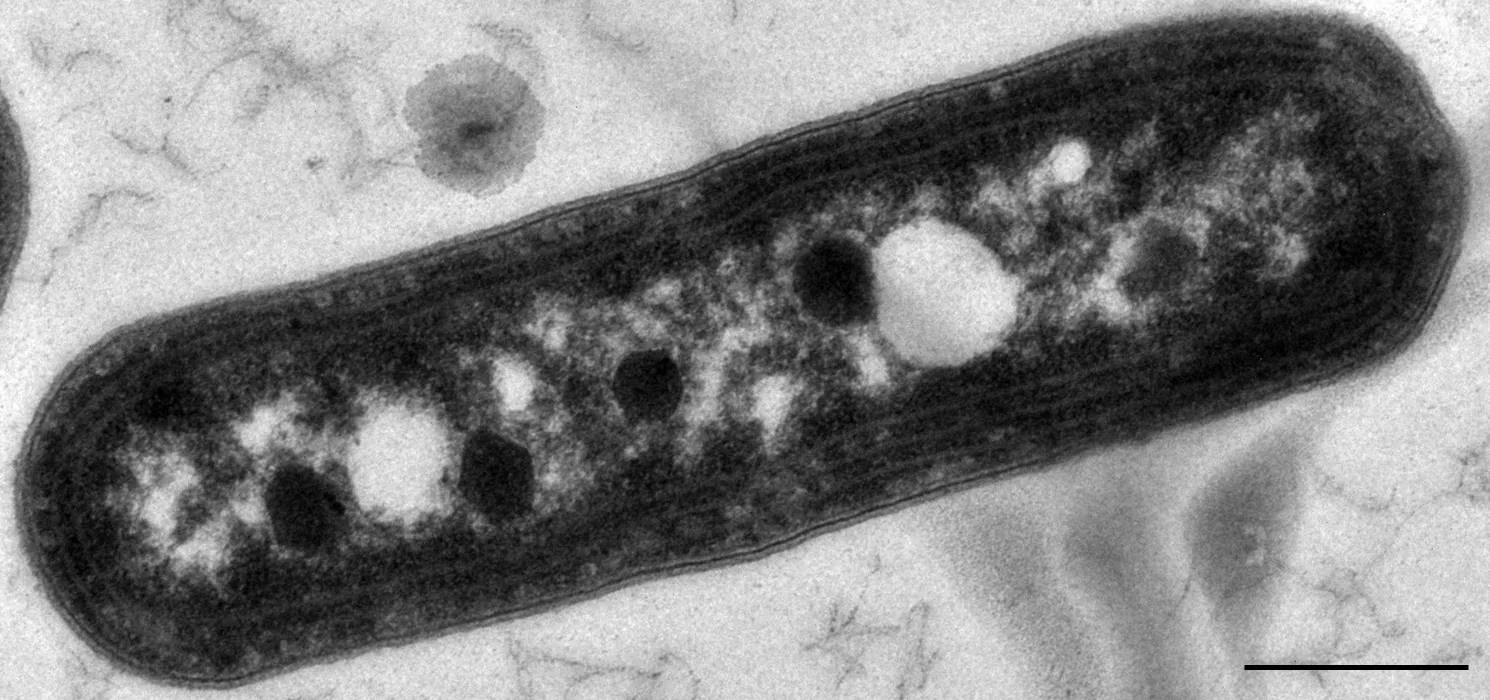
Synechococcus elongatus PCC 7942 electron micrograph showing carboxysomes.jpeg · Resized and converted to WebP for display. Source-identified documentary image; see the original file for method and context. AI-generated illustration. Raul Gonzalez and Cheryl Kerfeld · CC BY-SA 3.0

Field guide · species
Synechococcus elongatus
Nageli 1849
Synechococcus elongatus is a photosynthetic cyanobacterium widely used to study biological timing. Research on its clock shows how a single-celled organism can coordinate essential processes with recurring environmental cycles.
Public research profile · final editorial review pending.
Tree of lifeScientific lineage
- LifeLife
- DomainBacteria
- KingdomBacillati
- PhylumCyanobacteriota
- ClassCyanophyceae
- OrderSynechococcales
- FamilySynechococcaceae
- GenusSynechococcus
- SpeciesSynechococcus elongatus
Advanced classification
Complete source lineage, including intermediate ranks. The standard view uses Life and the eight principal ranks.
- cellular organisms cellular root
- Bacteria domain
- Bacillati kingdom
- Cyanobacteriota/Melainabacteria group clade
- Cyanobacteriota phylum
- Cyanophyceae class
- Synechococcales order
- Synechococcaceae family
- Synechococcus genus
- Synechococcus elongatus species
Structure and identification
Cells are elongated rods containing photosynthetic membranes and pigments. A green or blue-green culture is not enough for species identification.
Habitat and range
Freshwater-derived laboratory strains are central to research. They should not be conflated with every marine organism named Synechococcus.
Nutrition and metabolism
Light-driven photosynthesis supports carbon fixation, together with uptake of the inorganic nutrients required for growth.
Biological activity
An internal circadian system influences physiology. Clock function can help coordinate DNA replication with the environment.
Reproduction and life cycle
Vegetative cells grow and divide. DNA replication and cell division must be coordinated to produce viable descendants.
Geographic distribution
Research strains are cultured internationally; their use does not establish a complete natural distribution map.
Ecological role
As a phototrophic microbe, it illustrates the production of organic material from inorganic carbon in aquatic communities.
Distinctive adaptations
Internal timekeeping supports anticipation rather than a response based only on the immediate presence of light.
Evidence
Sources
- Synechococcus elongatus · NCBI Taxonomy ↗NCBI
- The circadian clock ensures successful DNA replication in cyanobacteria ↗Proceedings of the National Academy of Sciences of the United States of America · 2021
Connected life
Relationships
No reviewed ecological connections in the collection yet.
Explore network ↗