 Living Beings

 Framed for display
Species · Nostoc
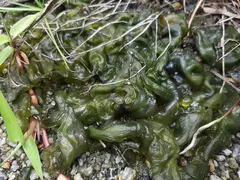
Nostoc commune
Nostoc commune
Nostoc commune is a terrestrial cyanobacterium that forms gelatinous colonies. Its striking ability to resume activity after drying makes it a useful …
Phylum · Scientific classification
Cyanobacteria are oxygen-producing photosynthetic bacteria with a deep evolutionary connection to chloroplasts.
 Framed for display
Explore broader group · Bacillati ↗
NCBI Taxonomy (2026-11-05 reconciled backbone) · Taxon source ↗
Group guide
The primary chloroplasts of plants and algae trace back to a cyanobacterial ancestor incorporated into a eukaryotic cell. Researchers compare genes from chloroplasts and living bacteria to investigate where that ancestor branched. The results show an evolutionary connection, rather than the identity of the exact ancient cell.
Source for an evolutionary connection to chloroplasts ↗Work on Synechococcus elongatus shows that clock proteins help time changes in metabolism across day and night. Experiments can compare a normal strain with altered clock strains under the same light schedule. This separates a response driven directly by changing light from one influenced by the cell's internal timing.
Source for a bacterial clock ↗Within this taxon
Framed for display
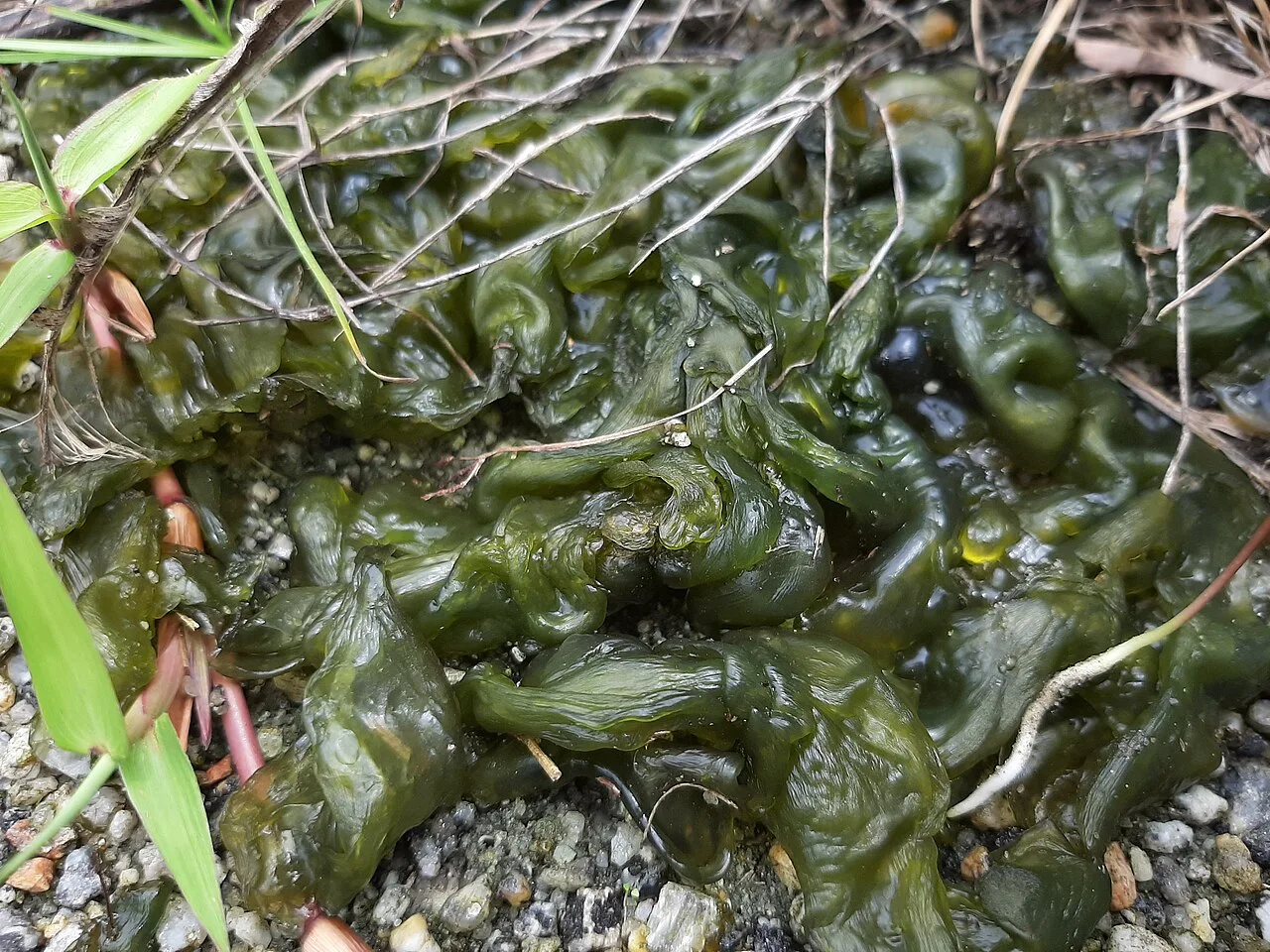
Nostoc commune
Nostoc commune is a terrestrial cyanobacterium that forms gelatinous colonies. Its striking ability to resume activity after drying makes it a useful …
 Framed for display
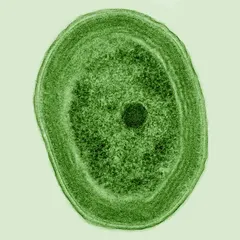
Prochlorococcus marinus
Prochlorococcus marinus represents extraordinarily small photosynthetic cyanobacteria in the ocean. Closely related ecotypes differ in their responses to light and resources, so …
 Framed for display
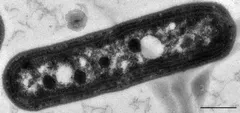
Synechococcus elongatus
Synechococcus elongatus is a photosynthetic cyanobacterium widely used to study biological timing. Research on its clock shows how a single-celled organism can …