Field guide · species

Tiger

Panthera tigris

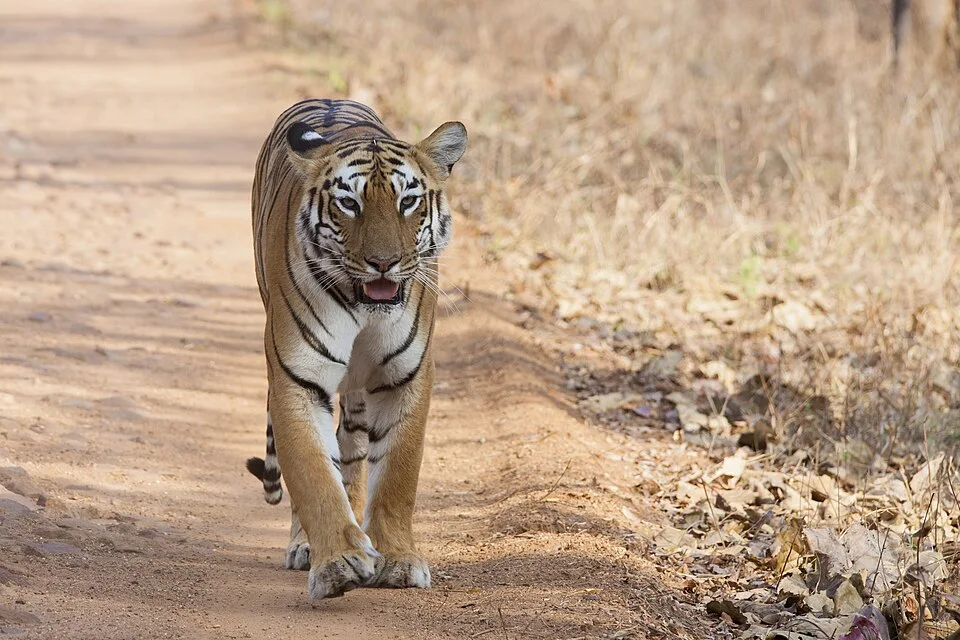
Tigers are large, striped cats native to Asia. Adults generally live and hunt alone.

Nutrition
Carnivorous
Source ↗
Social organization
Generally solitary
Source ↗
Tree of lifeScientific lineage
  1. LifeLife
  2. DomainEukaryota
  3. KingdomAnimalia
  4. PhylumChordata
  5. ClassMammalia
  6. OrderCarnivora
  7. FamilyFelidae
  8. GenusPanthera
  9. SpeciesPanthera tigris

In brief

Habitat and range
Tigers live in varied habitats, including tropical forests, mangrove swamps and temperate forest. Source ↗
Diet and nutrition
Tigers mainly hunt large mammals, including deer and wild pigs. Source ↗

Documented traits

  • Sexual dimorphism ↗

    Documented · Adult body size

    Adult males are generally larger than adult females. The cited account also records size variation among tiger populations. Source ↗

Scientific measurements

Body mass

170.0 kg

Mean · Adult

Source and measurement context

Literature value used in a comparative paper. The authors separate these mass references from their zoo sample. · ≈ 374.8 lb

Mass of an individual animal.

Stage
Adult
Naidenko & Alshinetskiy · Comparative felid body masses ↗ Table 1, literature-derived adult averages

Head and body length

1.50–2.30 m

Reported range

Source and measurement context

Species account range. Tiger size varies across populations. · ≈ 4.92–7.55 ft

Head and body, excluding the tail.

Original
150–230 cm
IUCN SSC Cat Specialist Group · Tiger account ↗ Body Length and Tail Length

Lifespan

8–10 years

Typical range · Wild

Source and measurement context

Typical wild lifespan in this species account.

Age attained in the recorded setting.

Setting
Wild
Animal Diversity Web · Tiger ↗ Typical lifespan, wild

Physical traits

Dark stripes break up the tiger’s outline. Stripe patterns vary from one individual to another.

Striping helps camouflage a stalking tiger in vegetation. The pattern varies individually, and field researchers can use photographs of the markings to distinguish animals.

Scientific source ↗

Habitat and range

Tigers live in varied habitats, including tropical forests, mangrove swamps and temperate forest.

A tiger can live in a mangrove forest or in a cold temperate forest. Those settings differ greatly in climate, while both can supply the cover and prey that a stalking predator uses.

Scientific source ↗

Diet and nutrition

Tigers mainly hunt large mammals, including deer and wild pigs.

Deer and wild pigs are examples of important prey. Which animals a tiger encounters depends on its region, so prey named in one local study should be read in that local context.

Scientific source ↗

Behavior and activity

A tiger usually hunts by stalking its prey and attacking at close range.

A tiger can communicate without meeting another tiger directly. Scratches and scent marks leave information at places another animal may visit later. In addition to stalking on land, tigers can swim well and have been observed hunting in water.

Scientific source ↗

Reproduction and life cycle

Young tigers stay with their mother while developing the skills needed to take prey. This prolonged period of dependence is consistent with an adult life that is generally solitary. A photograph of a female with cubs therefore describes an important life stage rather than a permanent social group.

Scientific source ↗

Geographic distribution

Native to Asia.

Scientific source ↗

Ecological role

  • Diet record · Wild boar

    A study of Bengal tiger scats in Chitwan National Park, Nepal, identified wild boar remains. Scientific source ↗

  • Diet record · Chital

    Chital occurred in the Bengal tiger scat sample from Chitwan. These records document local diet. Scientific source ↗

  • Diet record · Sambar

    The Chitwan study found sambar among the prey represented in the sampled Bengal tiger scats. Scientific source ↗

Explore documented relationships →

Distinctive adaptations

Individual stripe patterns have practical value to field researchers. Paired cameras can photograph the sides of a passing tiger, and repeated images of the same pattern can identify the same animal. A sequence of detections across sampling locations can support a population estimate.

Scientific source ↗

Species guide

Which name identifies a tiger?

Panthera tigris is the species name. A trinomial such as Panthera tigris tigris refers to a subspecies in a particular classification. One published treatment uses that name for continental tigers and Panthera tigris sondaica for Sunda tigers. Other treatments recognize additional subspecies.

Source for which name identifies a tiger? ↗

Why subspecies counts differ

A 2018 study of 32 documented tigers recovered six lineages matching the living subspecies it sampled, including the Malayan tiger. Different treatments group populations at different ranks, which changes the meaning of a subspecies label. Check the classification a source uses before comparing records.

Source for why subspecies counts differ ↗

Habitat and differences between adults

Tigers live in a range of Asian habitats, including tropical forests, mangroves and temperate forests. Males are generally larger than females in the same population, and size varies by population. Colour, size or a photograph alone offers limited evidence for assigning sex or subspecies.

Source for habitat and differences between adults ↗

Evidence

Sources

Connected life

Explore source-linked study observations, habitat records and classification in the focal network.