 Living Beings
 Framed for display
Compare species
African Baobab
Adansonia digitata
Asian Rice
Oryza sativa
How to compare two organisms
Choose two species and trace their closest shared group. Then compare a trait with the same definition on each side. Check the units, life stage and context before interpreting a measurement or range.
Missing data means that the collection lacks a sourced value. Where a characteristic does not apply to a lineage, the comparison labels it separately. Open the two profiles for context and follow their sources before drawing a conclusion.
Classification
Shared ancestry
Closest shared evolutionary group · Mesangiospermae.
Separate lineages
Biological comparison
Compare like with like. A mean, a range and a reported maximum summarize different things. Check the population and field or study conditions before interpreting differences.
| Characteristic | African Baobab | Asian Rice |
|---|---|---|
| Scientific measurements | ||
| Tree height |
28 m
Reported maximum · Mature tree Source and measurement contextUpper height in the Kew account. The account says most reach no more than about 20 m. · ≈ 92 ft Vertical height of a mature tree in the source conditions.
| Not recorded |
| Natural history | ||
| Nutrition and energy acquisition |
Leaves produce sugars through photosynthesis. Water and mineral nutrients are taken up through the roots. Source 1 ↗ |
Photosynthesis supports vegetative growth and grain filling. The seed endosperm stores carbohydrates used by a germinating seedling. Source 1 ↗ |
| Habitat |
A terrestrial tree of tropical Africa, it is adapted to seasonally dry conditions and is also planted in gardens and settlements. Source 1 ↗ |
Many rice systems use wet or flooded ground, but cultivation methods and water requirements vary among varieties. Source 1 ↗ |
| Geographic distribution |
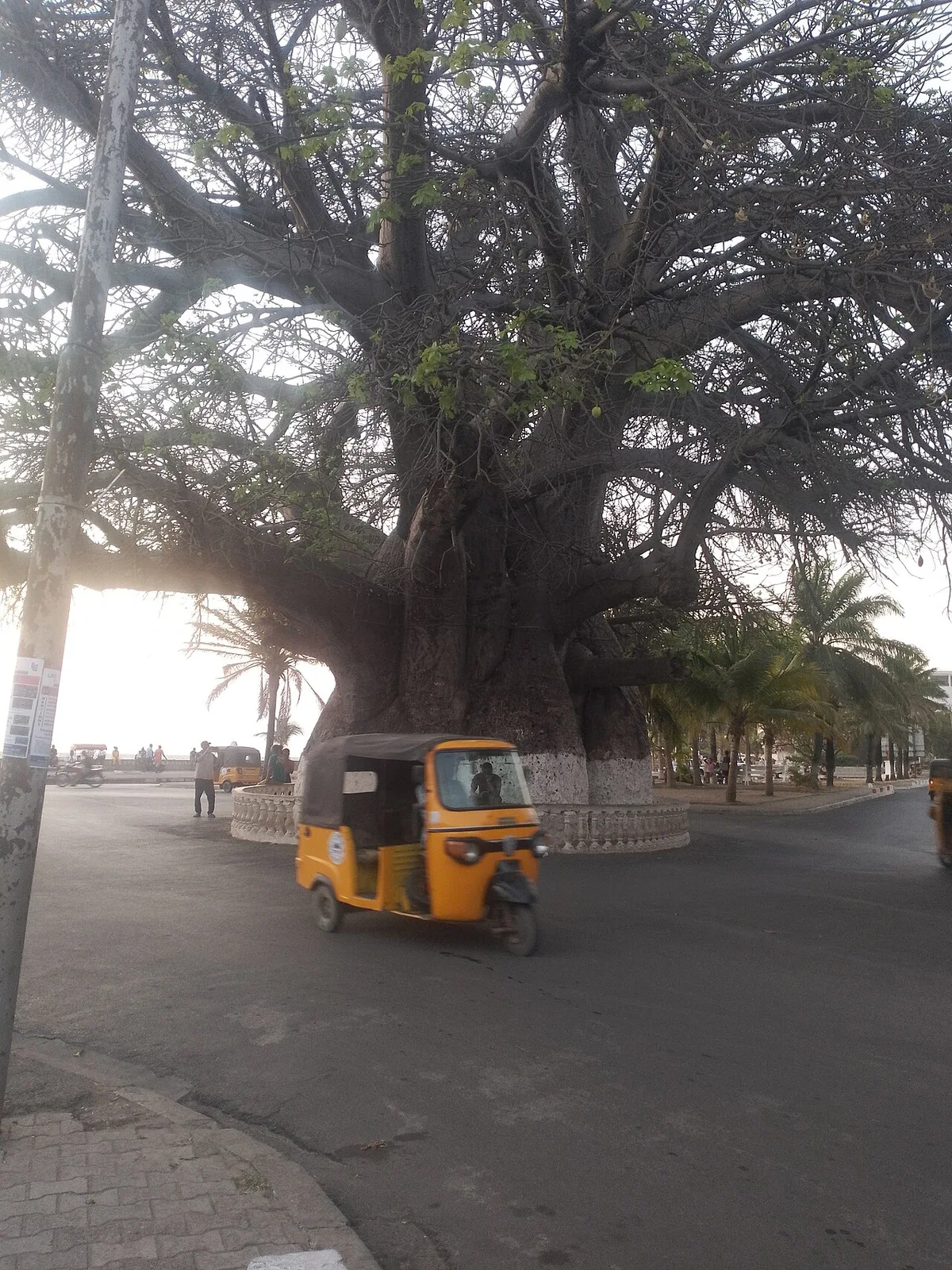
Native to Africa and cultivated elsewhere. The accompanying photograph shows a planted specimen in Madagascar; that location should not be confused with the native range of every baobab species. Source 1 ↗ |
The species is cultivated throughout many warm regions. Its distribution reflects domestication and agricultural movement rather than a simple wild range. Source 1 ↗ |
| Morphology |
Thick, fibrous bark surrounds a broad trunk. Each compound leaf has several leaflets radiating from a central point. Source 1 ↗ |
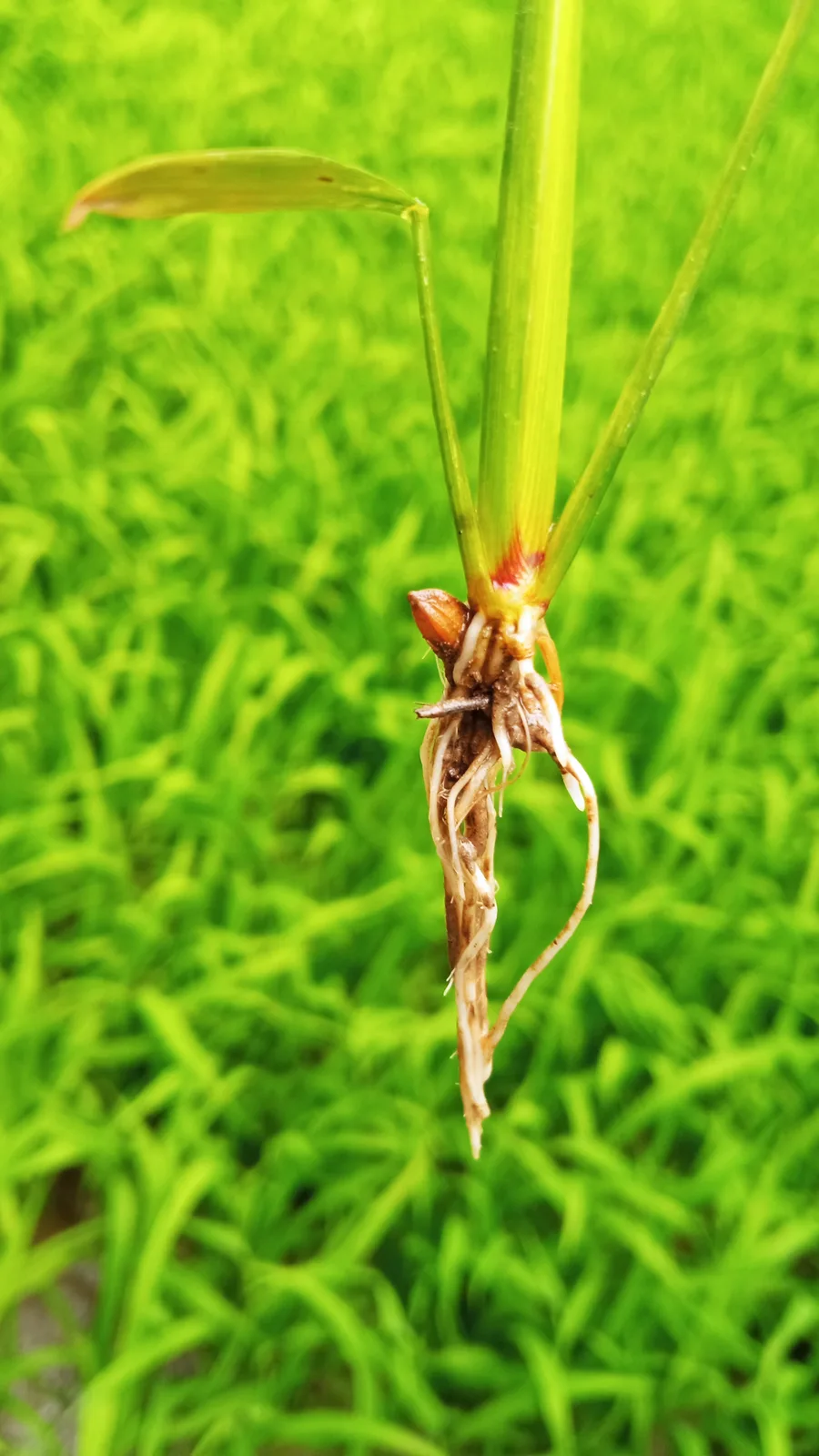
Narrow leaves arise from tillers. Small flowers develop in a branched panicle, followed by grains enclosed by husks. Source 1 ↗ |
| Reproduction and life cycle |
Large, hanging white flowers develop into capsules containing seeds embedded in pale, powdery pulp. New trees can be grown from seed. Source 1 ↗ |
Plants grow from seed, flower and produce a new grain crop. The normal cultivated cycle is annual. Source 1 ↗ |
| Ecological role |
Its flowers, fruit and extensive woody structure provide biological resources. The familiar name baobab also applies to other species, which should not be confused with this one. Source 1 ↗ |
Rice fields form managed ecosystems with aquatic and terrestrial organisms whose composition depends on farming practice. Source 1 ↗ |
| Behavior and activity |
No separate account recorded |
Tillering increases shoot number, while flowering and grain maturation depend on cultivar and growing conditions. Source 1 ↗ |
| Environmental adaptations |
A substantial trunk and drought-resistant growth form help distinguish this tree from many humid-forest trees. Source 1 ↗ |
Cultivated diversity includes contrasting responses to water availability and seasonal timing. Source 1 ↗ |
| Conservation |
No separate account recorded |
Maintaining crop genetic diversity and wild relatives is an important conservation task; Oryza glaberrima is a different cultivated rice species. Source 1 ↗ |
Sources from both profiles
More comparisons
Framed for display

 Framed for display

 Framed for display
