 Living Beings
Compare species
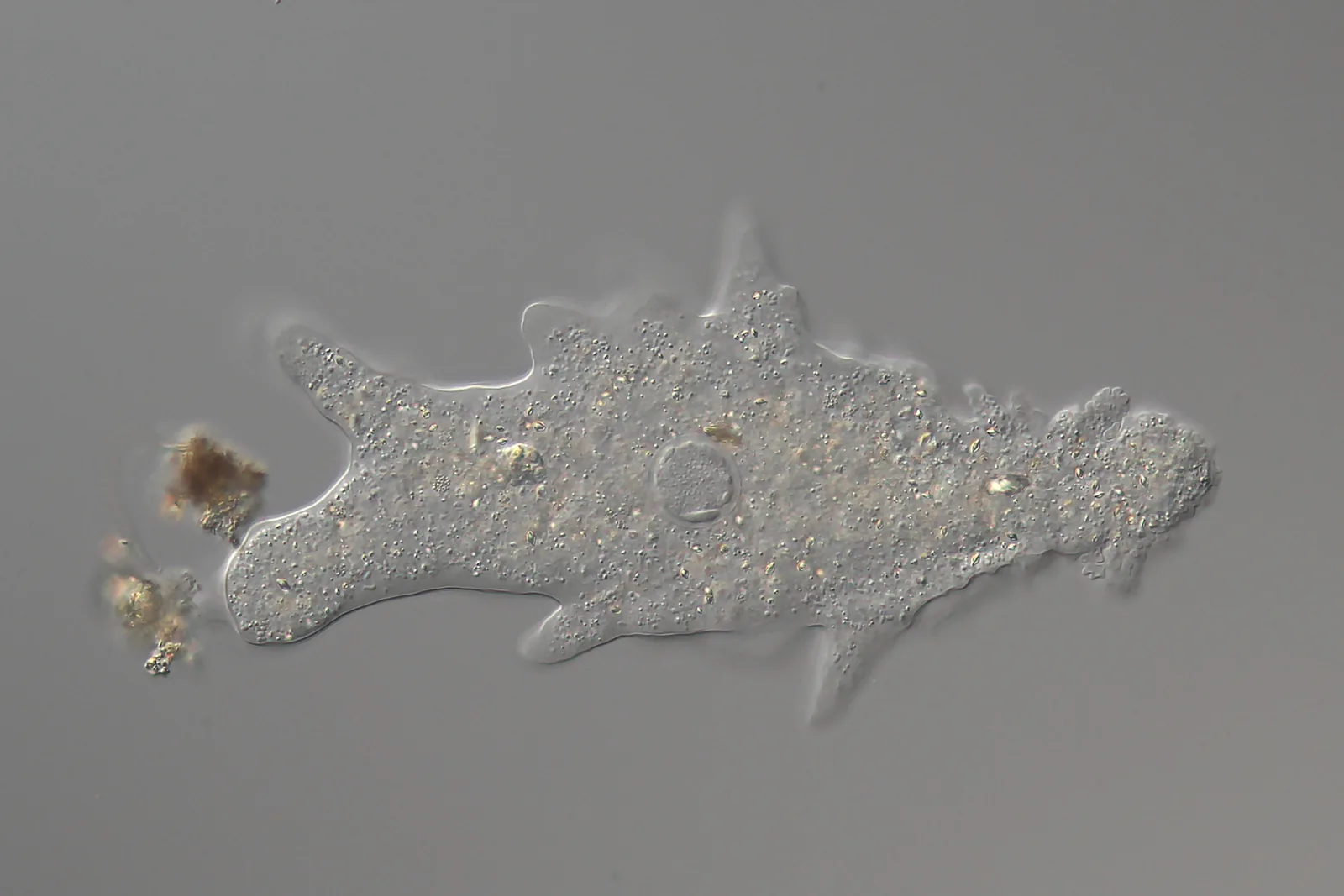
Amoeba proteus
Amoeba proteus
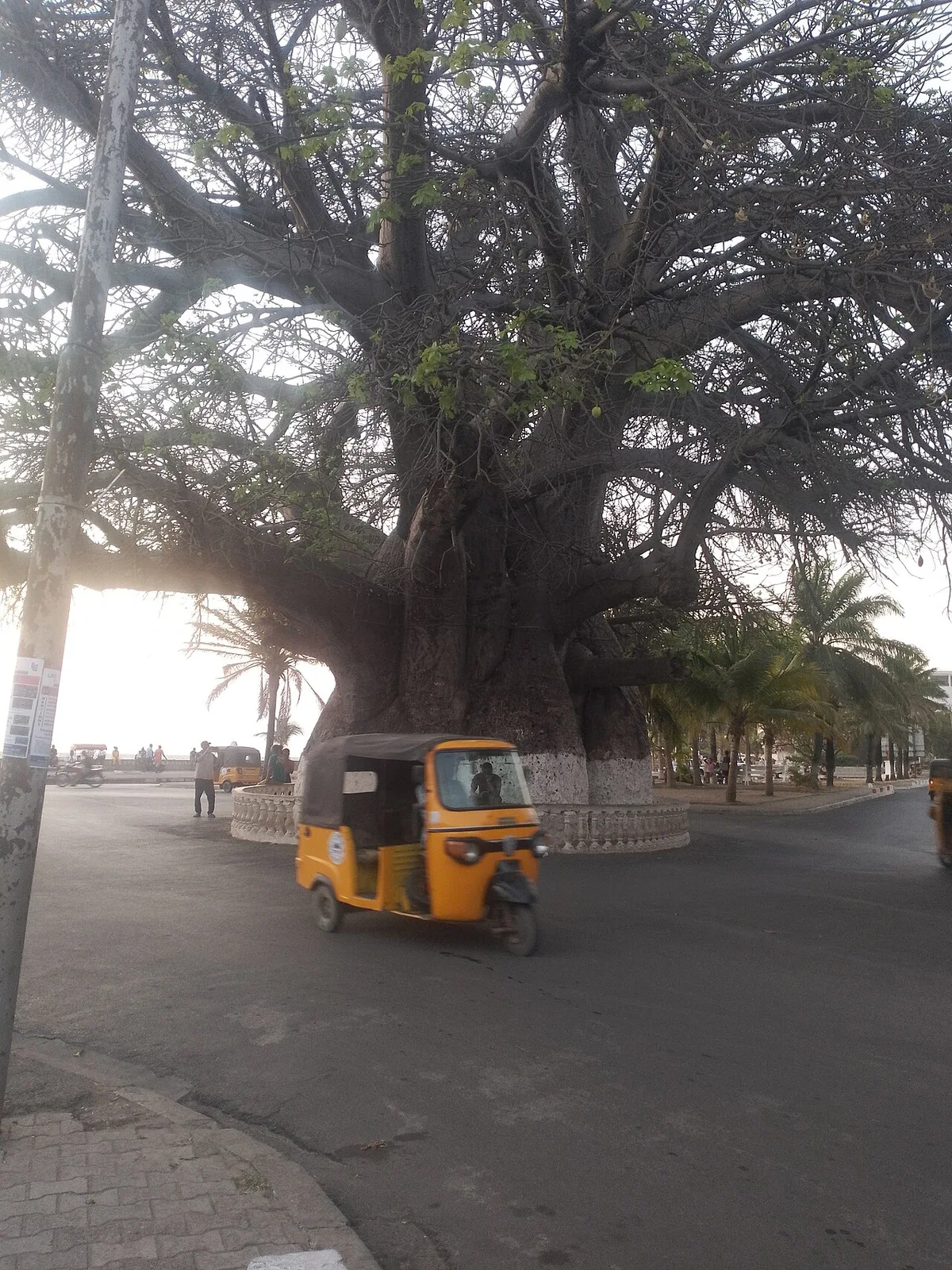
African Baobab
Adansonia digitata
Evidence from the profiles
Compare their characteristics
| Trait | Amoeba proteus | African Baobab |
|---|---|---|
| Physical traits | An irregular outline and flowing extensions distinguish a moving cell. A nucleus and vacuoles can be observed using suitable microscopy. | Thick, fibrous bark surrounds a broad trunk. Each compound leaf has several leaflets radiating from a central point. |
| Habitat and range | Freshwater environments with microbial food and suitable surfaces support its crawling and feeding activity. | A terrestrial tree of tropical Africa, it is adapted to seasonally dry conditions and is also planted in gardens and settlements. |
| Diet and nutrition | Pseudopodia surround food particles and small organisms, bringing them into vacuoles for digestion. | Leaves produce sugars through photosynthesis. Water and mineral nutrients are taken up through the roots. |
| Behavior and activity | The cell forms pseudopods as its shape changes. Direct pressure measurements found that internal pressure rose before movement and decreased around pseudopod formation, supporting a role for hydrostatic pressure driven by the contractile cell cortex. This links movement with the mechanics of a living cell rather than an animal-like limb. | Data unavailable |
| Reproduction and life cycle | A growing cell can divide after nuclear replication. This profile does not assign a complex reproductive stage from another amoeba species. | Large, hanging white flowers develop into capsules containing seeds embedded in pale, powdery pulp. New trees can be grown from seed. |
| Geographic distribution | Recorded cultures have particular collection histories. Identifying every large freshwater amoeba as A. proteus would overstate its distribution. | Native to Africa and cultivated elsewhere. The accompanying photograph shows a planted specimen in Madagascar; that location should not be confused with the native range of every baobab species. |
| Ecological role | Consumption of microorganisms connects it with freshwater microbial food webs. | Its flowers, fruit and extensive woody structure provide biological resources. The familiar name baobab also applies to other species, which should not be confused with this one. |
| Distinctive adaptations | A deformable cell surface supports both movement and feeding. Contractile-vacuole activity helps manage water balance in freshwater. | A substantial trunk and drought-resistant growth form help distinguish this tree from many humid-forest trees. |
Classification
Shared ancestry
Closest shared taxon: Eukaryota.