 Living Beings
 Framed for display
How to compare two organisms
Choose two species and trace their closest shared group. Then compare a trait with the same definition on each side. Check the units, life stage and context before interpreting a measurement or range.
Missing data means that the collection lacks a sourced value. Where a characteristic does not apply to a lineage, the comparison labels it separately. Open the two profiles for context and follow their sources before drawing a conclusion.
Biological comparison
Compare like with like. A mean, a range and a reported maximum summarize different things. Check the population and field or study conditions before interpreting differences.
| Characteristic | Jaguar | Leopard |
|---|---|---|
| Principal classification | ||
| Domain | Eukaryota | Eukaryota |
| Kingdom | Animalia | Animalia |
| Phylum | Chordata | Chordata |
| Class | Mammalia | Mammalia |
| Order | Carnivora | Carnivora |
| Family | Felidae | Felidae |
| Genus | Panthera | Panthera |
| Species | Panthera onca | Panthera pardus |
| Scientific measurements | ||
| Body mass |
80.6 kg ≈ 178 lb
Mean · Literature value used in a comparative paper. The authors separate these mass references from their zoo sample. Source and measurement contextMass of an individual animal.
|
50.0 kg ≈ 110 lb
Mean · Literature value used in a comparative paper. The authors separate these mass references from their zoo sample. Source and measurement contextMass of an individual animal.
|
| Natural history | ||
| Nutrition and energy acquisition |
Jaguars eat vertebrate prey including mammals and reptiles. Their broad jaws can be used to penetrate hard protective structures. Source 1 ↗ |
Prey includes mammals of varied sizes. Hunting choices reflect local availability rather than one universal prey species. Source 1 ↗ |
| Habitat |
Moist forest, wooded wetlands and other landscapes with dense cover provide hunting and resting places. Source 1 ↗ |
Leopards use forest, woodland, savanna and rocky country. Cover and opportunities to stalk prey matter more than any single vegetation type. Source 1 ↗ |
| Geographic distribution |
Present populations are distributed through parts of the Americas. Much of the former northern range has been lost or fragmented. Source 1 ↗ |
The species occurs in Africa and parts of Asia. Its current distribution is fragmented; a historical range should not be read as continuous present-day occupancy. Source 1 ↗ |
| Morphology |
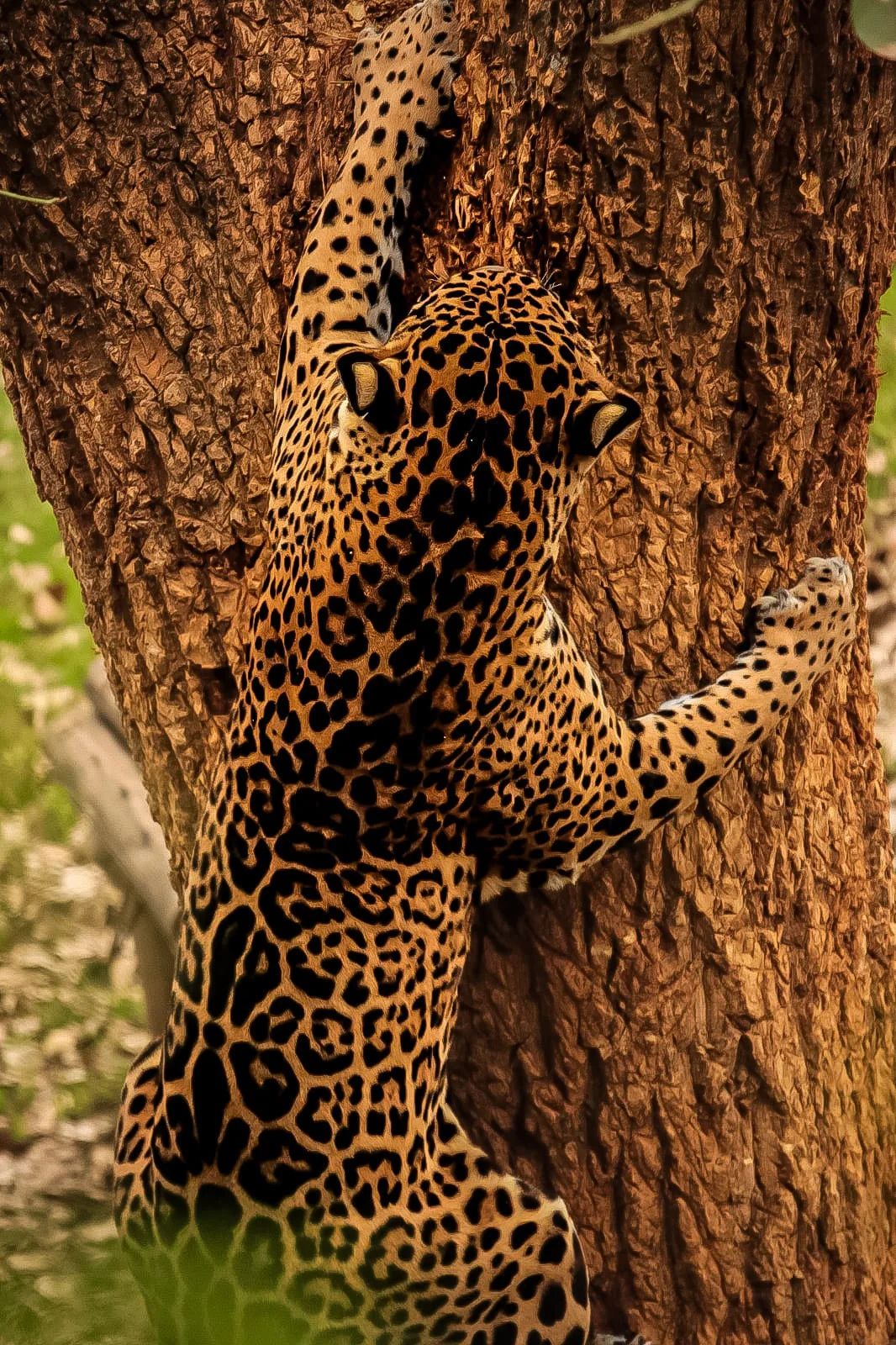
A jaguar is powerfully built, with relatively short limbs. Many rosettes contain small central spots, a useful contrast with a leopard's usual coat pattern. Source 1 ↗ |
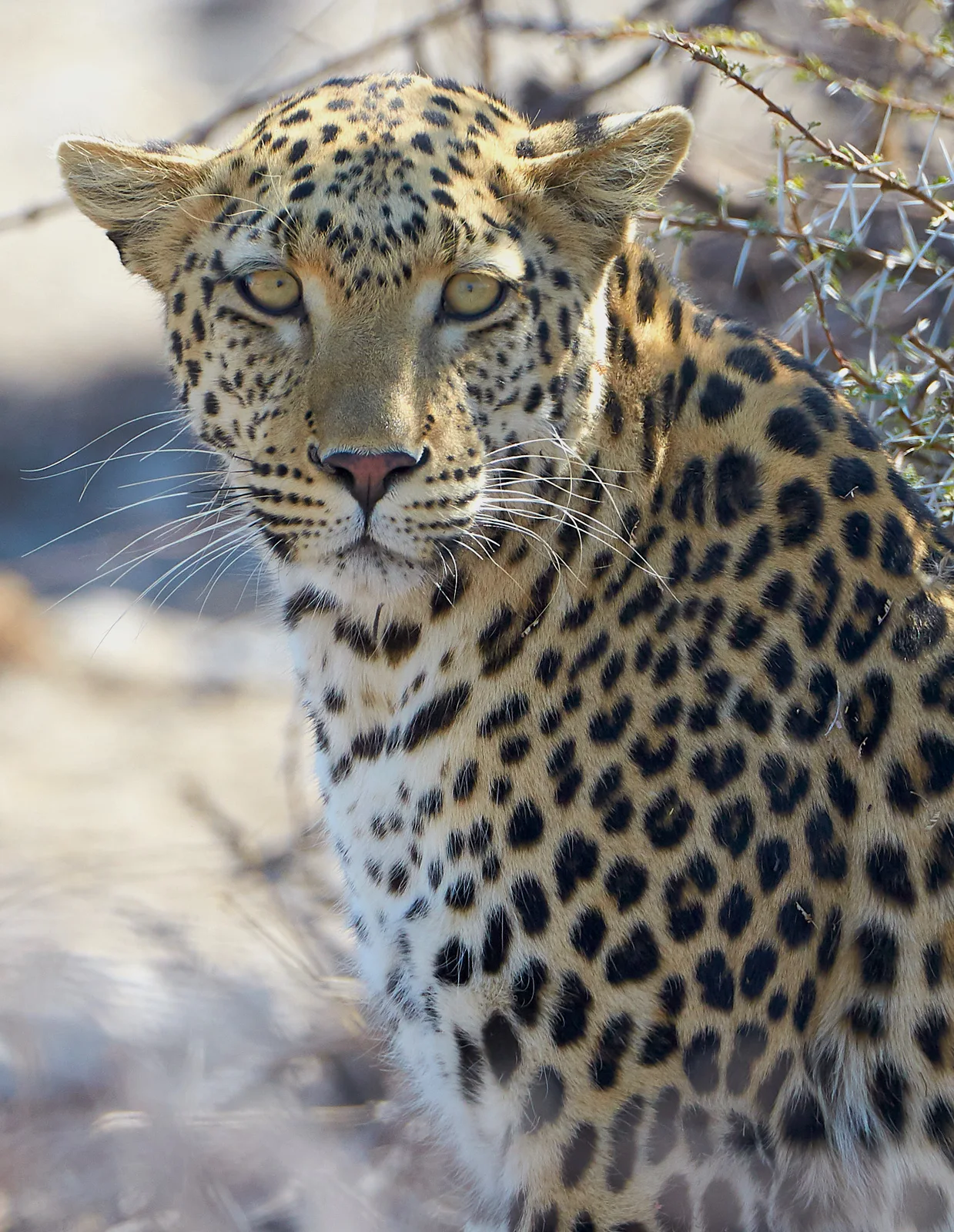
Dark rosettes cover most of the coat, while the face and limbs have smaller spots. Melanistic individuals retain the same underlying pattern. Source 1 ↗ |
| Reproduction and life cycle |
Cubs are born dependent on their mother. Maternal care includes protection and the gradual transition from milk to meat. Source 1 ↗ |
Females rear dependent cubs in sheltered sites. Young learn to hunt before becoming independent. Source 1 ↗ |
| Ecological role |
As large predators, jaguars connect terrestrial and wetland food webs. A diverse prey base supports their presence. Source 1 ↗ |
Leopards are predators within diverse food webs and compete with other large carnivores. Source 1 ↗ |
| Behavior and activity |
Adults are mostly solitary. They stalk from cover, swim readily and mark areas with scent and vocal signals. Source 1 ↗ |
Adults usually live alone and communicate through scent marks and calls. A leopard approaches prey closely before a short attack. Source 1 ↗ |
| Environmental adaptations |
Strong jaws, swimming ability and a concealed approach allow a varied hunting repertoire. Source 1 ↗ |
Climbing ability, camouflage and flexible hunting behavior help leopards exploit varied landscapes. Source 1 ↗ |
| Conservation |
Habitat fragmentation and conflict following livestock losses are important pressures. Protecting connected habitat is relevant to long-term persistence. Source 1 ↗ |
Habitat loss, persecution and depletion of prey threaten populations. Regional conditions differ; this account does not assign a new Red List category. Source 1 ↗ |
Sources from both profiles
More comparisons
Framed for display

 Framed for display

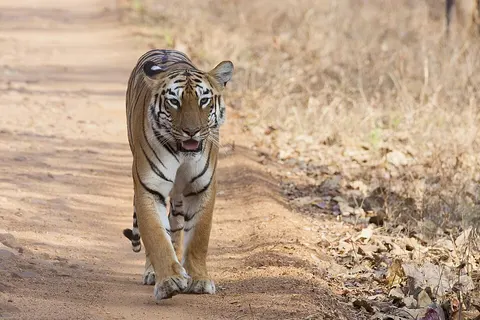 Framed for display

Classification
Shared ancestry
Closest shared taxon · Panthera.