Living Beings

 Framed for display
Species · Panthera
Lion
Panthera leo
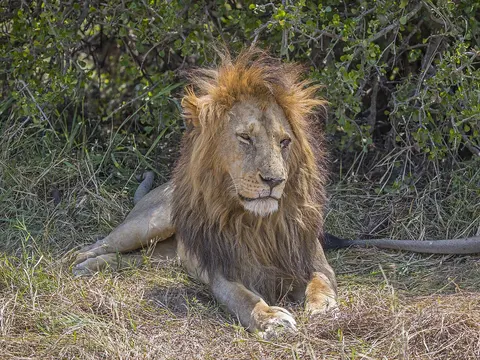
Lions are social cats that live in groups called prides. A pride usually includes related females, their young, and one or more …
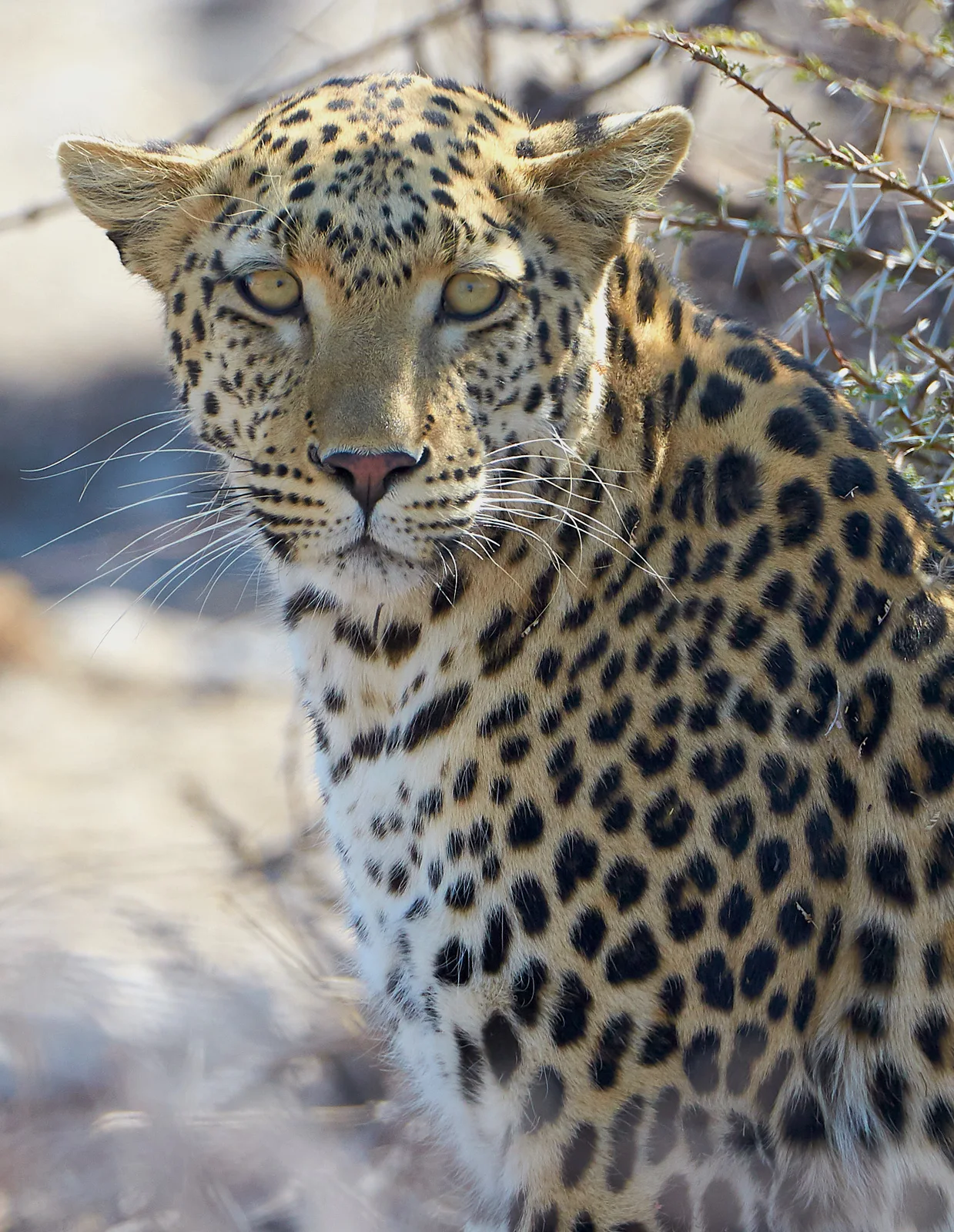
African Leopard Near Okevi Waterhole Etosha Namibia.jpg · Resized and converted to WebP for display. Documentary organism photograph. AI-generated illustration. Axel Tschentscher · CC BY-SA 4.0
Field guide · species
Panthera pardus
Rosettes, a muscular body and an unusually flexible choice of habitat distinguish the leopard. This solitary cat hunts from cover and can carry prey into trees, putting a meal beyond the reach of some competing carnivores.
Public research profile · final editorial review pending.
Complete source lineage, including intermediate ranks. The standard view uses Life and the eight principal ranks.
Dark rosettes cover most of the coat, while the face and limbs have smaller spots. Melanistic individuals retain the same underlying pattern.
Leopards use forest, woodland, savanna and rocky country. Cover and opportunities to stalk prey matter more than any single vegetation type.
Prey includes mammals of varied sizes. Hunting choices reflect local availability rather than one universal prey species.
Adults usually live alone and communicate through scent marks and calls. A leopard approaches prey closely before a short attack.
Females rear dependent cubs in sheltered sites. Young learn to hunt before becoming independent.
The species occurs in Africa and parts of Asia. Its current distribution is fragmented; a historical range should not be read as continuous present-day occupancy.
Leopards are predators within diverse food webs and compete with other large carnivores.
Climbing ability, camouflage and flexible hunting behavior help leopards exploit varied landscapes.
Habitat loss, persecution and depletion of prey threaten populations. Regional conditions differ; this account does not assign a new Red List category.
Shared classification
Framed for display
Panthera leo
Lions are social cats that live in groups called prides. A pride usually includes related females, their young, and one or more …
 Framed for display
Panthera tigris
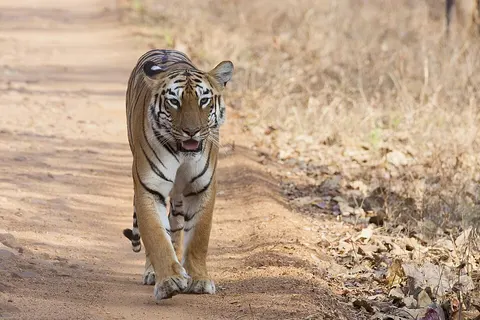
Tigers are large, striped cats native to Asia. Adults generally live and hunt alone.
 Framed for display
Panthera onca
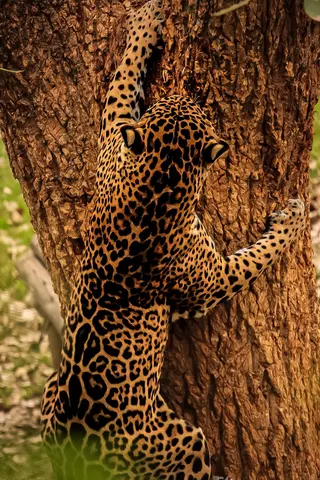
The jaguar is the largest living cat native to the Americas. Its stocky build, broad head and rosetted coat suit an ambush …
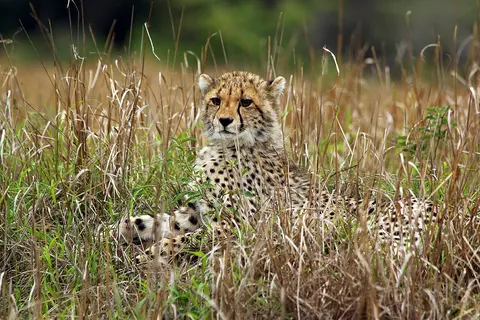 Framed for display
Acinonyx jubatus
The cheetah is a lightly built cat whose hunting style differs from the heavy ambush approach of many other felids. Its long …
Evidence
Connected life
No reviewed ecological connections in the collection yet.
Explore network ↗