 Living Beings
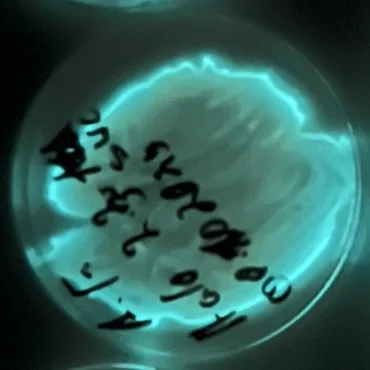
Aliivibrio Fischeri.jpg · Resized and converted to WebP for display. Source-identified documentary image; see the original file for method and context. AI-generated illustration. Seltersberg · CC BY 4.0

Field guide · species
Aliivibrio fischeri
(Beijerinck 1889) Urbanczyk et al. 2007
Aliivibrio fischeri is a marine bacterium famous for bioluminescence and partnerships with marine animals. Research often uses its former name, Vibrio fischeri, and particular squid-associated strains.
Public research profile · final editorial review pending.
Tree of lifeScientific lineage
- LifeLife
- DomainBacteria
- KingdomPseudomonadati
- PhylumPseudomonadota
- ClassGammaproteobacteria
- OrderVibrionales
- FamilyVibrionaceae
- GenusAliivibrio
- SpeciesAliivibrio fischeri
Advanced classification
Complete source lineage, including intermediate ranks. The standard view uses Life and the eight principal ranks.
- cellular organisms cellular root
- Bacteria domain
- Pseudomonadati kingdom
- Pseudomonadota phylum
- Gammaproteobacteria class
- Vibrionales order
- Vibrionaceae family
- Aliivibrio genus
- Aliivibrio fischeri species
Structure and identification
Small bacterial cells require microscopy for direct observation. Light emission is a physiological property, not a visible body-color diagnosis.
Habitat and range
Marine environmental phases and specialized host-associated sites provide distinct growth conditions.
Nutrition and metabolism
Organic substrates support metabolism. Conditions inside a host can differ substantially from those in surrounding seawater.
Biological activity
Chemical signaling and population context influence light production and other behaviors relevant to colonization.
Reproduction and life cycle
Cell multiplication and repeated opportunities for host colonization connect free-living and symbiotic phases.
Geographic distribution
Environmental and host-derived strains have documented collection localities. The origin of one experimental strain does not define the full range.
Ecological role
The well-studied squid association demonstrates a microbial contribution to an animal's light-producing system.
Distinctive adaptations
Bioluminescence, environmental sensing and colonization traits help explain the model symbiosis.
Evidence
Sources
Connected life
Relationships
No reviewed ecological connections in the collection yet.
Explore network ↗