 Living Beings

 Framed for display
Species · Aliivibrio
Aliivibrio fischeri
Aliivibrio fischeri
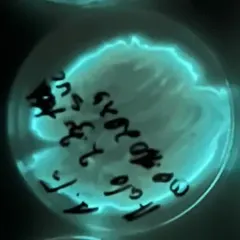
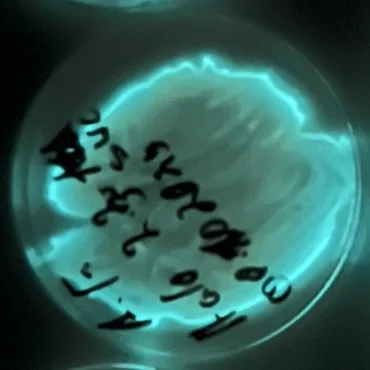
In the Hawaiian bobtail squid, light from Aliivibrio fischeri helps mask the animal’s silhouette when viewed from below.
Class · Scientific classification
Gammaproteobacteria is a class in the bacterial phylum Pseudomonadota. It contains E. coli and a wide variety of bacteria in other orders, including marine symbionts.
 Framed for display
Explore broader group · Pseudomonadota ↗
NCBI Taxonomy (2026-11-05 reconciled backbone) · Taxon source ↗
Group guide
Pseudomonadota is the broader phylum. Gammaproteobacteria is a class inside it, and Enterobacterales is one of the orders placed in that class. The family Enterobacteriaceae contains Escherichia, so E. coli can be traced upward through each of those ranks.
Source for find the class in a lineage ↗Aliivibrio fischeri is a member of Vibrionaceae. It lives in the light organ of the Hawaiian bobtail squid, which acquires it from seawater. Studies often use the older name Vibrio fischeri for the same bacterium.
Source for a light-producing partnership ↗The deep-sea clam studied under the name Calyptogena magnifica harbors sulfur-oxidizing bacteria in its gills. Its symbiont, described as Candidatus Ruthia magnifica, uses chemical energy to fix carbon. This partnership and the squid’s light organ illustrate different roles for bacteria in the same class.
Source for a different symbiosis at deep-sea vents ↗Gammaproteobacteria · class · Original classification source
The original identifier and source were retained when adopting the dated NCBI backbone. Different sources may use different names, ranks or group circumscriptions.
Within this taxon
Framed for display
Aliivibrio fischeri
In the Hawaiian bobtail squid, light from Aliivibrio fischeri helps mask the animal’s silhouette when viewed from below.
 Framed for display
Escherichia coli
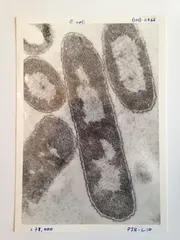
Escherichia coli is a bacterial species found in many environments, including the intestines of people and other animals. Most types are harmless, …