 Living Beings
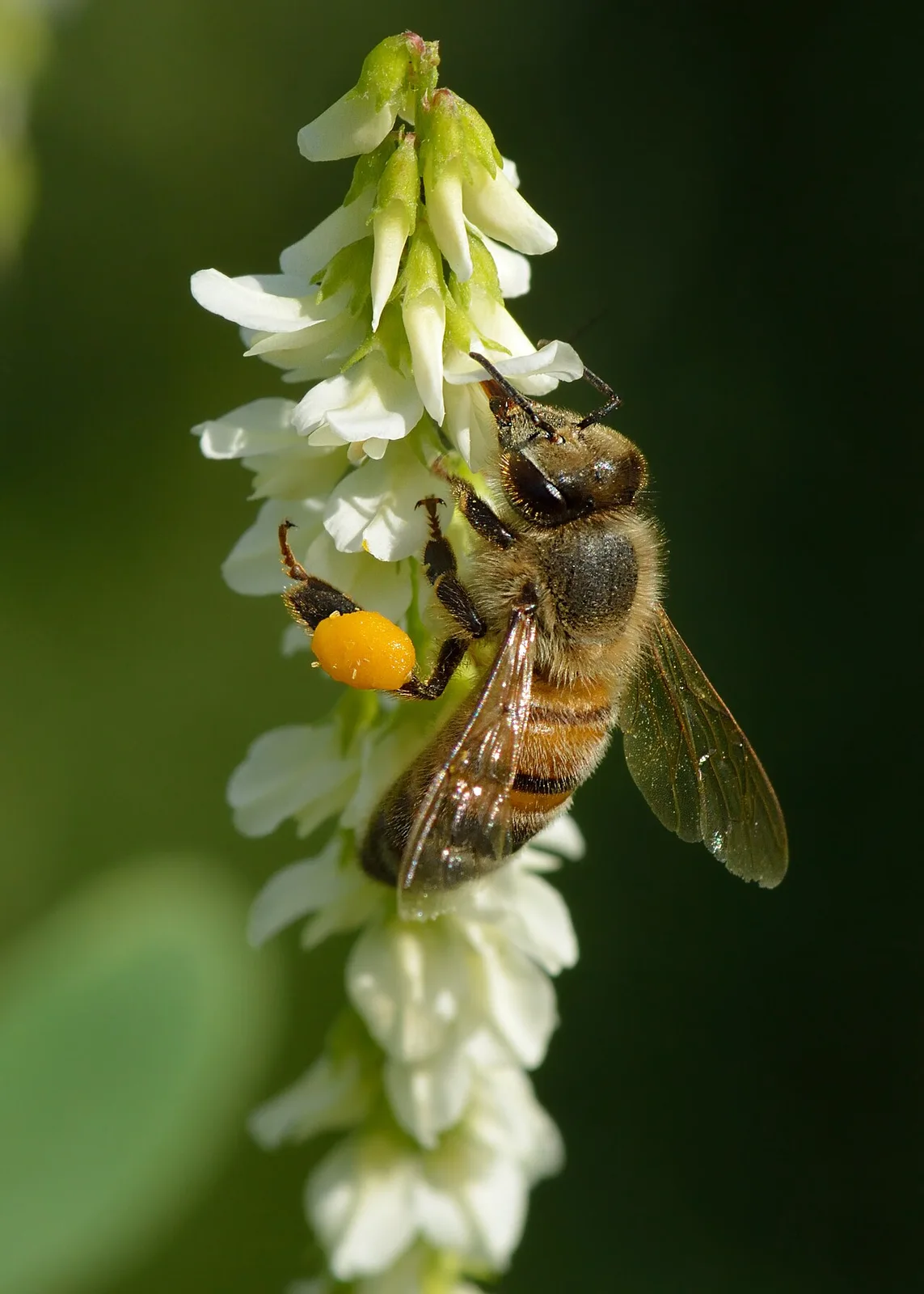
Apis mellifera - Melilotus albus - Keila.jpg · Resized and converted to WebP for display. Documentary organism photograph. AI-generated illustration. Ivar Leidus · CC BY-SA 4.0

Field guide · species
Honey Bee
Apis mellifera Linnaeus, 1758
A honey bee colony combines a reproductive queen, female workers and seasonal males. Workers collect floral resources, care for developing young and maintain a nest whose survival depends on coordinated activity.
Public research profile · final editorial review pending.
Tree of lifeScientific lineage
- LifeLife
- DomainEukaryota
- KingdomAnimalia
- PhylumArthropoda
- ClassInsecta
- OrderHymenoptera
- FamilyApidae
- GenusApis
- SpeciesApis mellifera
Advanced classification
Complete source lineage, including intermediate ranks. The standard view uses Life and the eight principal ranks.
- cellular organisms cellular root
- Eukaryota domain
- Opisthokonta clade
- Metazoa kingdom
- Eumetazoa clade
- Bilateria clade
- Protostomia clade
- Ecdysozoa clade
- Panarthropoda clade
- Arthropoda phylum
- Mandibulata clade
- Pancrustacea clade
- Altocrustacea clade
- Allotriocarida clade
- Hexapoda subphylum
- Insecta class
- Dicondylia clade
- Pterygota subclass
- Neoptera infraclass
- Eumetabola clade
- Endopterygota cohort
- Hymenoptera order
- Apocrita suborder
- Aculeata infraorder
- Apoidea superfamily
- Anthophila clade
- Apidae family
- Apinae subfamily
- Apini tribe
- Apis genus
- Apis mellifera species
Physical traits
Workers are hairy insects with pollen-carrying structures on the hind legs. Queens and drones differ in body form and role.
Habitat and range
Nests occupy protected cavities or managed hives near sufficient flowering plants and water.
Diet and nutrition
Nectar supplies sugars and pollen supplies other nutrients. Honey stores concentrated floral food for later use.
Behavior and activity
Workers communicate foraging information through dances and chemical signals. Tasks change with worker age and colony needs.
Reproduction and life cycle
Eggs develop through larval and pupal stages into adults. Female caste development depends strongly on larval feeding.
Geographic distribution
Native populations occur in Africa, Europe and western Asia. People have introduced the species widely for beekeeping.
Ecological role
Foraging transfers pollen between flowers. Managed honey bees can also compete with other flower-visiting insects.
Distinctive adaptations
Wax comb, food storage and collective temperature regulation help a colony persist through seasonal shortages.
Conservation
Parasites, disease, pesticides and limited forage can harm colonies. Managed-colony health and conservation of wild bee diversity are distinct issues.
Evidence
Sources
- Apis mellifera · NCBI Taxonomy ↗NCBI
- Apis mellifera — Animal Diversity Web, University of Michigan ↗Animal Diversity Web, University of Michigan
Connected life
Relationships
No reviewed ecological connections in the collection yet.
Explore network ↗