 Living Beings
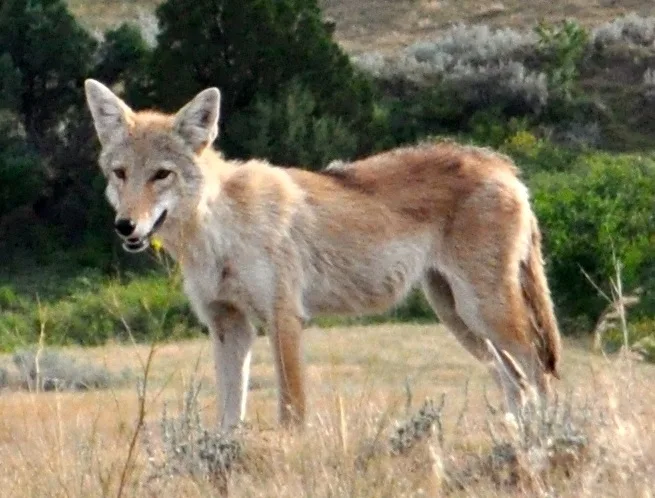

Body mass
7–21 kg
Reported range
Source and measurement context
Range in the species account. · ≈ 20–46 lb
Mass of an individual animal.
Animal Diversity Web · Coyote ↗ Physical Description · range massCanis latrans latrans Pennington County SD.jpg · Resized and converted to WebP for display. Madeleine H. · CC BY 2.0
Field guide · species
Canis latrans
The coyote is an adaptable North American canid that can live in natural and human-modified landscapes. Its success reflects flexible food use and behavior, not an absence of ecological needs.
Reported range
Range in the species account. · ≈ 20–46 lb
Mass of an individual animal.
Animal Diversity Web · Coyote ↗ Physical Description · range massA pointed muzzle, upright ears and a bushy tail accompany a grayish to tawny coat.
Grasslands, scrub, forests and some developed environments can provide habitat.
Small mammals are important prey, with carrion, fruit and other foods used when available.
In a Chicago-area study, scat contained naturally available foods including small rodents, deer, fruit and rabbits. The authors found that food use varied by place and season. An urban location alone is therefore insufficient to infer that an animal relies on human refuse. Scat also records what was eaten without distinguishing hunting from scavenging.
Scientific source 1 ↗ · Scientific source 2 ↗ · Scientific source 3 ↗
Individuals may forage alone, in pairs or in family associations. Social organization changes with resources and season.
The Mammal Diversity Database v2.5 records this species in Belize, Canada, Costa Rica, El Salvador, Guatemala, Honduras, Mexico, Nicaragua, Panama, United States.
Shared classification
 Framed for display
Canis simensis
The Ethiopian wolf is a specialized hunter of highland rodents. Its ecological niche differs from that of wolves that regularly cooperate to …
 Framed for display
Canis rufus
The red wolf is a North American wolf with a complex conservation and taxonomic history. It should not be reduced to a …
 Framed for display
Lycaon pictus
Botswana field observations show how pack members’ signals help determine when African wild dogs leave a resting site.
 Framed for display
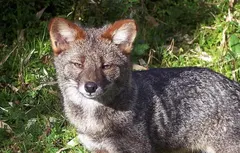
Lycalopex fulvipes
Darwin’s fox is a forest-associated Chilean canid with a restricted distribution. Its natural history differs from the open-country image commonly associated with …
Evidence
Connected life
No reviewed ecological connections in the collection yet.