 Living Beings

 Framed for display
Species · Trametes
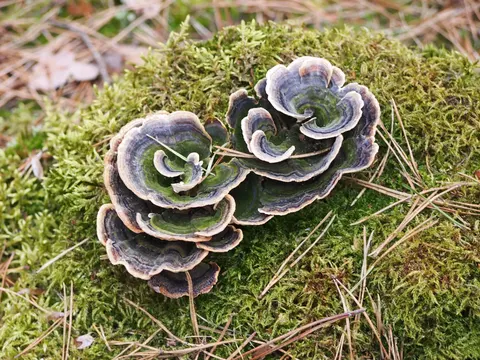
Turkey Tail
Trametes versicolor
Turkey tail forms thin, often overlapping brackets on dead wood. Its contrasting bands make it conspicuous, while its white-rot physiology enables breakdown …
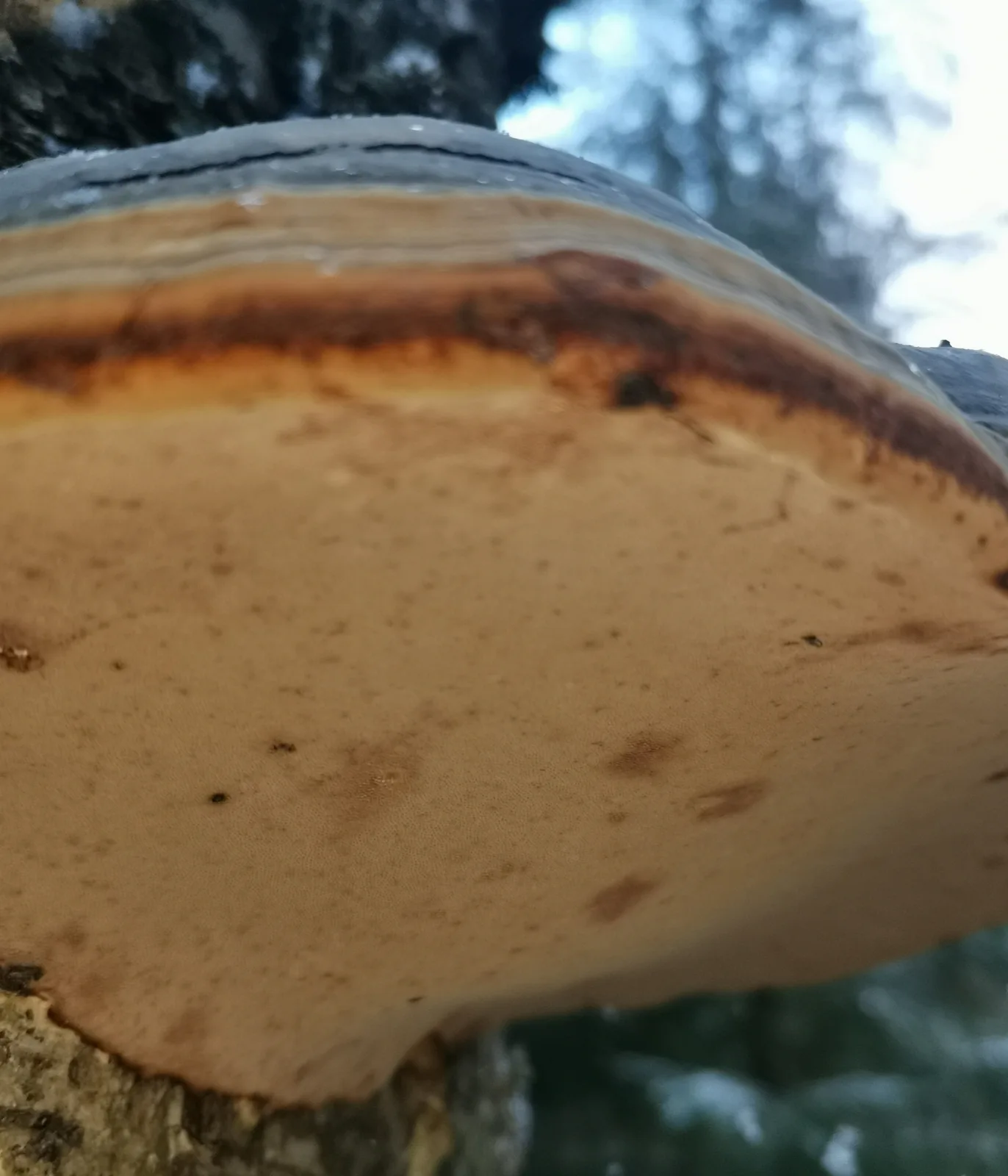
Fomes fomentarius 170004702.jpg · Resized and converted to WebP for display. Documentary organism photograph; source identification retained. AI-generated illustration. Ilkka Kaita-aho · CC0
Field guide · species
Fomes fomentarius (L.) Fr., 1849
The tinder fungus is a tough perennial bracket that often becomes hoof-shaped. Its woody fruiting bodies remain attached to hardwood and can persist across more than one growing season.
Public research profile · final editorial review pending.
Complete source lineage, including intermediate ranks. The standard view uses Life and the eight principal ranks.
A grayish, zoned upper surface contrasts with a brown underside covered in small pores. There is no central mushroom stem.
Standing and fallen hardwoods, particularly birch and beech, provide host material and a substrate.
The fungus causes white rot, breaking down components of wood and absorbing released nutrients.
Successive tube layers contribute to a durable bracket. Spores are produced within the pore-bearing tubes rather than on exposed gills.
The cited field account documents broad occurrence in northern and temperate North America. The photograph is a source-identified specimen, not a map of the species’ complete range.
It may inhabit living trees and continue decomposing wood after the host dies.
A hard, persistent fruiting body contrasts with short-lived fleshy mushrooms. Its historical use as tinder reflects properties of the fungal tissue, not a different biological role.
Shared classification
Framed for display
Trametes versicolor
Turkey tail forms thin, often overlapping brackets on dead wood. Its contrasting bands make it conspicuous, while its white-rot physiology enables breakdown …
Evidence
Connected life
No reviewed ecological connections in the collection yet.
Explore network ↗