 Living Beings

 Framed for display
Species · Canis
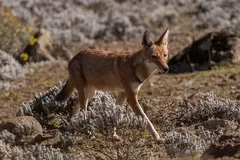
Ethiopian Wolf
Canis simensis
The Ethiopian wolf is a specialized hunter of highland rodents. Its ecological niche differs from that of wolves that regularly cooperate to …
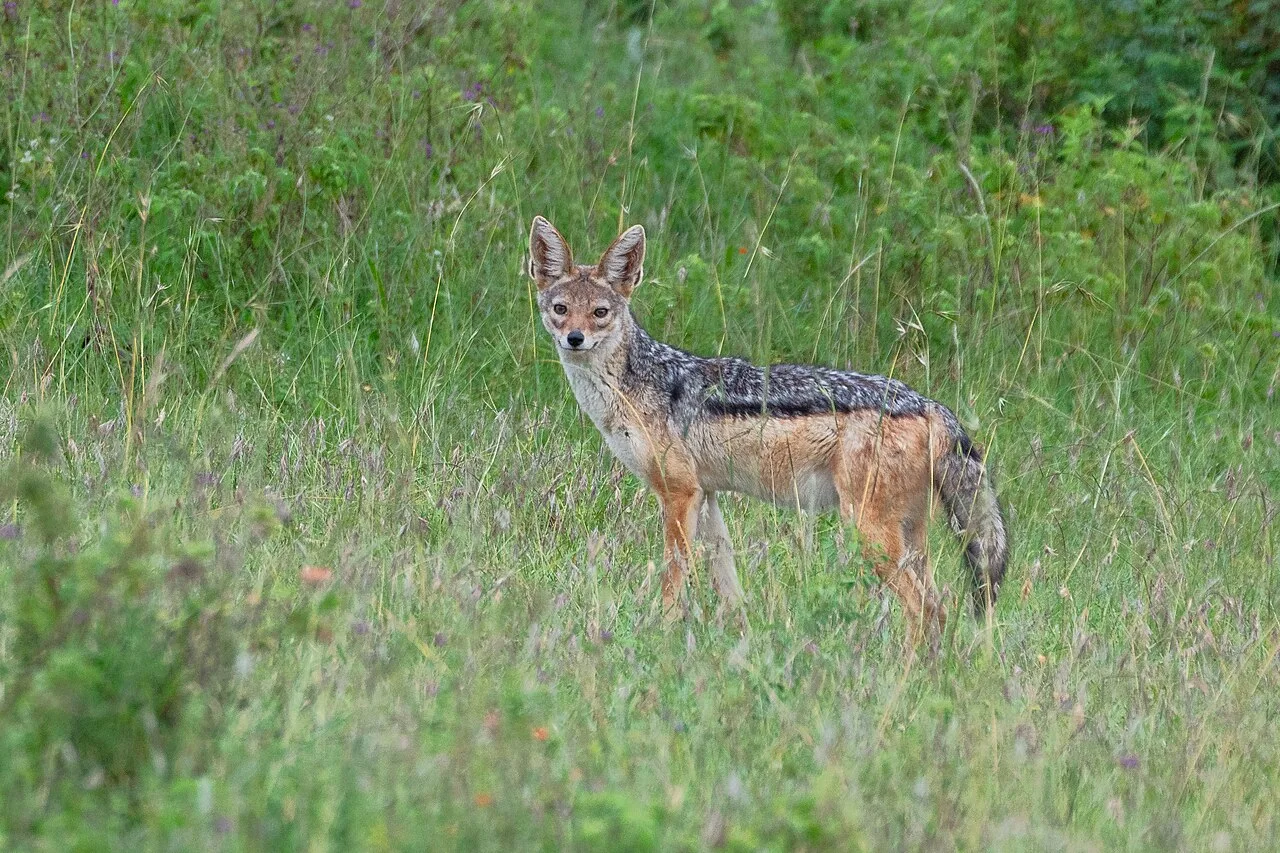
Chacal de lomo negro (Lupulella mesomelas), reserva natural Masái Mara, Kenia, 2024-05-20, DD 06.jpg · Resized and converted to WebP for display. Diego Delso · CC BY-SA 4.0
Field guide · species
Lupulella mesomelas
The black-backed jackal is an African predator and scavenger recognized by a dark saddle across its back. Its flexibility includes both independent foraging and cooperation with other individuals.
A dark grizzled back contrasts with reddish sides and a paler underside.
Dry and more varied open landscapes can be used, including areas influenced by people.
Small vertebrates, carrion, invertebrates and other available foods are eaten.
A South African scat study found different foods on livestock farms, game farms and a reserve. Sheep were prominent on livestock farms, whereas kudu appeared frequently on game farms. Finding either animal's remains shows consumption. Whether the jackal killed the animal or scavenged it requires additional evidence.
Scientific source 1 ↗ · Scientific source 2 ↗ · Scientific source 3 ↗
Foraging can occur alone or cooperatively. Daily timing varies, including shifts toward nighttime near human activity.
The Mammal Diversity Database v2.5 records this species in Angola, Botswana, Djibouti, Eritrea, Eswatini, Ethiopia, Kenya, Lesotho, Mozambique, Namibia, Somalia, South Africa, South Sudan, Sudan, Tanzania, Uganda, Zimbabwe.
Shared classification
Framed for display
Canis simensis
The Ethiopian wolf is a specialized hunter of highland rodents. Its ecological niche differs from that of wolves that regularly cooperate to …
 Framed for display
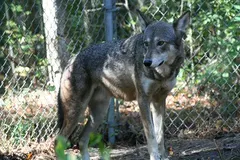
Canis rufus
The red wolf is a North American wolf with a complex conservation and taxonomic history. It should not be reduced to a …
 Framed for display
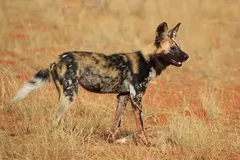
Lycaon pictus
Botswana field observations show how pack members’ signals help determine when African wild dogs leave a resting site.
 Framed for display
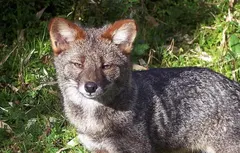
Lycalopex fulvipes
Darwin’s fox is a forest-associated Chilean canid with a restricted distribution. Its natural history differs from the open-country image commonly associated with …
Evidence
Connected life
No reviewed ecological connections in the collection yet.