 Living Beings
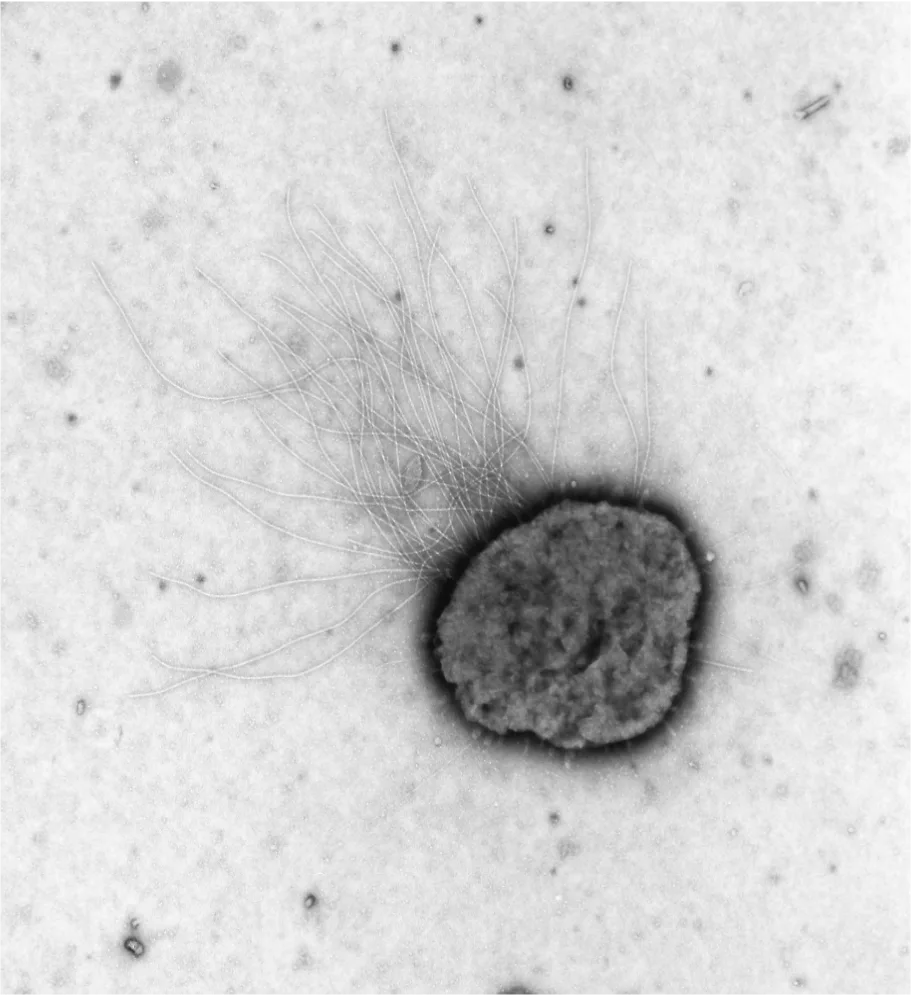
Electron micrograph of Methanococcus maripaludis.png · Resized and converted to WebP for display. Electron micrograph showing a cell and appendages. AI-generated illustration. Dr. Ken F. Jarrell and Dr. Shin-Ichi Aizawa · CC0

Field guide · species
Methanococcus maripaludis
Jones et al. 1984
Methanococcus maripaludis is a methane-producing archaeon associated with marine sediment. It has become an important laboratory organism for understanding and modifying archaeal metabolism.
Public research profile · final editorial review pending.
Tree of lifeScientific lineage
- LifeLife
- DomainArchaea
- KingdomMethanobacteriati
- PhylumMethanobacteriota
- ClassMethanococci
- OrderMethanococcales
- FamilyMethanococcaceae
- GenusMethanococcus
- SpeciesMethanococcus maripaludis
Advanced classification
Complete source lineage, including intermediate ranks. The standard view uses Life and the eight principal ranks.
- cellular organisms cellular root
- Archaea domain
- Methanobacteriati kingdom
- Methanobacteriota phylum
- Methanomada group clade
- Methanococci class
- Methanococcales order
- Methanococcaceae family
- Methanococcus genus
- Methanococcus maripaludis species
Structure and identification
The electron micrograph shows a small, roughly rounded cell with surface appendages. A micrograph reveals cell structure rather than a visible animal-like body.
Scientific source 1 ↗ · Scientific source 2 ↗ · Scientific source 3 ↗
Habitat and range
The original species was isolated from salt-marsh sediment. Culture-collection records identify a South Carolina coastal source.
Scientific source 1 ↗ · Scientific source 2 ↗ · Scientific source 3 ↗
Nutrition and metabolism
Laboratory cultures can grow with carbon dioxide and hydrogen or with formate. Methane production is a central feature of the metabolism.
Scientific source 1 ↗ · Scientific source 2 ↗ · Scientific source 3 ↗
Biological activity
Genetic experiments use its own DNA-repair machinery to alter genes. These experiments distinguish an engineered laboratory strain from a wild population.
Scientific source 1 ↗ · Scientific source 2 ↗ · Scientific source 3 ↗
Geographic distribution
The documented isolation site is evidence of occurrence, not a complete geographic range map.
Scientific source 1 ↗ · Scientific source 2 ↗ · Scientific source 3 ↗
Ecological role
Methanogenesis contributes to carbon transformations in environments where oxygen is absent.
Scientific source 1 ↗ · Scientific source 2 ↗ · Scientific source 3 ↗
Distinctive adaptations
Multiple genome copies and experimentally accessible genetics make it valuable for studying archaea. Its domain assignment must not be replaced with a bacterial kingdom label.
Scientific source 1 ↗ · Scientific source 2 ↗ · Scientific source 3 ↗
Evidence
Sources
- Methanococcus maripaludis · NCBI Taxonomy ↗www.ncbi.nlm.nih.gov
- Methanococcus maripaludis · Biological reference ↗lpsn.dsmz.de
- Methanococcus maripaludis · Biological reference ↗pubmed.ncbi.nlm.nih.gov
- Methanococcus maripaludis · Biological reference ↗www.jcm.riken.jp
Connected life
Relationships
No reviewed ecological connections in the collection yet.
Explore network ↗