Phylum · Scientific classification

Methanobacteriota

Follow methane-producing archaea and other metabolic strategies in the Methanobacteriota branch.

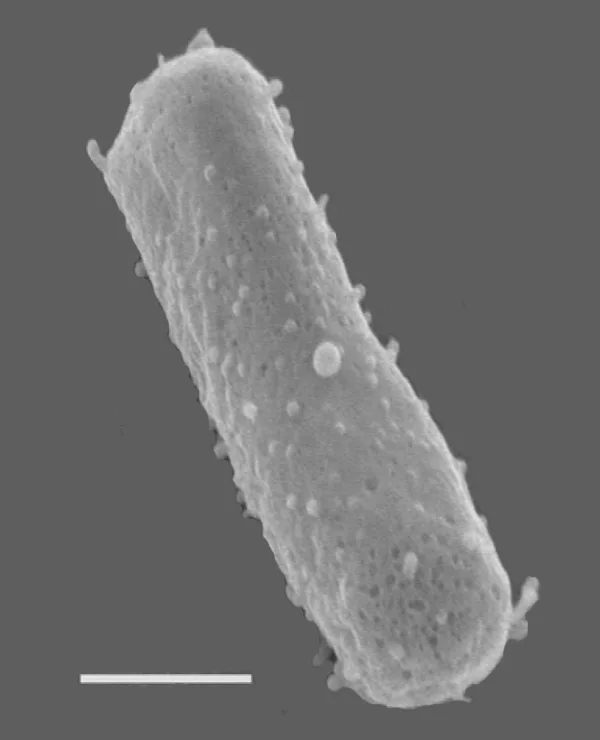
Source-identified Halobacterium salinarum; Source-identified documentary image; see the original file for method and context. Framed for display
Halobacterium salinarum · Helga Stan-Lotter and Sergiu Fendrihan. Photograph taken by Chris Frethem, University of Minnesota. · CC BY-SA 4.0

Group guide

Understanding Methanobacteriota

The phylum inside an archaeal kingdom

Methanobacteriota and Methanobacteriati refer to different levels in the adopted tree. Use the phylum name to find the organisms immediately grouped under this branch. Older literature often uses Euryarchaeota, and the organisms covered by that name depend on the classification.

Source for the phylum inside an archaeal kingdom ↗

More than one route to methane

Experiments with Methanosarcina barkeri show that the same organism can use different starting materials under different conditions, including acetate and methanol. Comparing mutants and growth media helped researchers separate the steps that conserve energy from those that supply material for building cells. The pathways observed in this archaeon need not all occur in a different methane producer.

Source for more than one route to methane ↗

Previous source record

Methanobacteriota · phylum · Original classification source

The original identifier and source were retained when adopting the dated NCBI backbone. Different sources may use different names, ranks or group circumscriptions.

Within this taxon

Published profiles

Source-identified Halobacterium salinarum; Source-identified documentary image; see the original file for method and context. Framed for display
Species · Halobacterium

Halobacterium salinarum

Halobacterium salinarum

Despite its historical genus name, Halobacterium salinarum is an archaeon. High-salt growth and light-sensitive membrane proteins make it a classic example of …

Source-identified Haloferax volcanii; Source-identified documentary image; see the original file for method and context. Framed for display
Species · Haloferax

Haloferax volcanii

Haloferax volcanii

Haloferax volcanii is a salt-loving archaeon used extensively in genetics and cell biology. Its tractable culture system and complete genome make it …

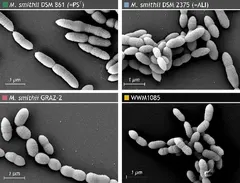
Source-identified Methanobrevibacter smithii; Source-identified documentary image; see the original file for method and context. Framed for display
Species · Methanobrevibacter

Methanobrevibacter smithii

Methanobrevibacter smithii

Methanobrevibacter smithii is a methane-producing archaeon associated with the human intestinal community. It consumes products generated by other microbes, placing its metabolism …

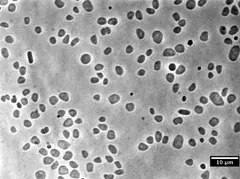
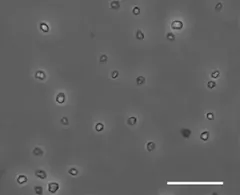
Source-identified Methanocaldococcus jannaschii; Light micrograph of cultured cells; source scale bar retained. Framed for display
Species · Methanocaldococcus

Methanocaldococcus jannaschii

Methanocaldococcus jannaschii

Methanocaldococcus jannaschii is a heat-adapted, methane-producing archaeon first isolated from a submarine hydrothermal vent. It belongs to Archaea, a domain distinct from …

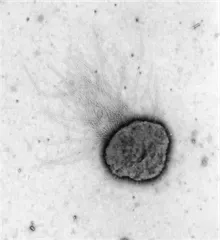
Source-identified Methanococcus maripaludis; Electron micrograph showing a cell and appendages. Framed for display
Species · Methanococcus

Methanococcus maripaludis

Methanococcus maripaludis

Methanococcus maripaludis is a methane-producing archaeon associated with marine sediment. It has become an important laboratory organism for understanding and modifying archaeal …

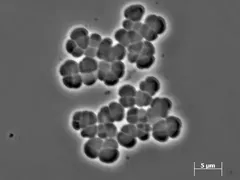
Source-identified Methanosarcina barkeri; Source-identified documentary image; see the original file for method and context. Framed for display
Species · Methanosarcina

Methanosarcina barkeri

Methanosarcina barkeri

Methanosarcina barkeri is an anaerobic archaeon with several routes to methane production. Its cells can form conspicuous aggregates, and its metabolic flexibility …

Species · Pyrococcus

Pyrococcus furiosus

Pyrococcus furiosus

Pyrococcus furiosus is a marine archaeon whose cells grow without oxygen at temperatures close to the boiling point of water. Its type …