 Living Beings
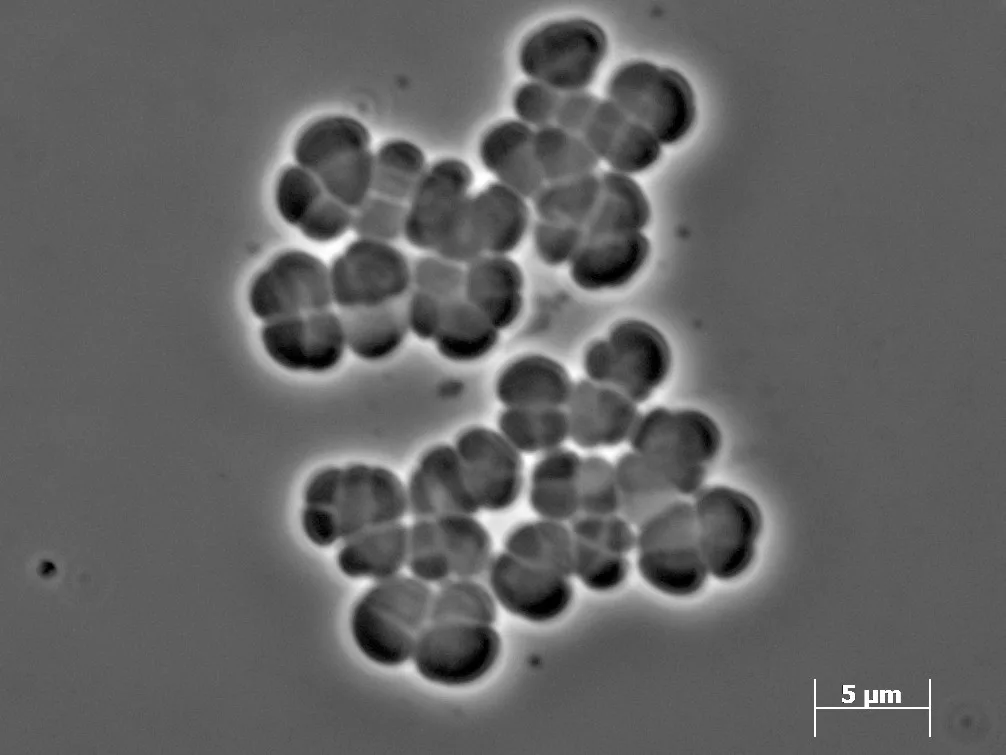
Methanosarcina barkeri MS.jpg · Resized and converted to WebP for display. Source-identified documentary image; see the original file for method and context. AI-generated illustration. Microvenator · CC BY-SA 4.0

Field guide · species
Methanosarcina barkeri
Schnellen 1947 (Approved Lists 1980) emend. Bryant and Boone 1987
Methanosarcina barkeri is an anaerobic archaeon with several routes to methane production. Its cells can form conspicuous aggregates, and its metabolic flexibility distinguishes it from methanogens restricted to a narrower range of substrates.
Public research profile · final editorial review pending.
Tree of lifeScientific lineage
- LifeLife
- DomainArchaea
- KingdomMethanobacteriati
- PhylumMethanobacteriota
- ClassMethanomicrobia
- OrderMethanosarcinales
- FamilyMethanosarcinaceae
- GenusMethanosarcina
- SpeciesMethanosarcina barkeri
Advanced classification
Complete source lineage, including intermediate ranks. The standard view uses Life and the eight principal ranks.
- cellular organisms cellular root
- Archaea domain
- Methanobacteriati kingdom
- Methanobacteriota phylum
- Stenosarchaea group clade
- Methanomicrobia class
- Methanosarcinales order
- Methanosarcinaceae family
- Methanosarcina genus
- Methanosarcina barkeri species
Structure and identification
Rounded cells may occur in packets or aggregates. Growth conditions and strain identity influence cell-surface organization.
Scientific source 1 ↗ · Scientific source 2 ↗ · Scientific source 3 ↗
Habitat and range
Oxygen-poor sediments and anaerobic digesters are documented habitats. A rumen-derived strain has also been characterized.
Scientific source 1 ↗ · Scientific source 2 ↗ · Scientific source 3 ↗
Nutrition and metabolism
Culture studies demonstrate growth with acetate, methanol or carbon dioxide under the appropriate experimental conditions. Substrate combinations, hydrogen availability and changes in medium acidity influence methanogenesis. A list of usable carbon sources therefore does not mean that each substrate supplies an identical or independent route to energy.
Biological activity
Aggregation changes contact with the surrounding medium and with neighboring cells.
Scientific source 1 ↗ · Scientific source 2 ↗ · Scientific source 3 ↗
Reproduction and life cycle
Cell division within growing populations can maintain or expand aggregates. These packets are not multicellular animals or fungal fruiting bodies.
Scientific source 1 ↗ · Scientific source 2 ↗ · Scientific source 3 ↗
Geographic distribution
Strain CM1 came from a ruminant setting, while other documented strains originate from sediments or digesters; these are distinct occurrence records.
Scientific source 1 ↗ · Scientific source 2 ↗ · Scientific source 3 ↗
Ecological role
Methanogenesis is a terminal process in anaerobic carbon breakdown and contributes methane to natural and managed systems.
Scientific source 1 ↗ · Scientific source 2 ↗ · Scientific source 3 ↗
Distinctive adaptations
Multiple methanogenic pathways allow use of contrasting substrate supplies.
Scientific source 1 ↗ · Scientific source 2 ↗ · Scientific source 3 ↗
Evidence
Sources
Connected life
Relationships
No reviewed ecological connections in the collection yet.
Explore network ↗