 Living Beings
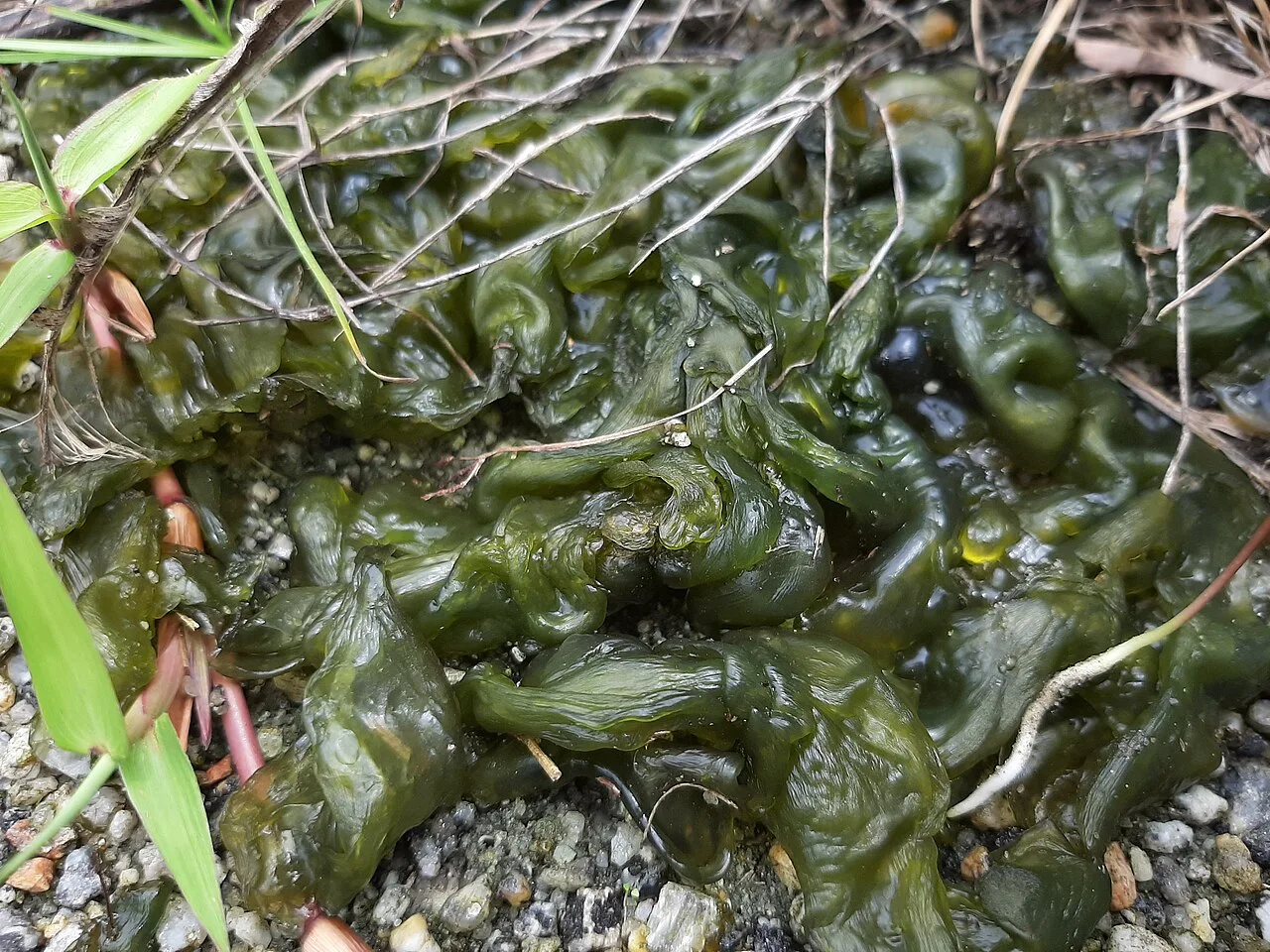
Nostoc commune star jelly.jpg · Resized and converted to WebP for display. Documentary organism photograph; source identification retained. AI-generated illustration. Jiaminglimjm · CC BY-SA 4.0

Field guide · species
Nostoc commune
Vaucher ex Bornet & Flahault, 1888
Nostoc commune is a terrestrial cyanobacterium that forms gelatinous colonies. Its striking ability to resume activity after drying makes it a useful organism for studying life under intermittent water supply.
Public research profile · final editorial review pending.
Tree of lifeScientific lineage
- LifeLife
- DomainBacteria
- KingdomBacillati
- PhylumCyanobacteriota
- ClassCyanophyceae
- OrderNostocales
- FamilyNostocaceae
- GenusNostoc
- SpeciesNostoc commune
Advanced classification
Complete source lineage, including intermediate ranks. The standard view uses Life and the eight principal ranks.
- cellular organisms cellular root
- Bacteria domain
- Bacillati kingdom
- Cyanobacteriota/Melainabacteria group clade
- Cyanobacteriota phylum
- Cyanophyceae class
- Nostocales order
- Nostocaceae family
- Nostoc genus
- Nostoc commune species
Structure and identification
The visible jelly-like mass is a colony containing many microscopic cells embedded in extracellular material. A colony is not a single large cell.
Habitat and range
Terrestrial colonies can alternate between wet and desiccated states as local conditions change.
Nutrition and metabolism
Photosynthesis captures light energy. Laboratory measurements track oxygen production as one sign that photosynthetic activity has recovered after rehydration.
Biological activity
Dry colonies can become metabolically inactive and resume measurable activity when water returns. Recovery is not unlimited and depends on storage conditions.
Reproduction and life cycle
The studied colonies persist through drying and rewetting rather than behaving like short-lived mushroom fruiting bodies.
Ecological role
Intermittent hydration makes the species relevant to understanding photosynthetic communities on surfaces exposed to drying.
Distinctive adaptations
Long-term storage experiments found better preservation under cold conditions than at room temperature. Such experimental survival should not be turned into a universal lifespan claim for every wild colony.
Evidence
Sources
- Nostoc commune · NCBI Taxonomy ↗www.ncbi.nlm.nih.gov
- Nostoc commune · Biological reference ↗pubmed.ncbi.nlm.nih.gov
Connected life
Relationships
No reviewed ecological connections in the collection yet.
Explore network ↗