 Living Beings
Compare species
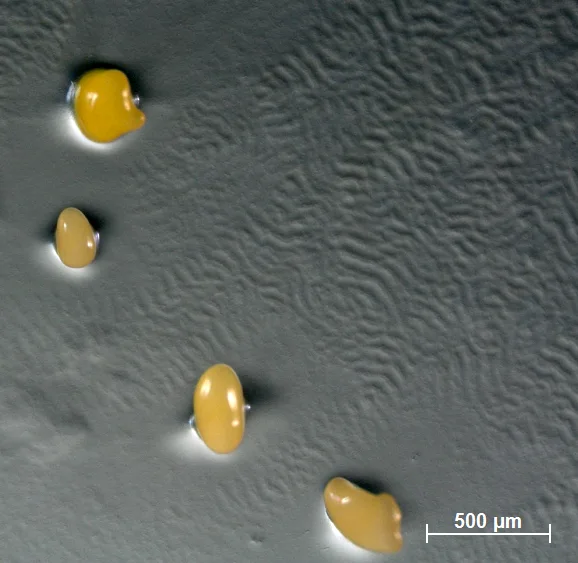
Myxococcus xanthus
Myxococcus xanthus
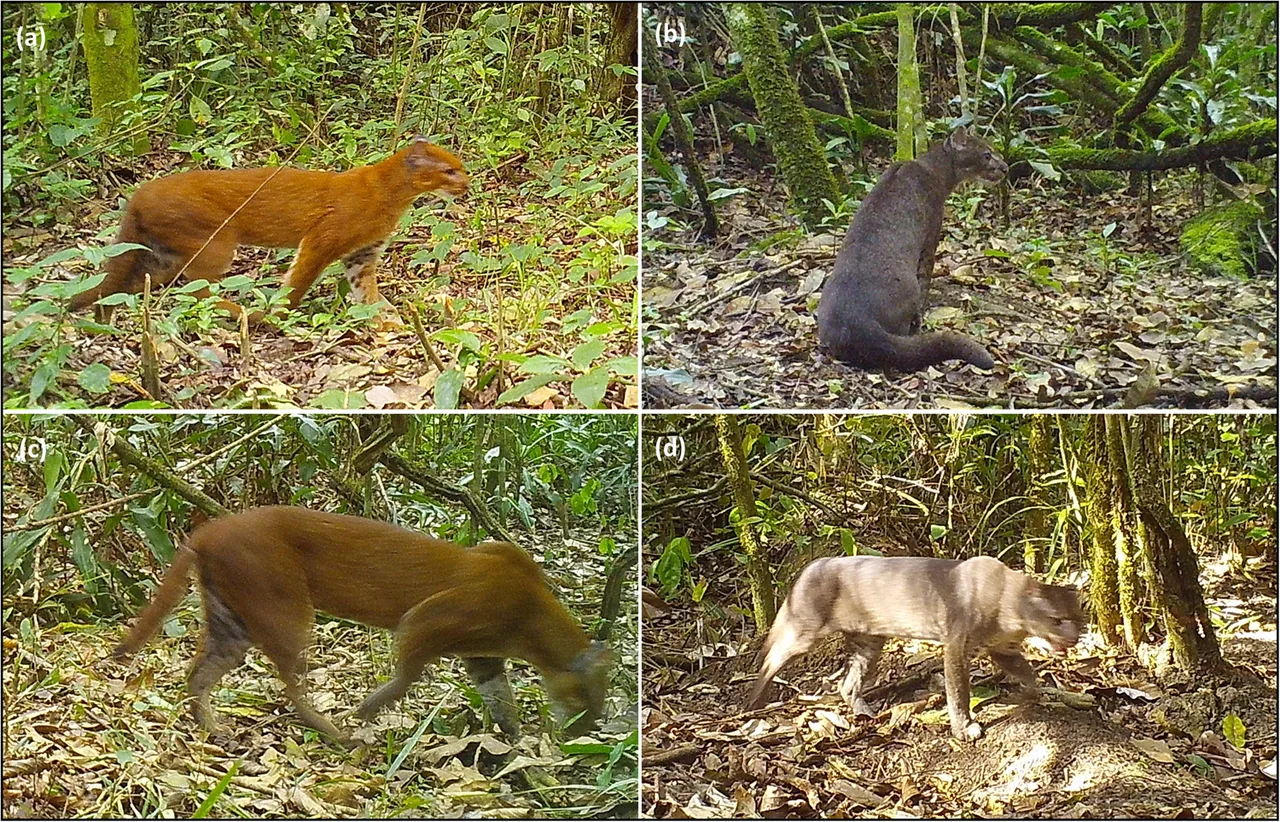
African Golden Cat
Caracal auratus
How to compare two organisms
Choose two species and trace their closest shared group. Then compare a trait with the same definition on each side. Check the units, life stage and context before interpreting a measurement or range.
Missing data means that the collection lacks a sourced value. Where a characteristic does not apply to a lineage, the comparison labels it separately. Open the two profiles for context and follow their sources before drawing a conclusion.
Evidence from the profiles
Compare their characteristics
| Trait | Myxococcus xanthus | African Golden Cat |
|---|---|---|
| Physical traits | Individual cells are microscopic rods. The yellowish aggregates and rippling patterns in culture arise from the coordinated behavior of many cells, not from a single giant bacterium. | The body is robust and the coat varies between reddish and grayish forms. Spotting can be more visible on some parts of the body. |
| Habitat and range | It is studied on surfaces and can be isolated from environmental material. Its behavior depends on contact with a substrate and neighboring cells. | Dense African forest and secondary growth provide cover and hunting habitat. |
| Diet and nutrition | Cells obtain nutrients by predation on other bacteria and by processing organic material released from prey. | Rodents and other forest mammals are important prey. Birds and additional small animals may also be taken. |
| Behavior and activity | Gliding, collective movement and rippling are experimentally observed features of the life cycle. The patterns reflect interactions among moving cells. | It is generally solitary and difficult to observe in dense cover. Sparse observations should not be treated as a complete account of its daily behavior. |
| Reproduction and life cycle | When conditions favor development, cells aggregate and differentiate into spores within fruiting bodies. Germination returns cells to the growing, motile state. | Data unavailable |
| Geographic distribution | Data unavailable | The Mammal Diversity Database v2.5 records this species in Angola, Cameroon, Central African Republic, Cote d'Ivoire, Democratic Republic of the Congo, Equatorial Guinea, Gabon, Ghana, Guinea, Liberia, Nigeria, Republic of the Congo, Sierra Leone, Uganda, Benin?, Burundi?, Gambia?, Guinea-Bissau?, Kenya?, Rwanda?, Senegal?, Sudan?, Togo?. |
| Ecological role | Predation changes microbial communities and recycles nutrients at a microscopic scale. | Data unavailable |
| Distinctive adaptations | Experiments disrupting polyphosphate metabolism impair movement, predation and development, illustrating how cellular chemistry supports collective behavior. | Data unavailable |
Classification
Shared ancestry
Closest shared taxon: cellular organisms.