 Living Beings
Compare species
Pyrococcus furiosus
Pyrococcus furiosus
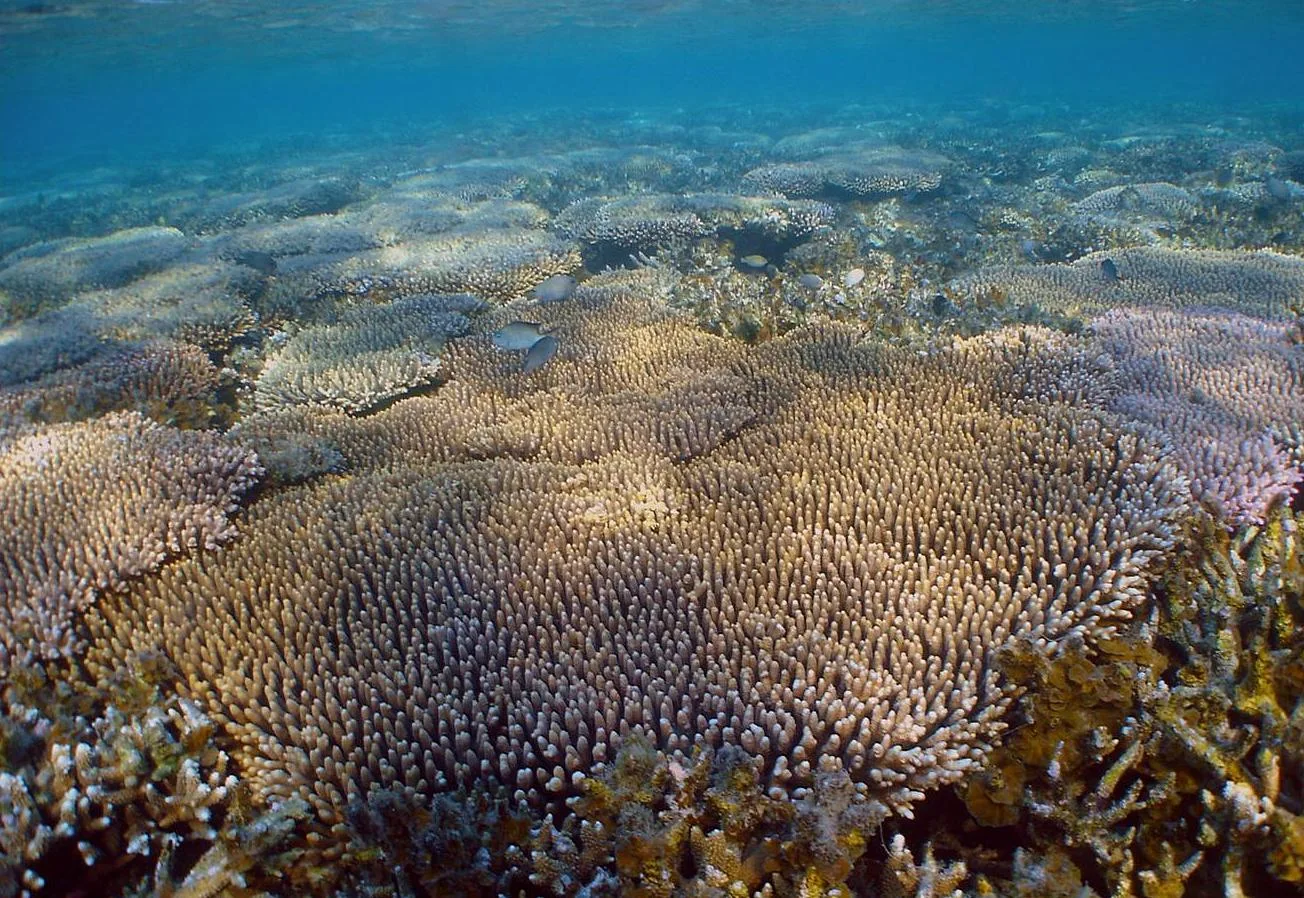
Acropora millepora
Acropora millepora
Evidence from the profiles
Compare their characteristics
| Trait | Pyrococcus furiosus | Acropora millepora |
|---|---|---|
| Physical traits | Cells are approximately rounded and require microscopy for direct observation. Molecular diagrams from the species do not depict whole cells. | Colonies form branching structures covered by small skeletal cups that house polyps. Colony color alone is insufficient for secure species identification. |
| Habitat and range | The authenticated type strain is associated with hot marine sediment. The DSMZ culture collection records Vulcano Island as its isolation locality and maintains it under anaerobic, high-temperature conditions. Such culture instructions document the needs of a particular laboratory strain; they are not a recommendation to treat every geothermal site as a confirmed occurrence. | Shallow, well-lit marine reef environments support the coral and its photosynthetic partners. |
| Diet and nutrition | The organism uses organic substrates rather than light as its energy source. Work summarized by Kengen distinguishes sugar fermentation from growth on proteins: sulfur requirements depend on the substrate and conditions. Fermentation of starch-derived sugars produces acetate, carbon dioxide and hydrogen. These specific metabolic observations are more useful than saying that every hyperthermophilic archaeon obtains energy in the same way. | Polyps capture small suspended food, while algal symbionts contribute photosynthetic products. |
| Behavior and activity | The 2017 account describes strong motility and rapid growth under favorable culture conditions. Those observations helped motivate the species name, but laboratory growth speed should not be treated as a constant rate in natural sediment. Temperature, substrate supply and gas conditions are part of the experimental setting. | Tentacles and mucus help the colony interact with surrounding seawater. Recognition mechanisms influence responses to microbes. |
| Reproduction and life cycle | Cells increase in number through division when conditions permit. Continuous-culture experiments maintained growth near 100 °C and measured gas production alongside dilution rate. Such experiments distinguish sustained cellular growth from the separate observation that an isolated enzyme remains active after heating. | Colonies grow by producing additional polyps. Sexual reproduction can release gametes that develop into settling larvae. |
| Geographic distribution | The type-strain record provides a definite natural locality at Vulcano, Italy. International collections maintain descendants of that isolate, including DSM 3638 and JCM 8422. A culture housed in another country is not evidence that the species is native there, so this profile does not turn a catalogue of laboratory holdings into a world distribution map. | The species occurs in the Indo-Pacific reef region. Species-level locality records should accompany detailed range mapping. |
| Ecological role | Its metabolism demonstrates that organic carbon can be processed in hot, oxygen-free marine environments. The natural community contains organisms with different metabolic roles. Species-level observations should not be expanded into an unsupported food web or a claim that this archaeon dominates every hydrothermal habitat. | Skeletal growth contributes reef structure and habitat. Symbiotic interactions are central to energy supply and colony health. |
| Distinctive adaptations | Heat-compatible cellular machinery permits growth under conditions that disrupt many ordinary proteins. The type-strain catalogue also records production of the Pfu DNA polymerase used in research. Enzyme stability and whole-cell growth are related aspects of its biology, but the presence of a stable enzyme is not by itself proof that a cell survives any arbitrary temperature. | A colonial body and partnerships with photosynthetic cells support growth in well-lit reef environments. |
| Conservation | Data unavailable | Thermal stress, bleaching and degradation of reef habitat are concerns. A source on molecular recognition does not establish a current Red List category. |
Classification
Shared ancestry
Closest shared taxon: cellular organisms.
Sources from both profiles
Pyrococcus furiosus
- Pyrococcus furiosus · NCBI Taxonomy ↗
- Pyrococcus furiosus · Scientific account ↗
- Cultivation Techniques for Hyperthermophilic Archaebacteria: Continuous Culture of Pyrococcus furiosus at Temperatures near 100 degrees C ↗
- Pyrococcus furiosus DSM 3638 — authenticated type-strain catalogue ↗
- Pyrococcus furiosus JCM 8422 — type-strain catalogue ↗
- Pyrococcus furiosus, 30 years on ↗