 Living Beings
Compare species
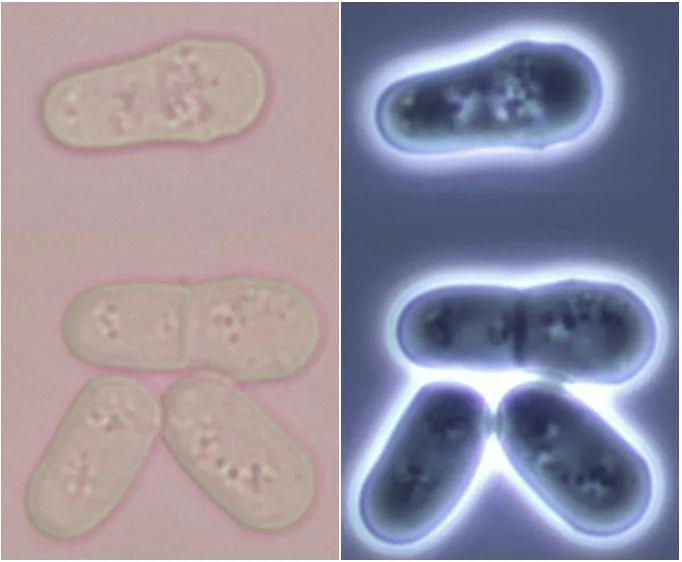
Fission Yeast
Schizosaccharomyces pombe
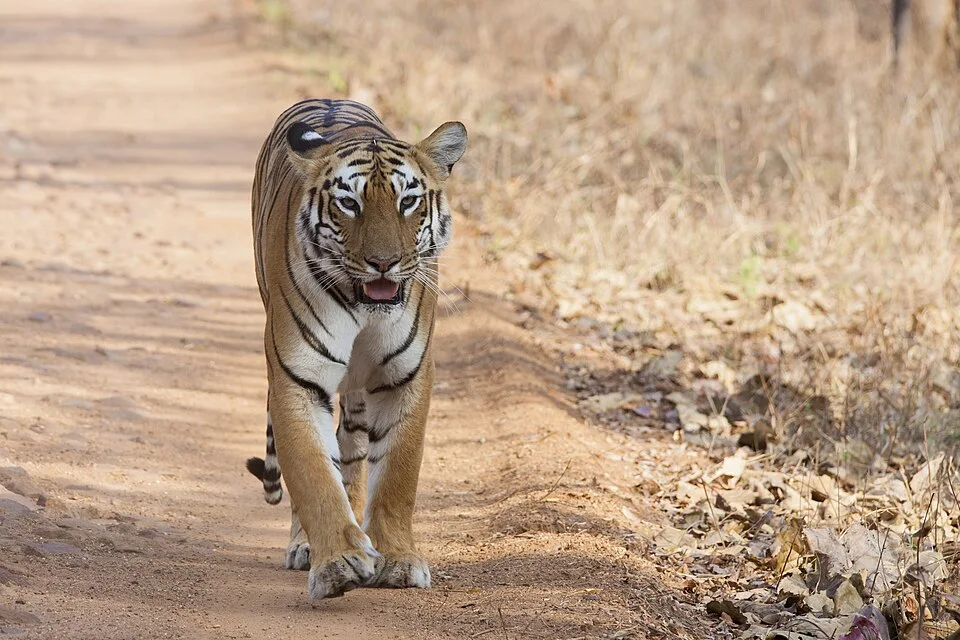
Tiger
Panthera tigris
Evidence from the profiles
Compare their characteristics
| Trait | Fission Yeast | Tiger |
|---|---|---|
| Nutrition | Data unavailable | Carnivorous Source ↗ |
| Social organization | Not applicable | Generally solitary Source ↗ |
| Physical traits | Cells are elongated, often with rounded ends. A dividing cell forms a transverse partition near its middle. | Dark stripes break up the tiger’s outline. Stripe patterns vary from one individual to another. |
| Habitat and range | The species has been recovered from fermentation-associated materials and is maintained on defined laboratory substrates. | Tigers live in varied habitats, including tropical forests, mangrove swamps and temperate forest. |
| Diet and nutrition | Organic nutrients, including sugars, support growth. Carbon source and nutrient availability influence physiology. | Tigers mainly hunt large mammals, including deer and wild pigs. |
| Behavior and activity | Cells extend at their tips and coordinate growth with nuclear division and septum formation. | A tiger usually hunts by stalking its prey and attacking at close range. |
| Reproduction and life cycle | Vegetative cells reproduce by fission. Mating and meiosis under suitable conditions lead to spore formation. | Data unavailable |
| Geographic distribution | Research and fermentation records occur in different regions, but these should not be treated as a complete map of natural populations. | Data unavailable |
| Ecological role | The fungus forms part of microbial communities associated with organic substrates and fermentation. | Data unavailable |
| Distinctive adaptations | A regular rod-shaped growth cycle has made changes in cell-cycle control experimentally observable. | Data unavailable |
Classification
Shared ancestry
Closest shared taxon: Opisthokonta.