Field guide · species

Sand Cat

Felis margarita

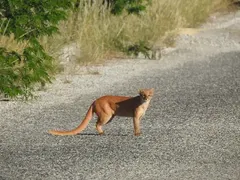
Radio tracking in the Moroccan Sahara shows how far a small sand cat may move beyond its daytime shelter.

Tree of lifeScientific lineage
  1. LifeLife
  2. DomainEukaryota
  3. KingdomAnimalia
  4. PhylumChordata
  5. ClassMammalia
  6. OrderCarnivora
  7. FamilyFelidae
  8. GenusFelis
  9. SpeciesFelis margarita

In brief

Habitat and range
Arid sandy and stony habitats are used. Vegetation and burrows can provide important local shelter. Source ↗
Geographic distribution
The Mammal Diversity Database v2.5 records this species in Algeria, Chad, Egypt, Iran, Iraq, Jordan, Kazakhstan, Kuwait, Mali, Mauritania, Morocco, Niger, Oman, Saudi Arabia, Sudan, Syria,… Source ↗
Diet and nutrition
Small mammals, reptiles and other desert animals are hunted according to availability. Source ↗

Scientific measurements

Head and body length

0.39–0.52 m

Reported range

Source and measurement context

The group reports this range for body length separately from the tail. · ≈ 1.3–1.7 ft

Head and body, excluding the tail.

Original
39–52 cm
IUCN SSC Cat Specialist Group · Sand cat ↗ Description, Body Length

Physical traits

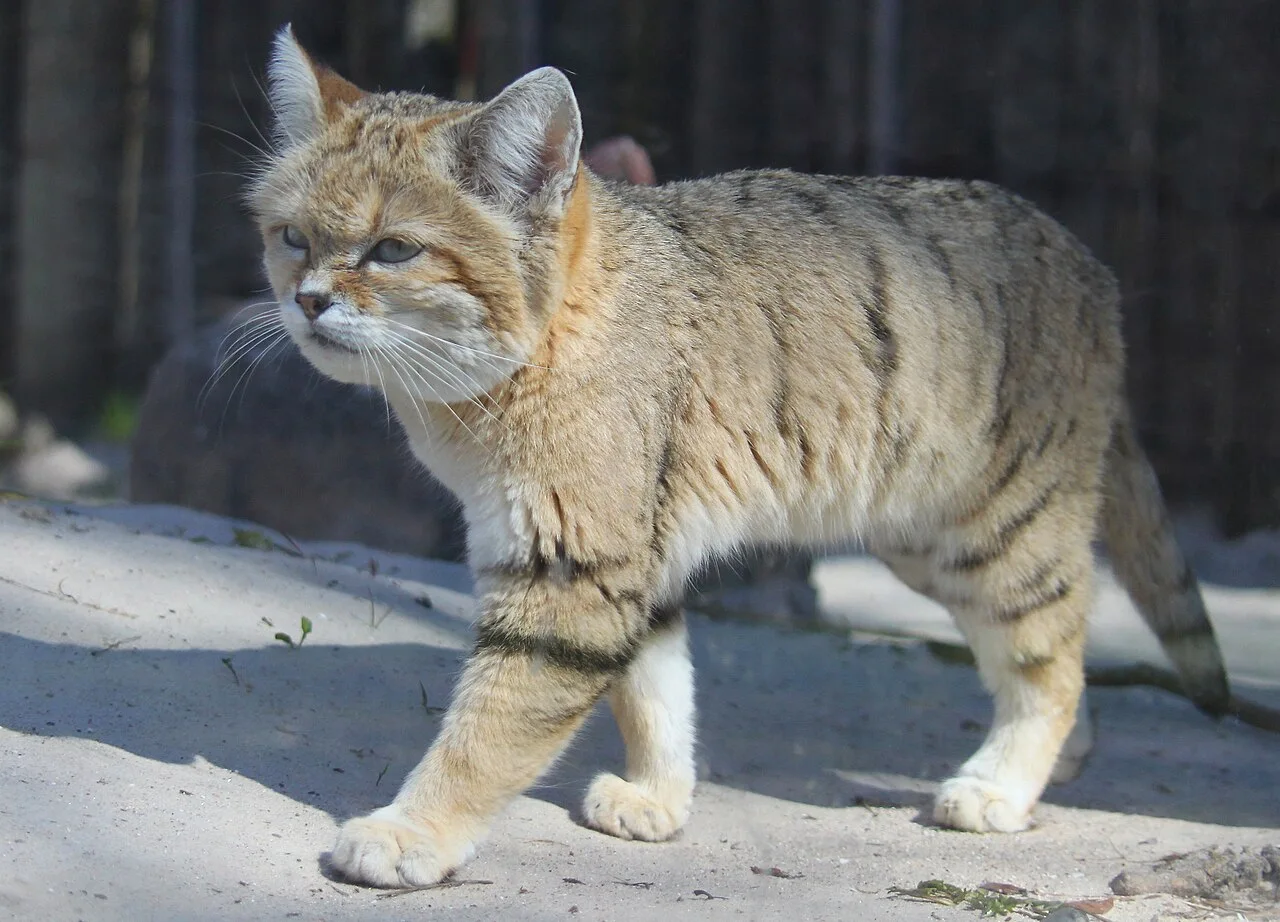
A pale coat and broad head with large, low-set ears help give it a distinctive appearance.

Scientific source 1 ↗ · Scientific source 2 ↗

Habitat and range

Arid sandy and stony habitats are used. Vegetation and burrows can provide important local shelter.

Scientific source 1 ↗ · Scientific source 2 ↗

Diet and nutrition

Small mammals, reptiles and other desert animals are hunted according to availability.

Scientific source 1 ↗ · Scientific source 2 ↗

Behavior and activity

Sand cats dig and use burrows for shelter. Activity and refuge use help them avoid the most demanding desert conditions.

Radio tracking in the Moroccan Sahara revealed how difficult it is to describe the space a sand cat uses from a single encounter. Researchers followed 22 cats and obtained enough records to estimate ranges for ten of them. The animals covered large areas and some changed the areas they used during tracking. For a cat that spends part of its time sheltered in a burrow, the visible refuge represents only one part of its movements.

Scientific source 1 ↗ · Scientific source 2 ↗ · Scientific source 3 ↗

Geographic distribution

The Mammal Diversity Database v2.5 records this species in Algeria, Chad, Egypt, Iran, Iraq, Jordan, Kazakhstan, Kuwait, Mali, Mauritania, Morocco, Niger, Oman, Saudi Arabia, Sudan, Syria, Turkmenistan, United Arab Emirates, Uzbekistan, Israel?, Pakistan?, Qatar?, Yemen?.

Scientific source 1 ↗ · Scientific source 2 ↗

Distinctive adaptations

Dense hair on the underside of a sand cat's feet covers the pads and insulates them against hot or cold ground. The bony chambers around the middle ears are relatively large for a small cat. The Cat Specialist Group connects this hearing anatomy with finding scattered prey, including animals below the sand.

Scientific source ↗

Evidence

Sources

Connected life

No reviewed ecological connections in the collection yet.