Field guide · species

Black-footed Cat

Felis nigripes

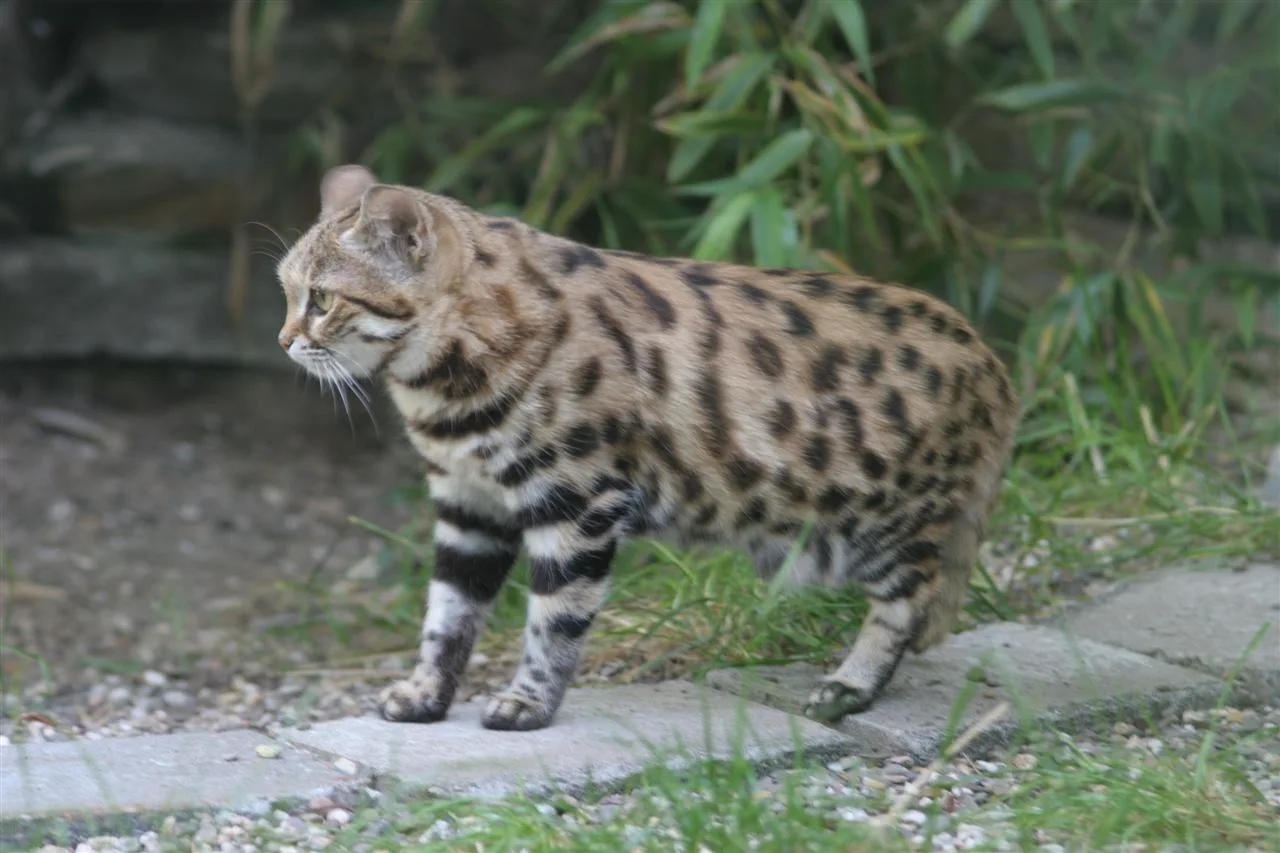
The black-footed cat is a small southern African hunter of open, dry country. It is a separate species from the domestic cat and should not be described as a domesticated or unusually colored household animal.

Tree of lifeScientific lineage
  1. LifeLife
  2. DomainEukaryota
  3. KingdomAnimalia
  4. PhylumChordata
  5. ClassMammalia
  6. OrderCarnivora
  7. FamilyFelidae
  8. GenusFelis
  9. SpeciesFelis nigripes

In brief

Habitat and range
Dry grassland and savanna provide hunting habitat, with existing holes and sheltered spaces used as refuges. Source ↗
Geographic distribution
The Mammal Diversity Database v2.5 records this species in Botswana, Namibia, South Africa, Angola?, Eswatini?, Lesotho?, Zimbabwe?. Source ↗
Diet and nutrition
Small mammals and birds make up much of its prey. The species hunts numerous small animals rather than relying on large kills. Source ↗

Scientific measurements

Head and body length

0.37–0.52 m

Reported range

Source and measurement context

The group reports this range for body length. Tail length is recorded separately. · ≈ 1.2–1.7 ft

Head and body, excluding the tail.

Original
37–52 cm
IUCN SSC Cat Specialist Group · Black-footed cat ↗ Description, Body Length

Physical traits

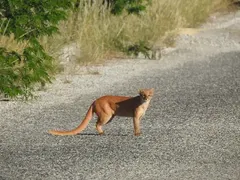
Dark spots and bands break up a pale brown coat. Dark foot markings contribute to the common name.

Scientific source 1 ↗ · Scientific source 2 ↗

Habitat and range

Dry grassland and savanna provide hunting habitat, with existing holes and sheltered spaces used as refuges.

Scientific source 1 ↗ · Scientific source 2 ↗

Diet and nutrition

Small mammals and birds make up much of its prey. The species hunts numerous small animals rather than relying on large kills.

Scientific source 1 ↗ · Scientific source 2 ↗

Behavior and activity

Individuals are largely solitary, meeting for breeding or in mother–young associations. Much hunting takes place at night.

The South African National Biodiversity Institute describes several ways black-footed cats hunt. A cat may move quickly through vegetation to flush prey, search slowly for movement, or wait at the entrance to a rodent burrow. The last tactic uses an existing opening as an ambush point and can bring a hidden animal within reach.

Scientific source 1 ↗ · Scientific source 2 ↗ · Scientific source 3 ↗

Geographic distribution

The Mammal Diversity Database v2.5 records this species in Botswana, Namibia, South Africa, Angola?, Eswatini?, Lesotho?, Zimbabwe?.

Scientific source 1 ↗ · Scientific source 2 ↗

Evidence

Sources

Connected life

No reviewed ecological connections in the collection yet.