Living Beings

 Framed for display
Species · Octopus
Common Octopus
Octopus vulgaris
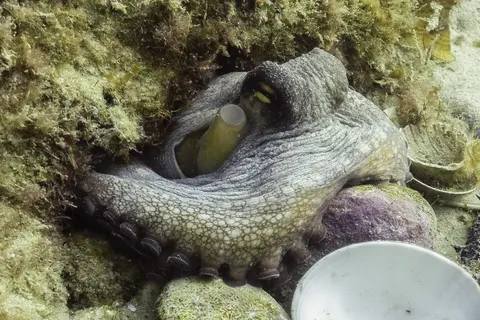
Eight flexible arms, a soft body and rapidly changing skin make the common octopus an effective coastal predator. The name once covered …
Field guide · species
Octopus cyanea Gray, 1849
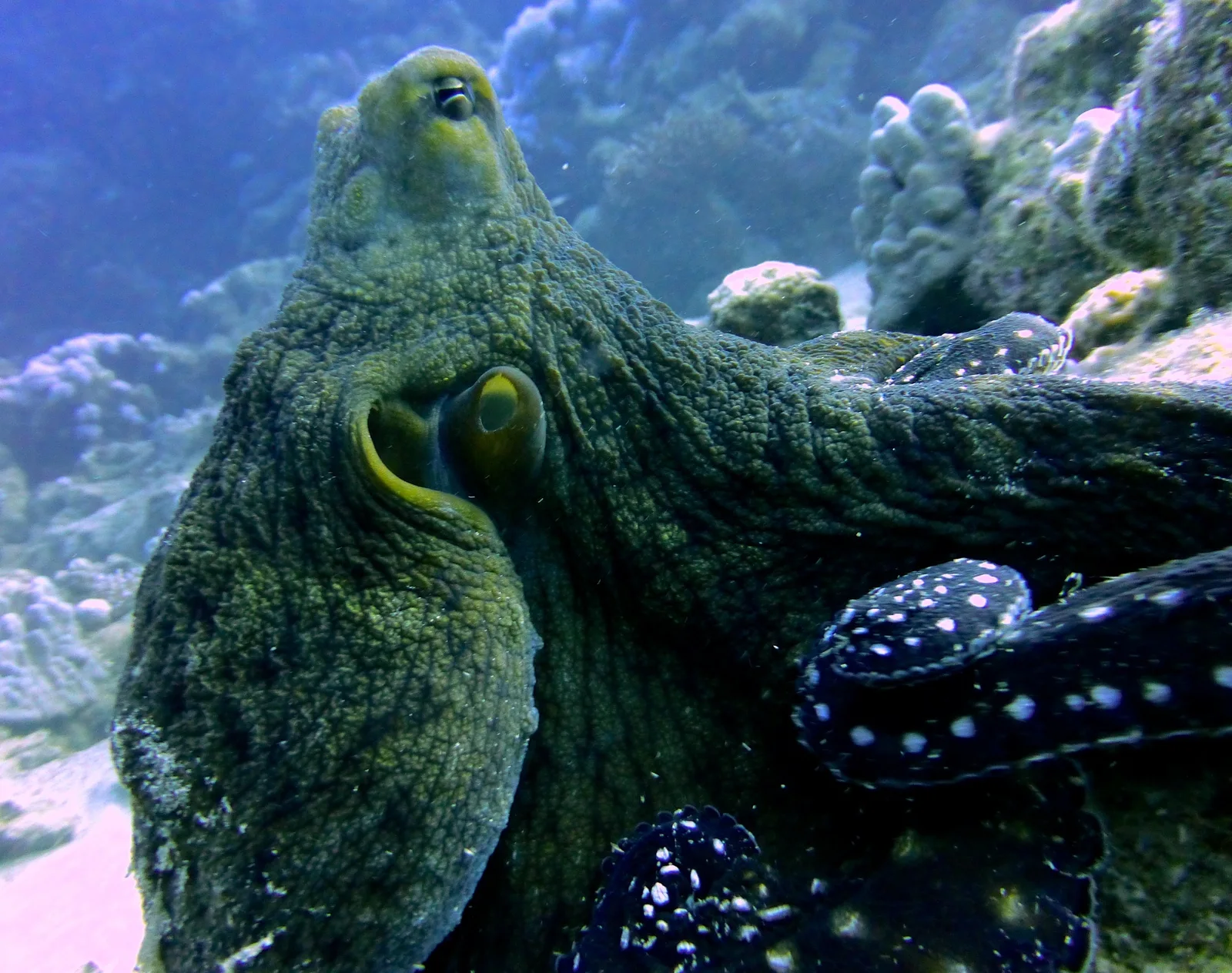
The day octopus is a reef-dwelling cephalopod of the tropical Indo-Pacific. Unlike many octopuses that hunt mainly at night, it often searches for prey in daylight.
Public research profile · final editorial review pending.
Complete source lineage, including intermediate ranks. The standard view uses Life and the eight principal ranks.
Eight flexible, sucker-bearing arms surround the mouth. Rapid changes in skin color and texture help the animal blend with complex reef surfaces.
Coral and rocky reefs offer crevices for shelter and varied surfaces over which to forage. A den can serve as a retreat between hunting excursions.
Crustaceans, molluscs and fish are among its prey. Flexible arms explore places that a rigid-bodied predator cannot easily reach.
Individuals are generally solitary. Crawling and camouflage support hunting; an ink release can help an octopus escape a threat.
The female guards and tends her eggs. Brood care involves reduced or absent feeding, and reproduction is followed by the end of the adult female’s life.
Native to tropical Indo-Pacific waters. Its reef habitat includes both exposed surfaces and protected holes.
A soft body, grasping suckers and adjustable skin appearance make it an effective hunter in a structurally complex environment.
Shared classification
Framed for display
Octopus vulgaris
Eight flexible arms, a soft body and rapidly changing skin make the common octopus an effective coastal predator. The name once covered …
Evidence
Connected life
No reviewed ecological connections in the collection yet.
Explore network ↗