Living Beings

 Framed for display
Species · Octopus
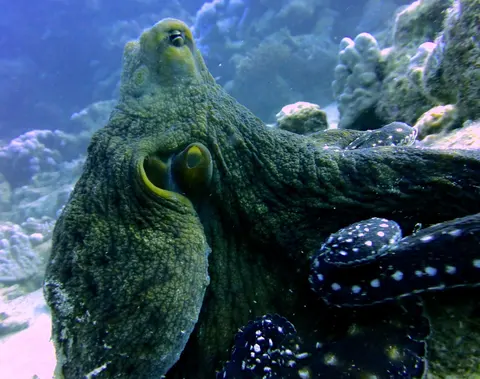
Day Octopus
Octopus cyanea
The day octopus is a reef-dwelling cephalopod of the tropical Indo-Pacific. Unlike many octopuses that hunt mainly at night, it often searches …
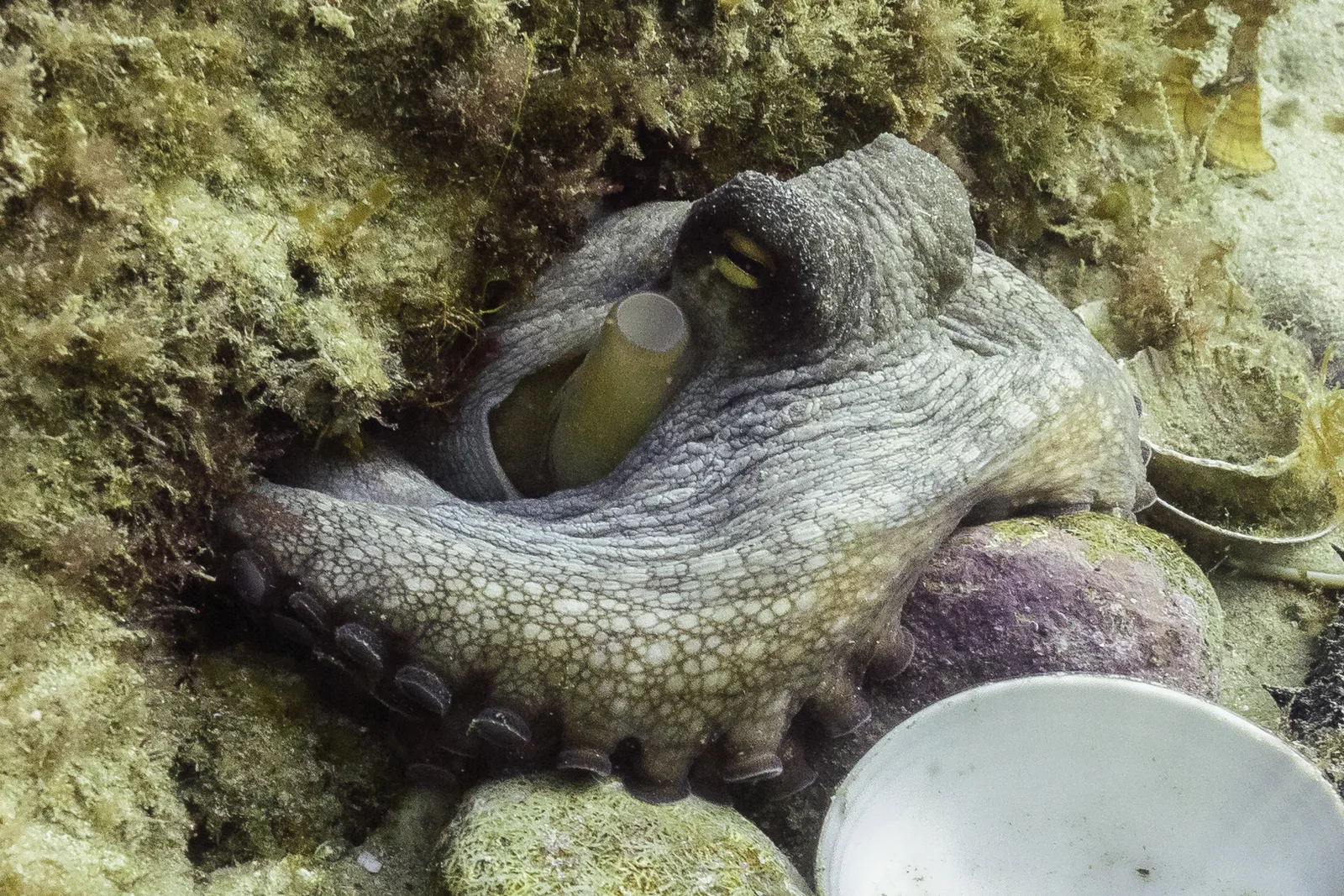
Pulpo común (Octopus vulgaris), Parque natural de la Arrábida, Portugal, 2020-07-31, DD 111.jpg · Resized and converted to WebP for display. Documentary organism photograph. AI-generated illustration. Diego Delso · CC BY-SA 4.0
Field guide · species
Octopus vulgaris Cuvier, 1797
Eight flexible arms, a soft body and rapidly changing skin make the common octopus an effective coastal predator. The name once covered a broader species complex; this profile distinguishes the eastern Atlantic and Mediterranean species concept.
Public research profile · final editorial review pending.
Complete source lineage, including intermediate ranks. The standard view uses Life and the eight principal ranks.
Suckers line the arms, which surround the mouth. Skin color and texture can change, so a single color pattern is not a secure species diagnosis.
Scientific source 1 ↗ · Scientific source 2 ↗ · Scientific source 3 ↗
Rocky shores, reefs and other coastal seabeds provide crevices and shelters. Soft-bottom areas can also be used.
Scientific source 1 ↗ · Scientific source 2 ↗ · Scientific source 3 ↗
Molluscs, crustaceans and other animal prey are captured with the arms and processed with the beak.
Scientific source 1 ↗ · Scientific source 2 ↗ · Scientific source 3 ↗
Individuals shelter in dens and explore using touch, vision and chemical cues. Learning changes responses to food and shelter.
Scientific source 1 ↗ · Scientific source 2 ↗ · Scientific source 3 ↗
Females tend attached egg strings in protected shelters. Small hatchlings enter a planktonic phase before settling into benthic life.
Scientific source 1 ↗ · Scientific source 2 ↗ · Scientific source 3 ↗
The restricted species concept is associated with the eastern Atlantic and Mediterranean. Older global records may represent related species and need reassessment.
Scientific source 1 ↗ · Scientific source 2 ↗ · Scientific source 3 ↗
Octopuses consume benthic animals and are themselves prey for larger marine predators.
Scientific source 1 ↗ · Scientific source 2 ↗ · Scientific source 3 ↗
Camouflage, flexible arms and jet-assisted escape provide several ways to handle threats.
Scientific source 1 ↗ · Scientific source 2 ↗ · Scientific source 3 ↗
Fishing pressure must be evaluated against local populations and the correct species identity; records from the entire historical complex cannot simply be pooled.
Scientific source 1 ↗ · Scientific source 2 ↗ · Scientific source 3 ↗
Shared classification
Framed for display
Octopus cyanea
The day octopus is a reef-dwelling cephalopod of the tropical Indo-Pacific. Unlike many octopuses that hunt mainly at night, it often searches …
Evidence
Connected life
No reviewed ecological connections in the collection yet.
Explore network ↗