 Living Beings

 Framed for display
Species · Octopus
Common Octopus
Octopus vulgaris
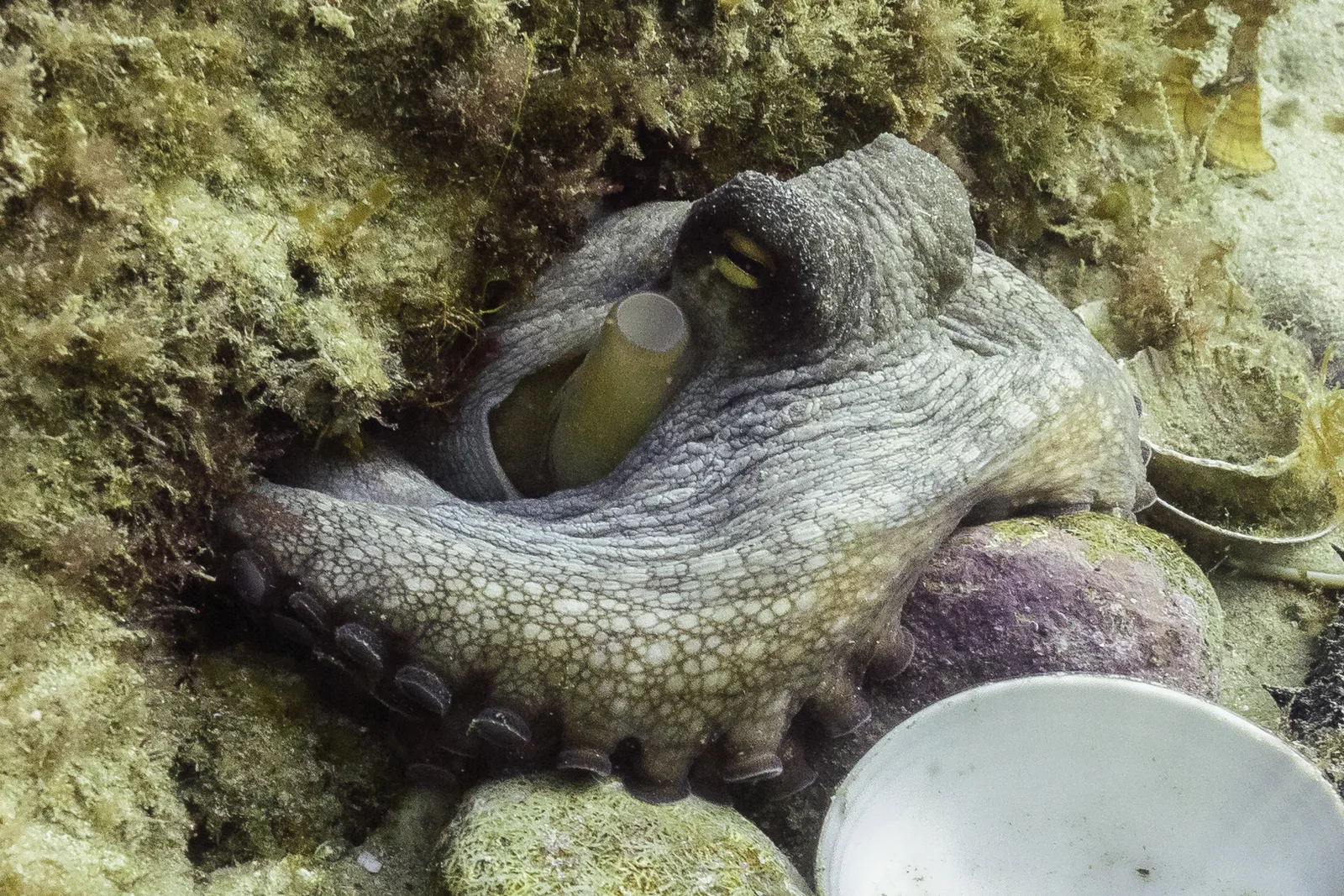
Eight flexible arms, a soft body and rapidly changing skin make the common octopus an effective coastal predator. The name once covered …
Genus · Scientific classification
Octopus includes the common octopus and the day octopus. The appearance of a single animal often gives only part of the identification.
 Framed for display
Explore broader group · Octopodidae ↗
NCBI Taxonomy (2026-11-05 reconciled backbone) · Taxon source ↗
Group guide
In northeastern Pacific Octopus, researchers compared relative arm lengths, gill features and DNA. In that sample, looking at several features together helped distinguish species. The common octopus name has also been used for multiple similar lineages.
Source for what specimens can tell us ↗The day octopus forages around tropical reefs and sometimes leaves prey remains in piles around dens. Its use of that habitat is a species example. Follow its profile to see the evidence tied to the animal itself.
Source for a tropical example in the catalog ↗Within this taxon
Framed for display
Octopus vulgaris
Eight flexible arms, a soft body and rapidly changing skin make the common octopus an effective coastal predator. The name once covered …
 Framed for display
Octopus cyanea
The day octopus is a reef-dwelling cephalopod of the tropical Indo-Pacific. Unlike many octopuses that hunt mainly at night, it often searches …