Field guide · species

Fishing Cat

Prionailurus viverrinus

The fishing cat is a sturdy wetland-associated felid. Its name reflects an important part of its diet, but it should not be read as a claim that the animal eats nothing except fish.

Tree of lifeScientific lineage
  1. LifeLife
  2. DomainEukaryota
  3. KingdomAnimalia
  4. PhylumChordata
  5. ClassMammalia
  6. OrderCarnivora
  7. FamilyFelidae
  8. GenusPrionailurus
  9. SpeciesPrionailurus viverrinus

In brief

Habitat and range
Marshes, swamps and vegetated river or wetland margins are important habitats. Source ↗
Geographic distribution
The Mammal Diversity Database v2.5 records this species in Bangladesh, Cambodia, India, Myanmar, Nepal, Pakistan, Sri Lanka, Thailand, Indonesia?, Vietnam?. Source ↗
Diet and nutrition
Fish are prominent foods; other animals encountered around wetlands may also be taken. Source ↗

Scientific measurements

Head and body length

0.65–0.85 m

Reported range

Source and measurement context

The species description notes smaller females. Its tail contributes no length to this measure. · ≈ 2.1–2.8 ft

Head and body, excluding the tail.

Original
65–85 cm
IUCN SSC Cat Specialist Group · Fishing cat ↗ Description, Body Length

Physical traits

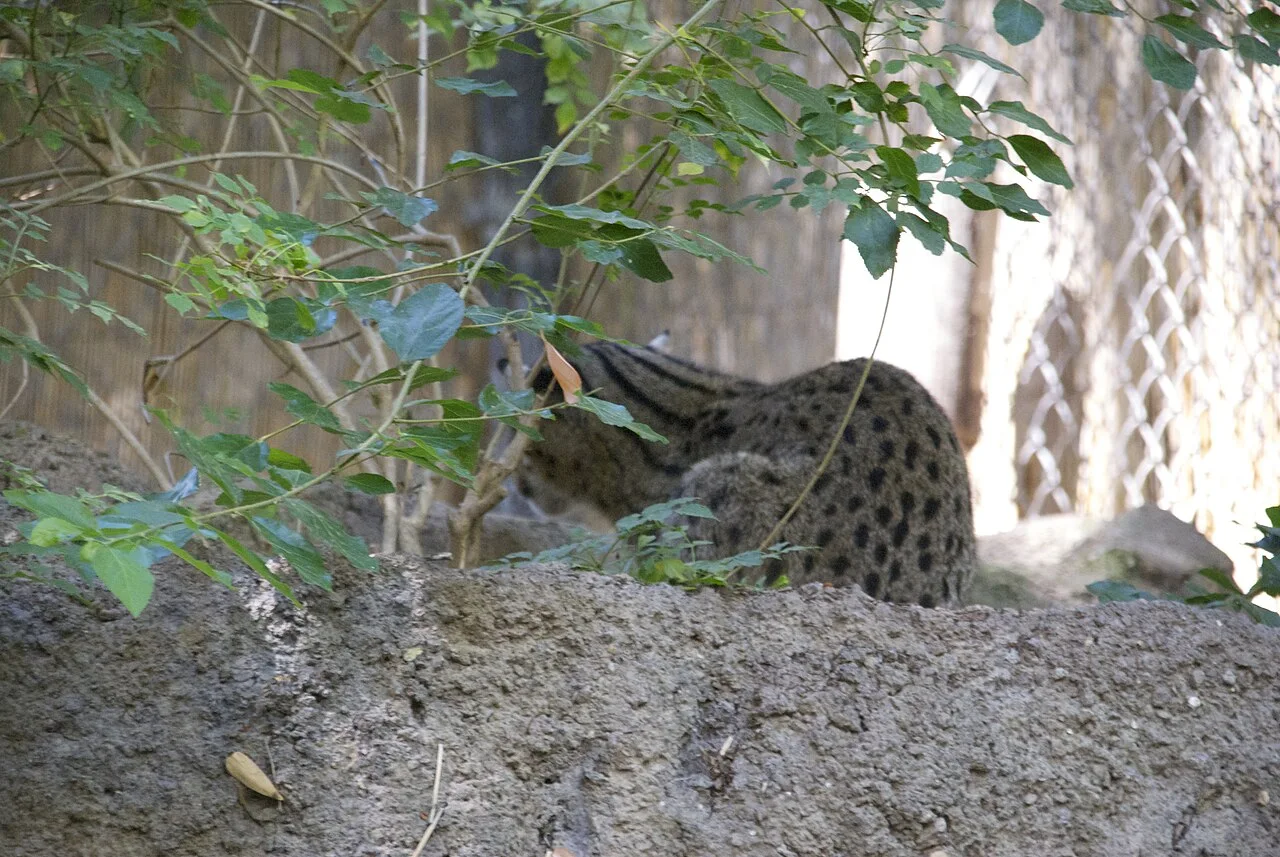
A robust body, short limbs and relatively short tail distinguish its shape.

Scientific source 1 ↗ · Scientific source 2 ↗

Habitat and range

Marshes, swamps and vegetated river or wetland margins are important habitats.

Evidence from an urban wetland is useful for showing that the cat can use a modified landscape. The occurrence of an animal there leaves questions about prey, water conditions, disturbance and long-term survival. Those questions need more than a presence record.

Scientific source 1 ↗ · Scientific source 2 ↗ · Scientific source 3 ↗

Diet and nutrition

Fish are prominent foods; other animals encountered around wetlands may also be taken.

Scientific source 1 ↗ · Scientific source 2 ↗

Behavior and activity

Fishing cats forage at water edges and can enter water. Wetland structure and accessible prey are central to this hunting environment.

Scientific source 1 ↗ · Scientific source 2 ↗

Reproduction and life cycle

Mating has been reported in the Indian Sundarbans around the end of February and beginning of March. The Cat Specialist Group summarizes gestation as roughly two months and litters as generally one to three kittens. The field observation supplies a local record of the timing, while the account leaves seasonality elsewhere open.

Scientific source ↗

Geographic distribution

The Mammal Diversity Database v2.5 records this species in Bangladesh, Cambodia, India, Myanmar, Nepal, Pakistan, Sri Lanka, Thailand, Indonesia?, Vietnam?.

Scientific source 1 ↗ · Scientific source 2 ↗

Ecological role

Wetlands near cities can support wildlife and expose it to materials from human activity. Researchers studying fishing cats in urban wetlands reported plastic in scat and considered whether prey could transfer it to predators. The observations document exposure in the sampled setting. They do not establish a global rate for the species.

Scientific source ↗

Evidence

Sources

Connected life

No reviewed ecological connections in the collection yet.