 Living Beings

 Framed for display
Species · Canis
Ethiopian Wolf
Canis simensis
The Ethiopian wolf is a specialized hunter of highland rodents. Its ecological niche differs from that of wolves that regularly cooperate to …
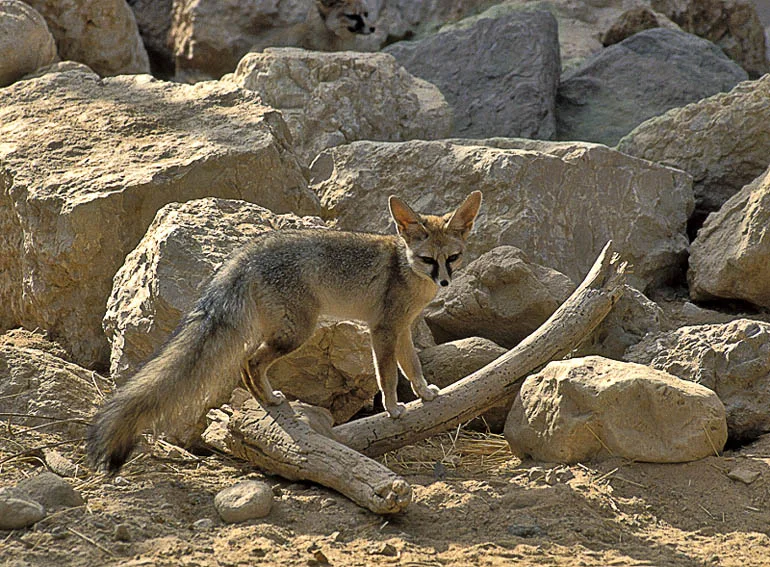
Blandford's fox 1.jpg · Resized and converted to WebP for display. Eyal Bartov · CC BY-SA 3.0
Field guide · species
Vulpes cana
Blanford’s fox is a small canid associated with steep, dry terrain. Its feeding ecology includes substantial insect and fruit use, contrasting with a purely meat-eating stereotype of foxes.
Large ears and a long, bushy tail accompany a small, lightly built body.
Rocky slopes, cliffs and canyons provide cover and movement routes.
Insects and fruits are important foods, with the exact combination depending on local resources.
A field study in Israel found that invertebrates and fruit contributed substantially to the diet of Blanford's foxes. The result helps explain why searching for tracks or prey remains alone would give an incomplete picture of feeding. The availability of different fruit and arthropods can change the mix from one locality to another.
Scientific source 1 ↗ · Scientific source 2 ↗ · Scientific source 3 ↗
It commonly forages alone at night. The rough landscape provides sheltered resting places and access to dispersed foods.
The Mammal Diversity Database v2.5 records this species in Afghanistan, Egypt, Iran, Israel, Jordan, Oman, Pakistan, Palestine, Saudi Arabia, Tajikistan, Turkmenistan, United Arab Emirates, Yemen, Uzbekistan?.
Shared classification
Framed for display
Canis simensis
The Ethiopian wolf is a specialized hunter of highland rodents. Its ecological niche differs from that of wolves that regularly cooperate to …
 Framed for display
Canis rufus
The red wolf is a North American wolf with a complex conservation and taxonomic history. It should not be reduced to a …
 Framed for display
Lycaon pictus
Botswana field observations show how pack members’ signals help determine when African wild dogs leave a resting site.
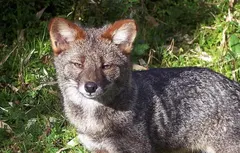 Framed for display
Lycalopex fulvipes
Darwin’s fox is a forest-associated Chilean canid with a restricted distribution. Its natural history differs from the open-country image commonly associated with …
Evidence
Connected life
No reviewed ecological connections in the collection yet.