 Living Beings

 Framed for display
Species · Ignicoccus
Ignicoccus hospitalis
Ignicoccus hospitalis
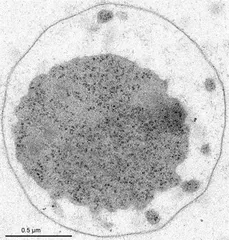
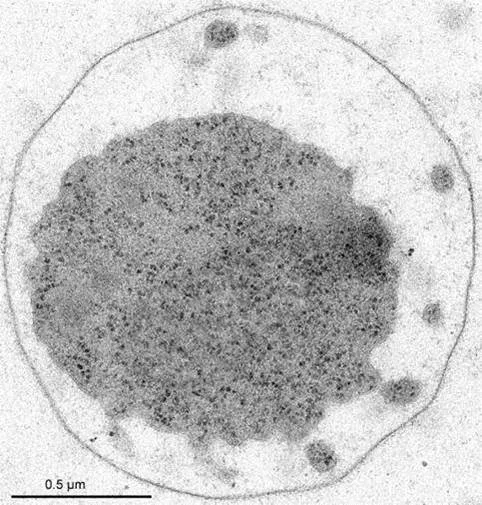
Ignicoccus hospitalis is a heat-loving archaeon with an unusual cell envelope. It is especially well known as a host for the much …
Kingdom · Scientific classification
Thermoproteati includes archaeal lineages from hot acidic springs and lineages that use ammonia in the ocean.
 Framed for display
Explore broader group · Archaea ↗
NCBI Taxonomy (2026-11-05 reconciled backbone) · Taxon source ↗
Group guide
Thermoproteati is a kingdom in the adopted archaeal tree. Its published name reflects a grouping of several archaeal lineages. The similar-looking name Thermoproteota identifies a phylum. Check the rank when comparing the source tree with older literature that uses names such as Crenarchaeota.
Source for a kingdom with varied environments ↗Sulfolobus acidocaldarius grows in hot, acidic spring environments. Its genome has been studied as a model for how an archaeon works under these conditions. The marine Nitrosopumilus in this branch gives a very different example of where these archaea can live.
Source for two routes through archaeal ecology ↗Culturing Nitrosopumilus maritimus showed that a marine archaeon can obtain energy by oxidizing ammonia. The reaction produces nitrite. It helps explain a step in marine nitrogen cycling that cannot be inferred merely from a cell's shape or its taxonomic rank.
Source for ammonia oxidation in a marine member ↗Within this taxon
Framed for display
Ignicoccus hospitalis
Ignicoccus hospitalis is a heat-loving archaeon with an unusual cell envelope. It is especially well known as a host for the much …
 Framed for display
Nitrosopumilus maritimus
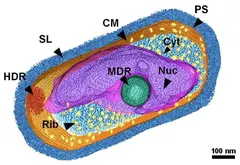
Nitrosopumilus maritimus helped overturn the idea that cultivated Archaea were confined to extreme habitats. This marine archaeon obtains energy by oxidizing ammonia …
 Framed for display
Saccharolobus solfataricus
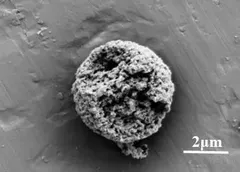
Saccharolobus solfataricus is a heat- and acid-adapted archaeon formerly classified as Sulfolobus solfataricus. Genome research on strain P2 and later taxonomic work …
 Framed for display
Sulfolobus acidocaldarius
Sulfolobus acidocaldarius is an aerobic archaeon of hot, acidic terrestrial environments. The genome study of strain DSM639 reports optimal growth around 80 …