 Living Beings
Compare species
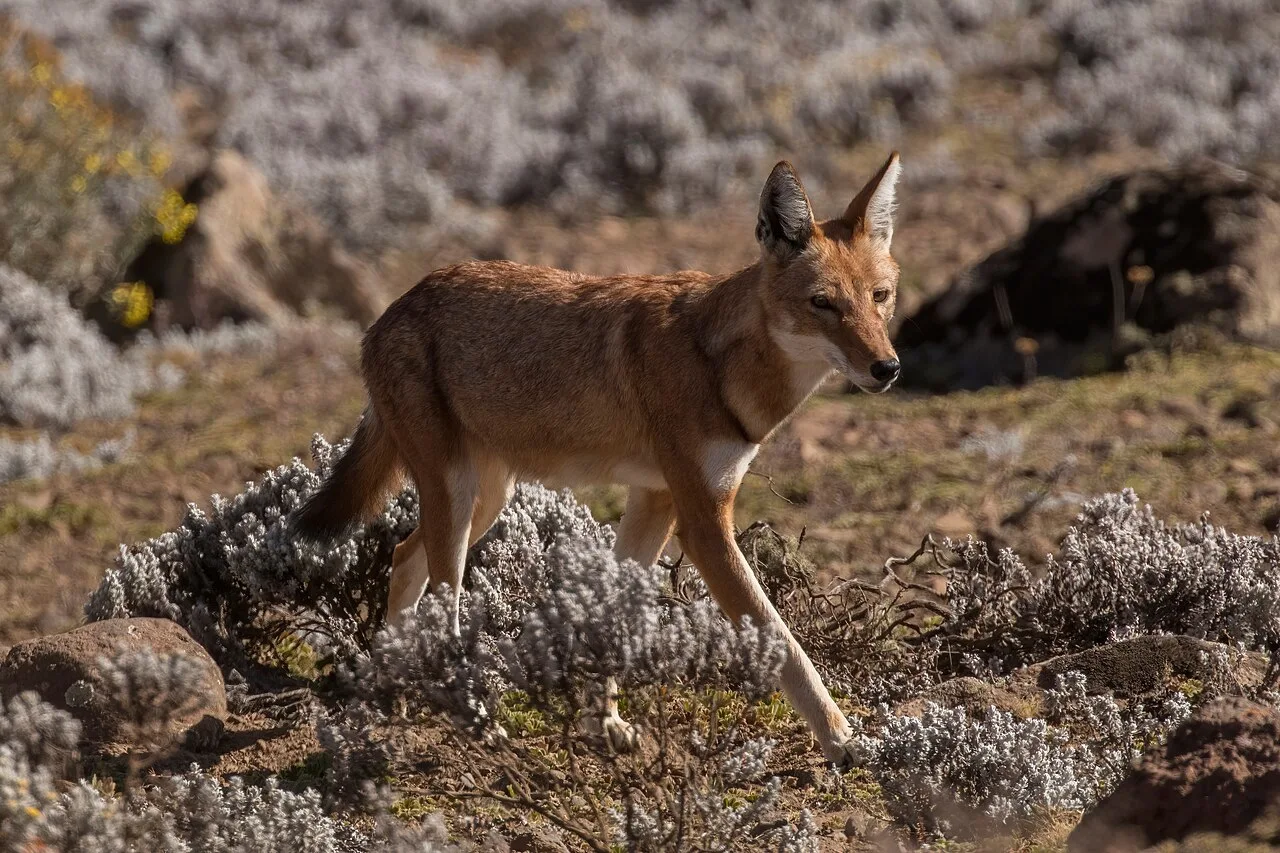
Ethiopian Wolf
Canis simensis

African Baobab
Adansonia digitata
How to compare two organisms
Choose two species and trace their closest shared group. Then compare a trait with the same definition on each side. Check the units, life stage and context before interpreting a measurement or range.
Missing data means that the collection lacks a sourced value. Where a characteristic does not apply to a lineage, the comparison labels it separately. Open the two profiles for context and follow their sources before drawing a conclusion.
Evidence from the profiles
Compare their characteristics
| Trait | Ethiopian Wolf | African Baobab |
|---|---|---|
| Physical traits | Long legs, a narrow muzzle and reddish fur contrasting with pale markings are characteristic. | Thick, fibrous bark surrounds a broad trunk. Each compound leaf has several leaflets radiating from a central point. |
| Habitat and range | Afro-alpine grasslands and heathlands support the rodents on which it depends. | A terrestrial tree of tropical Africa, it is adapted to seasonally dry conditions and is also planted in gardens and settlements. |
| Diet and nutrition | Rodents are the principal prey, often captured by individual hunters. Field comparisons in the Ethiopian highlands distinguish the Ethiopian wolf’s focus on rodents from the broader foraging of sympatric African wolves. Both animals can occur in the same landscape. The kinds of prey eaten and the way each canid searches for them help explain how they use that landscape differently. | Leaves produce sugars through photosynthesis. Water and mineral nutrients are taken up through the roots. |
| Behavior and activity | Ethiopian wolves form social packs even though much feeding takes place alone. Group living and hunting strategy need not follow the same pattern. | Data unavailable |
| Reproduction and life cycle | Data unavailable | Large, hanging white flowers develop into capsules containing seeds embedded in pale, powdery pulp. New trees can be grown from seed. |
| Geographic distribution | The Mammal Diversity Database v2.5 records this species in Ethiopia. | Native to Africa and cultivated elsewhere. The accompanying photograph shows a planted specimen in Madagascar; that location should not be confused with the native range of every baobab species. |
| Ecological role | The comparison has conservation value because the identity of the canid matters when interpreting observations. A widespread generalist canid visiting a highland site is not evidence that a rodent-specialist Ethiopian wolf is using the same site in the same way. | Its flowers, fruit and extensive woody structure provide biological resources. The familiar name baobab also applies to other species, which should not be confused with this one. |
| Distinctive adaptations | Data unavailable | A substantial trunk and drought-resistant growth form help distinguish this tree from many humid-forest trees. |
Classification
Shared ancestry
Closest shared taxon: Eukaryota.