 Living Beings
Compare species
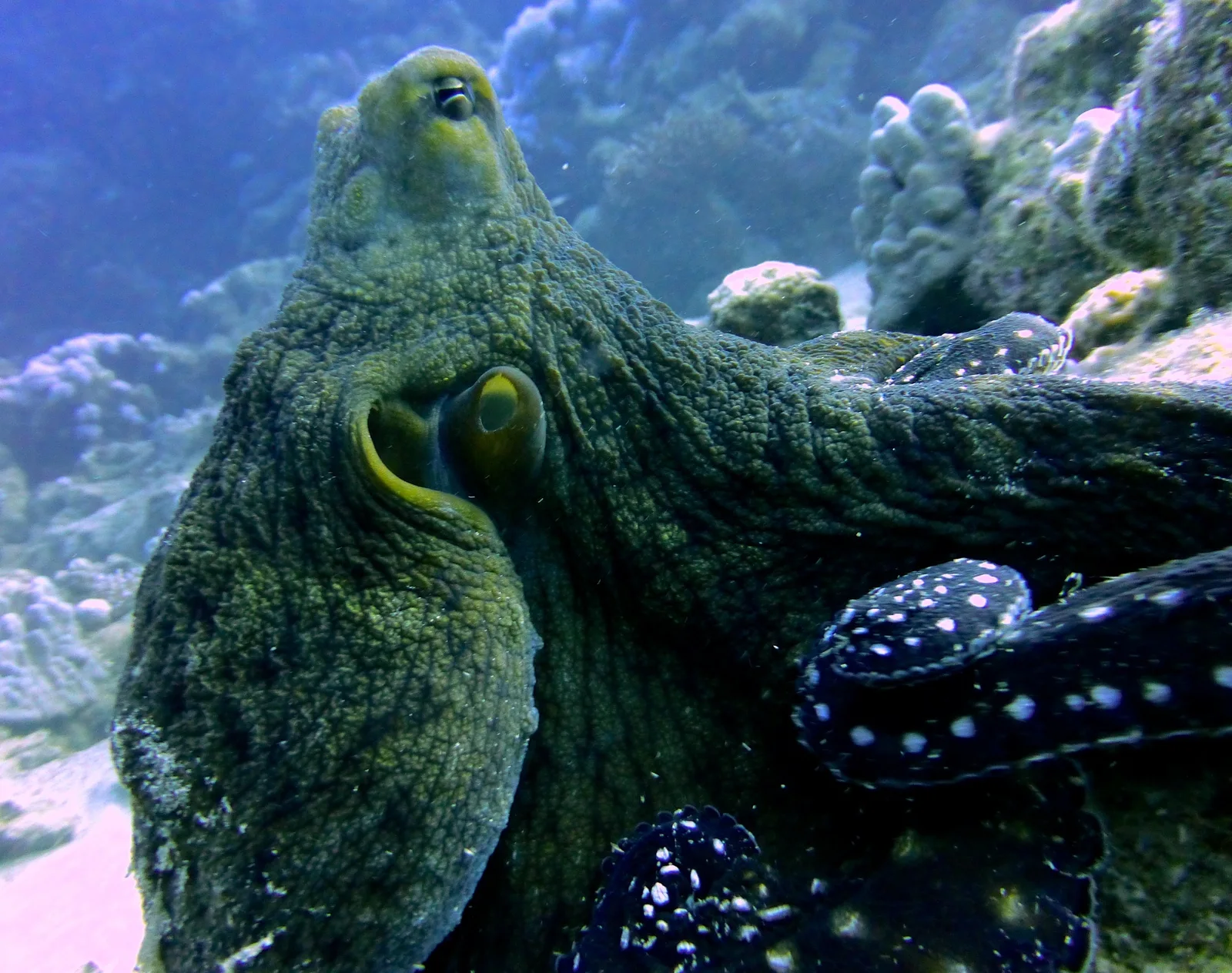
Day Octopus
Octopus cyanea
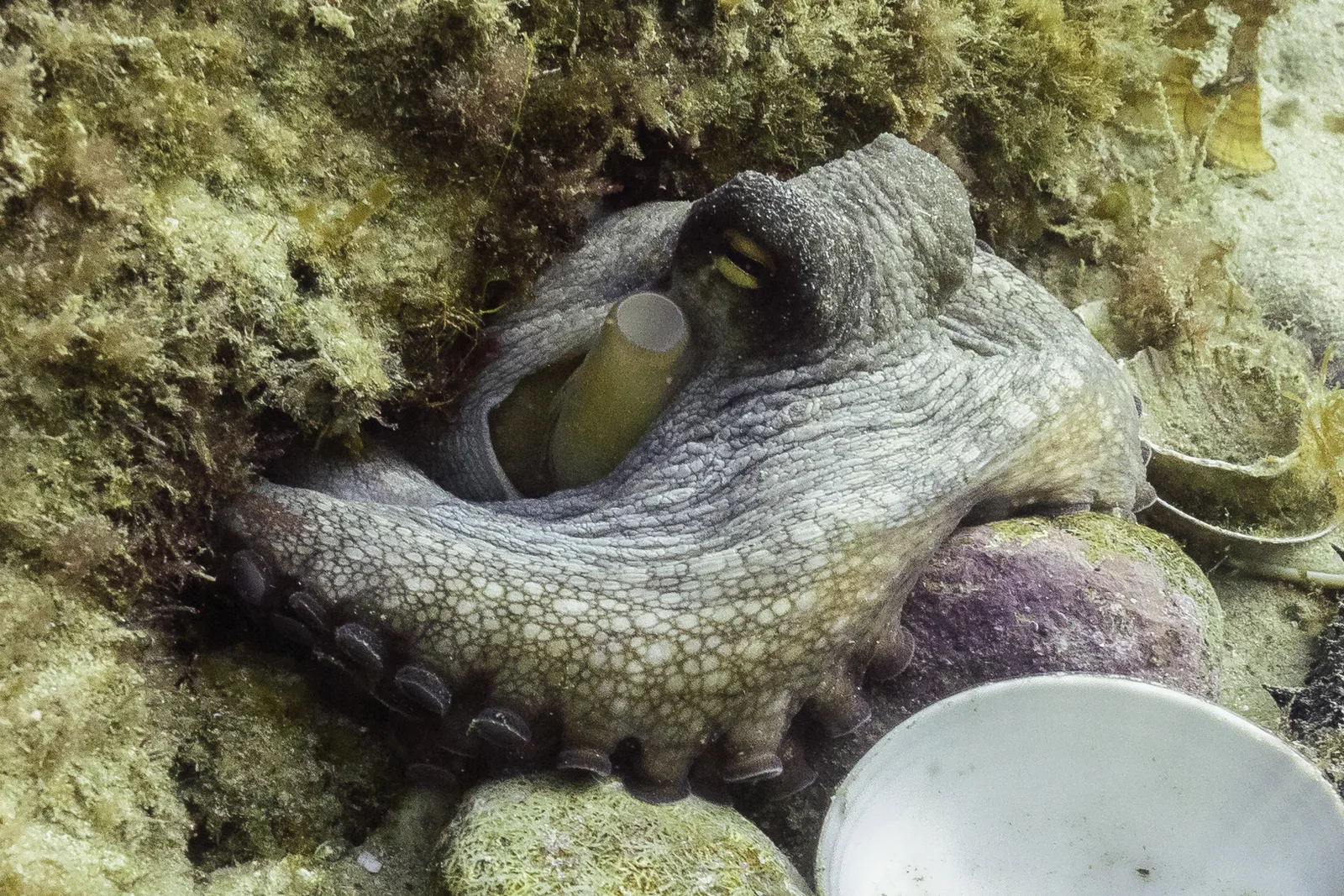
Common Octopus
Octopus vulgaris
How to compare two organisms
Choose two species and trace their closest shared group. Then compare a trait with the same definition on each side. Check the units, life stage and context before interpreting a measurement or range.
Missing data means that the collection lacks a sourced value. Where a characteristic does not apply to a lineage, the comparison labels it separately. Open the two profiles for context and follow their sources before drawing a conclusion.
Biological comparison
Compare like with like. A mean, a range and a reported maximum summarize different things. Check the population and field or study conditions before interpreting differences.
| Characteristic | Day Octopus | Common Octopus |
|---|---|---|
| Principal classification | ||
| Domain | Eukaryota | Eukaryota |
| Kingdom | Animalia | Animalia |
| Phylum | Mollusca | Mollusca |
| Class | Cephalopoda | Cephalopoda |
| Order | Octopoda | Octopoda |
| Family | Octopodidae | Octopodidae |
| Genus | Octopus | Octopus |
| Species | Octopus cyanea | Octopus vulgaris |
| Scientific measurements | ||
| No verified quantitative measurements are available for this pair. | ||
| Natural history | ||
| Nutrition and energy acquisition |
Crustaceans, molluscs and fish are among its prey. Flexible arms explore places that a rigid-bodied predator cannot easily reach. Source 1 ↗ |
Molluscs, crustaceans and other animal prey are captured with the arms and processed with the beak. Source 1 ↗Source 2 ↗Source 3 ↗ |
| Habitat |
Coral and rocky reefs offer crevices for shelter and varied surfaces over which to forage. A den can serve as a retreat between hunting excursions. Source 1 ↗ |
Rocky shores, reefs and other coastal seabeds provide crevices and shelters. Soft-bottom areas can also be used. Source 1 ↗Source 2 ↗Source 3 ↗ |
| Geographic distribution |
Native to tropical Indo-Pacific waters. Its reef habitat includes both exposed surfaces and protected holes. Source 1 ↗ |
The restricted species concept is associated with the eastern Atlantic and Mediterranean. Older global records may represent related species and need reassessment. Source 1 ↗Source 2 ↗Source 3 ↗ |
| Morphology |
Eight flexible, sucker-bearing arms surround the mouth. Rapid changes in skin color and texture help the animal blend with complex reef surfaces. Source 1 ↗ |
Suckers line the arms, which surround the mouth. Skin color and texture can change, so a single color pattern is not a secure species diagnosis. Source 1 ↗Source 2 ↗Source 3 ↗ |
| Reproduction and life cycle |
The female guards and tends her eggs. Brood care involves reduced or absent feeding, and reproduction is followed by the end of the adult female’s life. Source 1 ↗ |
Females tend attached egg strings in protected shelters. Small hatchlings enter a planktonic phase before settling into benthic life. Source 1 ↗Source 2 ↗Source 3 ↗ |
| Ecological role |
No separate account recorded |
Octopuses consume benthic animals and are themselves prey for larger marine predators. Source 1 ↗Source 2 ↗Source 3 ↗ |
| Behavior and activity |
Individuals are generally solitary. Crawling and camouflage support hunting; an ink release can help an octopus escape a threat. Source 1 ↗ |
Individuals shelter in dens and explore using touch, vision and chemical cues. Learning changes responses to food and shelter. Source 1 ↗Source 2 ↗Source 3 ↗ |
| Environmental adaptations |
A soft body, grasping suckers and adjustable skin appearance make it an effective hunter in a structurally complex environment. Source 1 ↗ |
Camouflage, flexible arms and jet-assisted escape provide several ways to handle threats. Source 1 ↗Source 2 ↗Source 3 ↗ |
| Conservation |
No separate account recorded |
Fishing pressure must be evaluated against local populations and the correct species identity; records from the entire historical complex cannot simply be pooled. Source 1 ↗Source 2 ↗Source 3 ↗ |
Sources from both profiles
Classification
Shared ancestry
Closest shared taxon · Octopus.