 Living Beings
The Smithsonian account lists temperate, tropical and evergreen forests among the habitats occupied by tigers. Source ↗
Published literatureRelationship Network
Explore how an organism connects to its relatives, food, and habitat. Select a connection to read the observation and its source.
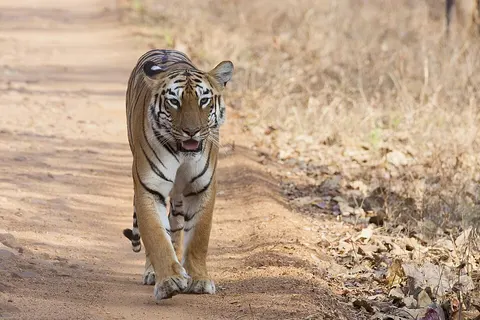
TigerPanthera tigris
2 displayed connections
Choose a different organism
Find an organism or filter connections
← Return to Dyeing Poison Frog
Trace a path & display options
Paths follow arrow direction; symmetric relationships can be traversed both ways. Only recorded, reviewed connections are searched.
Drag to orbit or select a node to inspect it. Squares mark habitats. Arrows follow the recorded direction. Positions are schematic.
The Smithsonian account also records habitat use in mangrove swamps. Habitat varies across the tiger’s range. Source ↗
Published literature2 connections shown
Another way to explore
Relatives in the collection
These organisms share a recorded family. Classification does not establish an ecological interaction.
 Framed for display
Species · Caracal
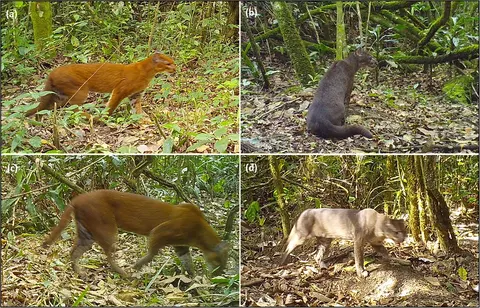
African Golden Cat
Caracal auratus
The African golden cat is an elusive forest cat, distinct from the Asian golden cat despite their similar common names. Understanding this …
 Framed for display
Species · Catopuma
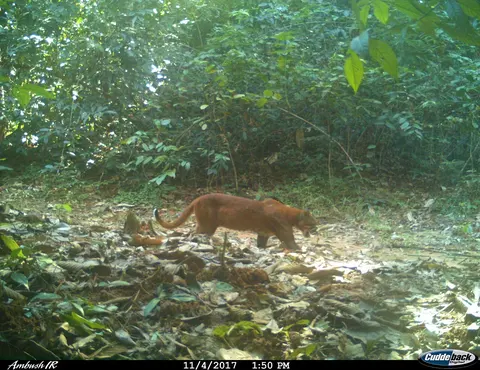
Asian Golden Cat
Catopuma temminckii
The Asian golden cat is a medium-sized forest felid with variable coloration. Its name should not be taken to mean that every …
 Framed for display
Species · Catopuma
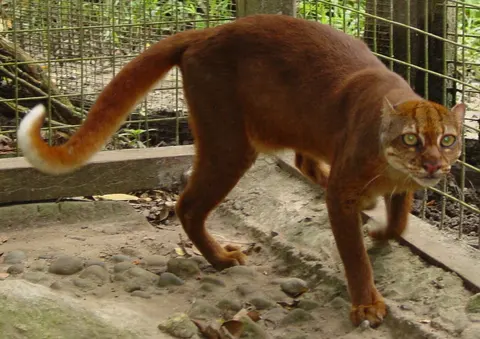
Bay Cat
Catopuma badia
The bay cat is a rarely observed forest cat of Borneo. Because information remains limited, confident claims about its population or detailed …
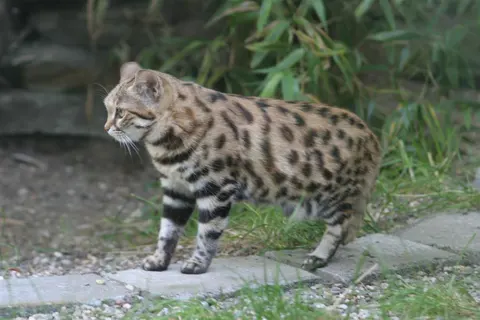 Framed for display
Species · Felis
Black-footed Cat
Felis nigripes
The black-footed cat is a small southern African hunter of open, dry country. It is a separate species from the domestic cat …
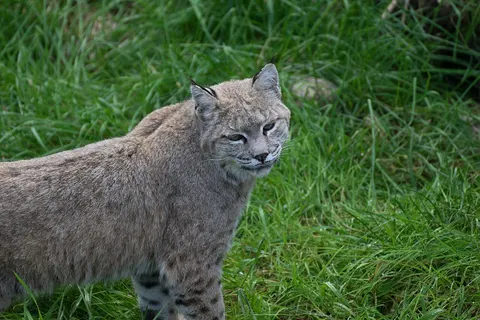 Framed for display
Species · Lynx
Bobcat
Lynx rufus
The bobcat is a short-tailed North American felid that uses many different environments. Its adaptability should not obscure its need for cover, …
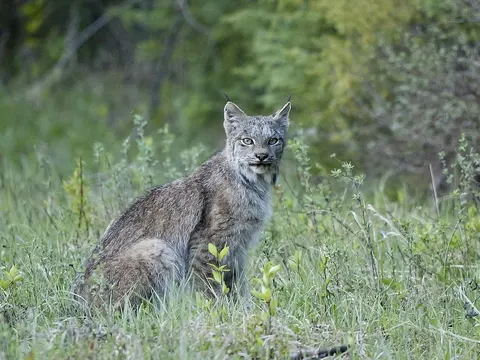 Framed for display
Species · Lynx
Canada Lynx
Lynx canadensis
The Canada lynx is a northern forest cat with a close ecological connection to snowshoe hares. Changes in hare abundance can influence …