Field guide · species

Bobcat

Lynx rufus

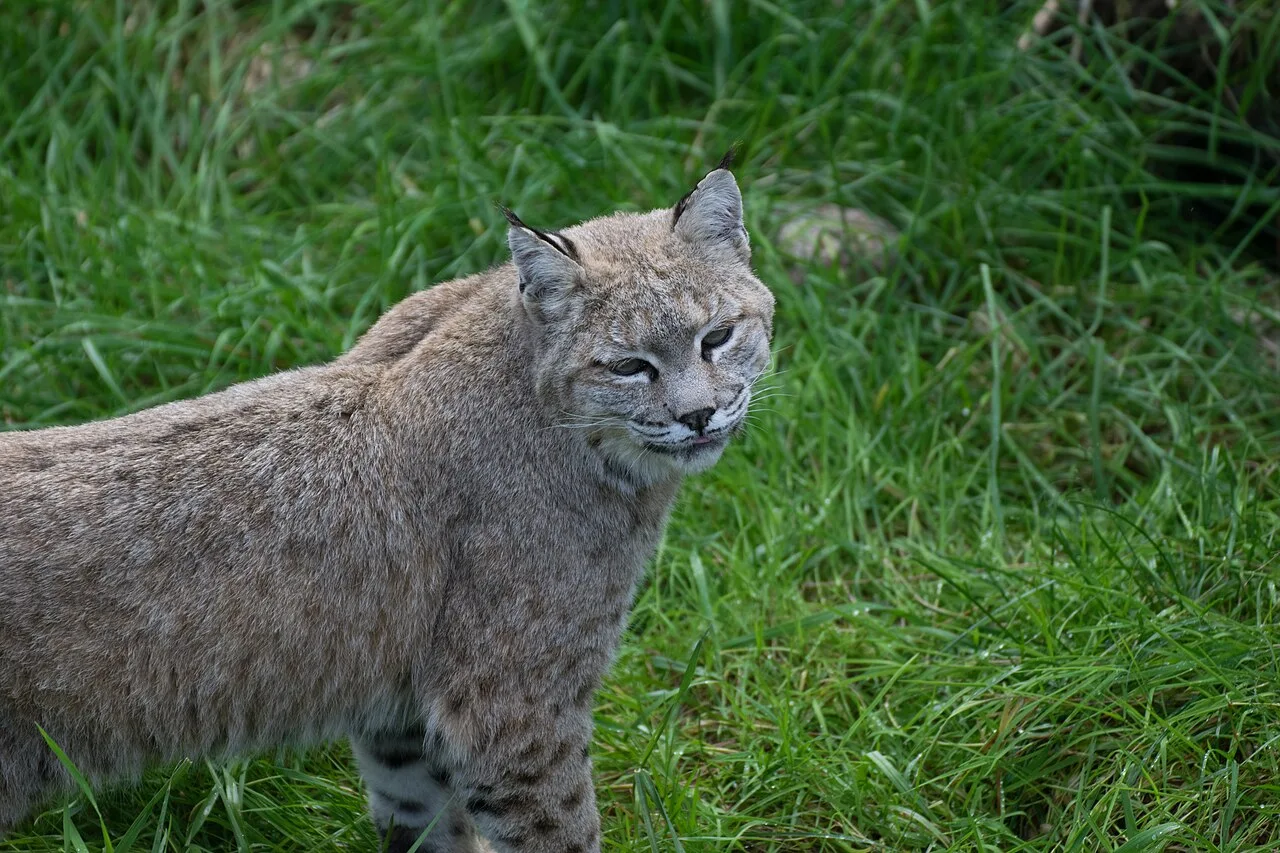
The bobcat is a short-tailed North American felid that uses many different environments. Its adaptability should not obscure its need for cover, resting sites and reliable small-animal prey.

Tree of lifeScientific lineage
  1. LifeLife
  2. DomainEukaryota
  3. KingdomAnimalia
  4. PhylumChordata
  5. ClassMammalia
  6. OrderCarnivora
  7. FamilyFelidae
  8. GenusLynx
  9. SpeciesLynx rufus

In brief

Habitat and range
Forests, scrub, mountains and semi-open habitats can be occupied where shelter and food are available. Source ↗
Geographic distribution
Bobcats range from southern Canada through much of the United States and into Mexico. Across that span they use scrub, forest and rocky terrain, including habitats… Source ↗
Diet and nutrition
Rabbits, rodents and other small vertebrates are common prey. Larger or unusual prey may be taken opportunistically. Source ↗

Scientific measurements

Body mass

4–15 kg

Reported range

Source and measurement context

Species account, descriptive range · ≈ 9–33 lb

Mass of an individual animal.

Uncertainty
The source describes this organism or study sample; the value does not define every individual.
Original
4–15 kg
Animal Diversity Web · Bobcat ↗ Physical Description; Reproduction

Head and body length

0.65–1.05 m

Reported range

Source and measurement context

Species account, descriptive range · ≈ 2.1–3.44 ft

Head and body, excluding the tail.

Uncertainty
The source describes this organism or study sample; the value does not define every individual.
Original
65–105 cm
Animal Diversity Web · Bobcat ↗ Physical Description; Reproduction

Tail length

0.11–0.19 m

Reported range

Source and measurement context

Species account, descriptive range · ≈ 0.36–0.62 ft

Length of the tail alone.

Uncertainty
The source describes this organism or study sample; the value does not define every individual.
Original
11–19 cm
Animal Diversity Web · Bobcat ↗ Physical Description; Reproduction

Physical traits

A short tail, facial ruff and spotted or streaked coat contribute to identification.

Check the short tail along with the ears and the markings on the legs. The bobcat has a dark area on top of the tail tip and pale fur below it, while the Canada lynx has a black tip all the way around. View the tail from more than one angle if the animal is moving.

Scientific source 1 ↗ · Scientific source 2 ↗ · Scientific source 3 ↗

Habitat and range

Forests, scrub, mountains and semi-open habitats can be occupied where shelter and food are available.

Scientific source 1 ↗ · Scientific source 2 ↗

Diet and nutrition

Rabbits, rodents and other small vertebrates are common prey. Larger or unusual prey may be taken opportunistically.

Scientific source 1 ↗ · Scientific source 2 ↗

Behavior and activity

Bobcats generally live independently outside mating and mother–young associations. They stalk and pounce rather than pursuing prey over long distances.

Scientific source 1 ↗ · Scientific source 2 ↗

Reproduction and life cycle

The female raises her kittens in a sheltered den. They begin eating solid food while still dependent on her and learn to hunt before becoming independent. The species account describes dispersal during the first winter, commonly at about eight months. Litter size and development vary, so these timings describe a life-history pattern rather than a fixed timetable for every kitten.

Scientific source ↗

Geographic distribution

Bobcats range from southern Canada through much of the United States and into Mexico. Across that span they use scrub, forest and rocky terrain, including habitats outside the boreal range associated with Canada lynx. In areas where both cats occur, location can narrow the possibilities but features such as feet and tail markings are needed to distinguish them.

Scientific source 1 ↗ · Scientific source 2 ↗ · Scientific source 3 ↗

Evidence

Sources

Connected life

No reviewed ecological connections in the collection yet.