 Living Beings

 Framed for display
Species · Ursus
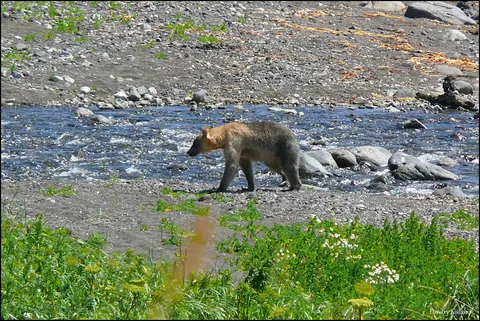
Brown Bear
Ursus arctos
Brown bears are large omnivores with a prominent shoulder hump and powerful forelimbs. Their diets and seasonal routines change with the foods …
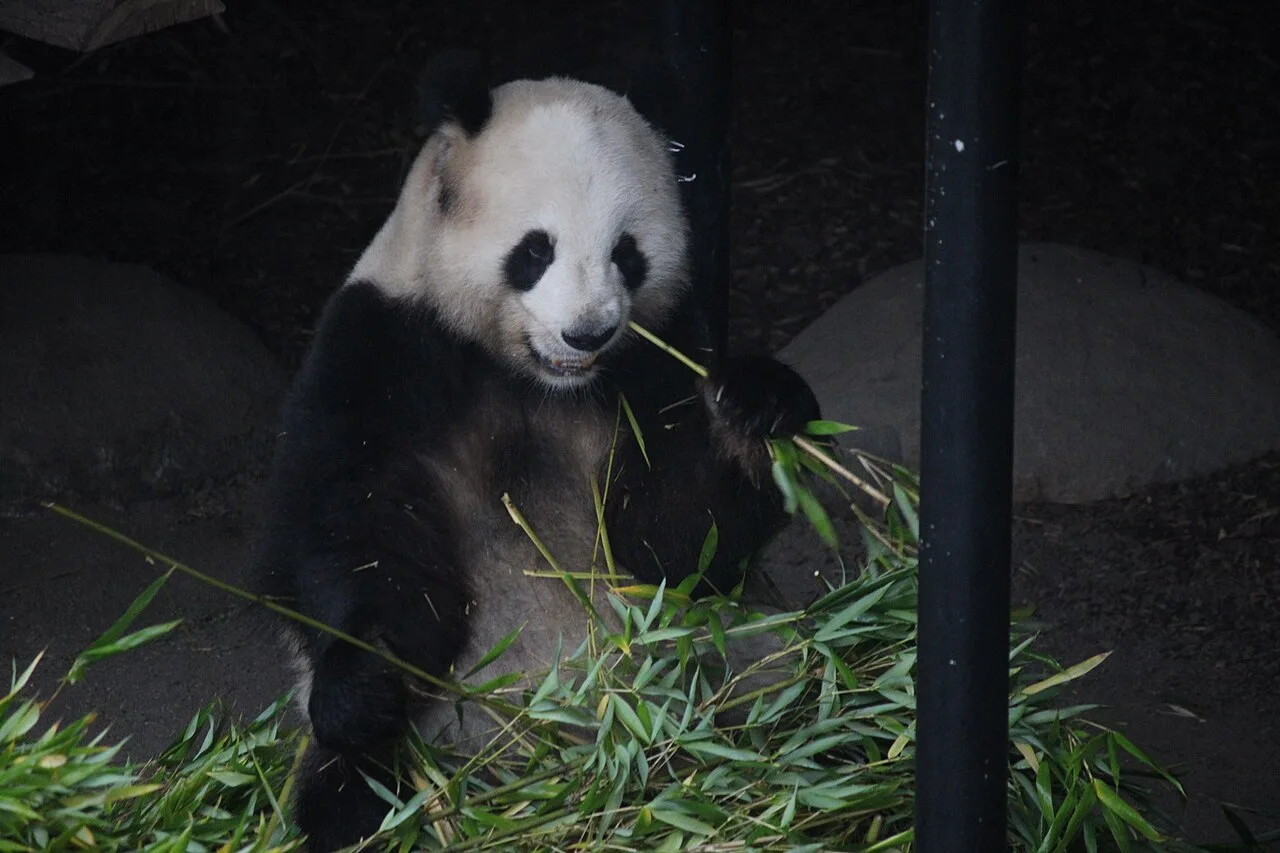
Ailuropoda melanoleuca (Mao Sun) (54831103977).jpg · Resized and converted to WebP for display. AI-generated illustration. Christian Ursilva from København, Danmark · CC BY-SA 4.0
Field guide · species
Ailuropoda melanoleuca
The giant panda is a bamboo-specialist bear of Chinese mountain forests. Its familiar black-and-white appearance conceals an unusual feeding strategy: a member of the carnivoran lineage makes its living largely from a fibrous plant.
Public research profile · final editorial review pending.
Complete source lineage, including intermediate ranks. The standard view uses Life and the eight principal ranks.
Black ears, limbs and eye patches contrast with a pale body. A broad head and powerful jaws support the repeated chewing needed to process bamboo.
Mountain forests with substantial bamboo growth provide both food and shelter. Pandas can move between elevations as conditions and food availability change.
Bamboo dominates feeding, but the panda is not simply a grazing herbivore. Its digestive anatomy retains features of its carnivoran ancestry, and much of its daily activity is devoted to obtaining and processing food.
Adults generally forage alone, communicating partly through scent. They climb and take shelter in natural cover rather than maintaining a single permanent den throughout the year.
Mothers raise very small, dependent cubs. Reproductive timing and the survival of young are important considerations in both wild population research and conservation breeding.
The Mammal Diversity Database v2.5 records this species in China.
Shared classification
Framed for display
Ursus arctos
Brown bears are large omnivores with a prominent shoulder hump and powerful forelimbs. Their diets and seasonal routines change with the foods …
 Framed for display
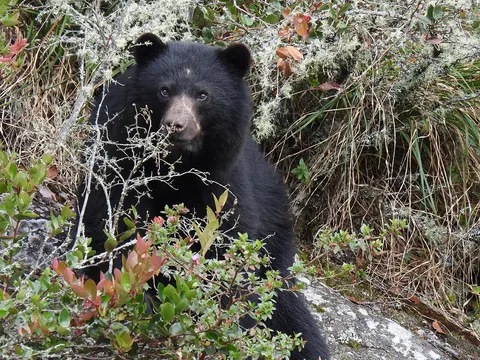
Tremarctos ornatus
The Andean bear, also called the spectacled bear, is the living bear native to South America. It connects forests and high mountain …
 Framed for display
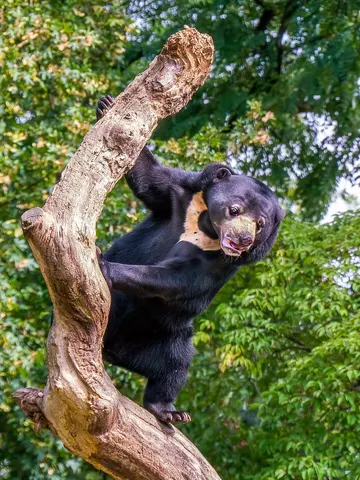
Helarctos malayanus
The sun bear is a small tropical forest bear of Southeast Asia. Curved claws, climbing ability and a long mobile tongue help …
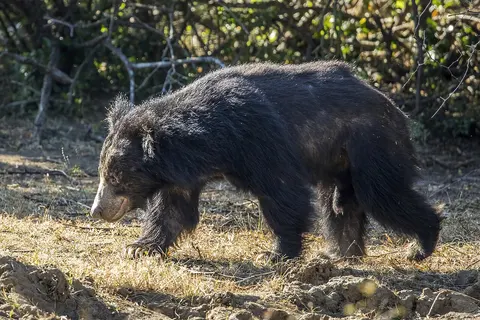 Framed for display
Melursus ursinus
The sloth bear is an insect-feeding specialist of the Indian subcontinent. Despite its name it is a bear, not a sloth, and …
Evidence
Connected life
No reviewed ecological connections in the collection yet.
Explore network ↗