 Living Beings

 Framed for display
Species · Ursus
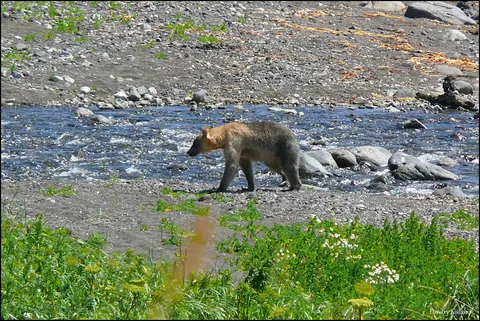
Brown Bear
Ursus arctos
Brown bears are large omnivores with a prominent shoulder hump and powerful forelimbs. Their diets and seasonal routines change with the foods …
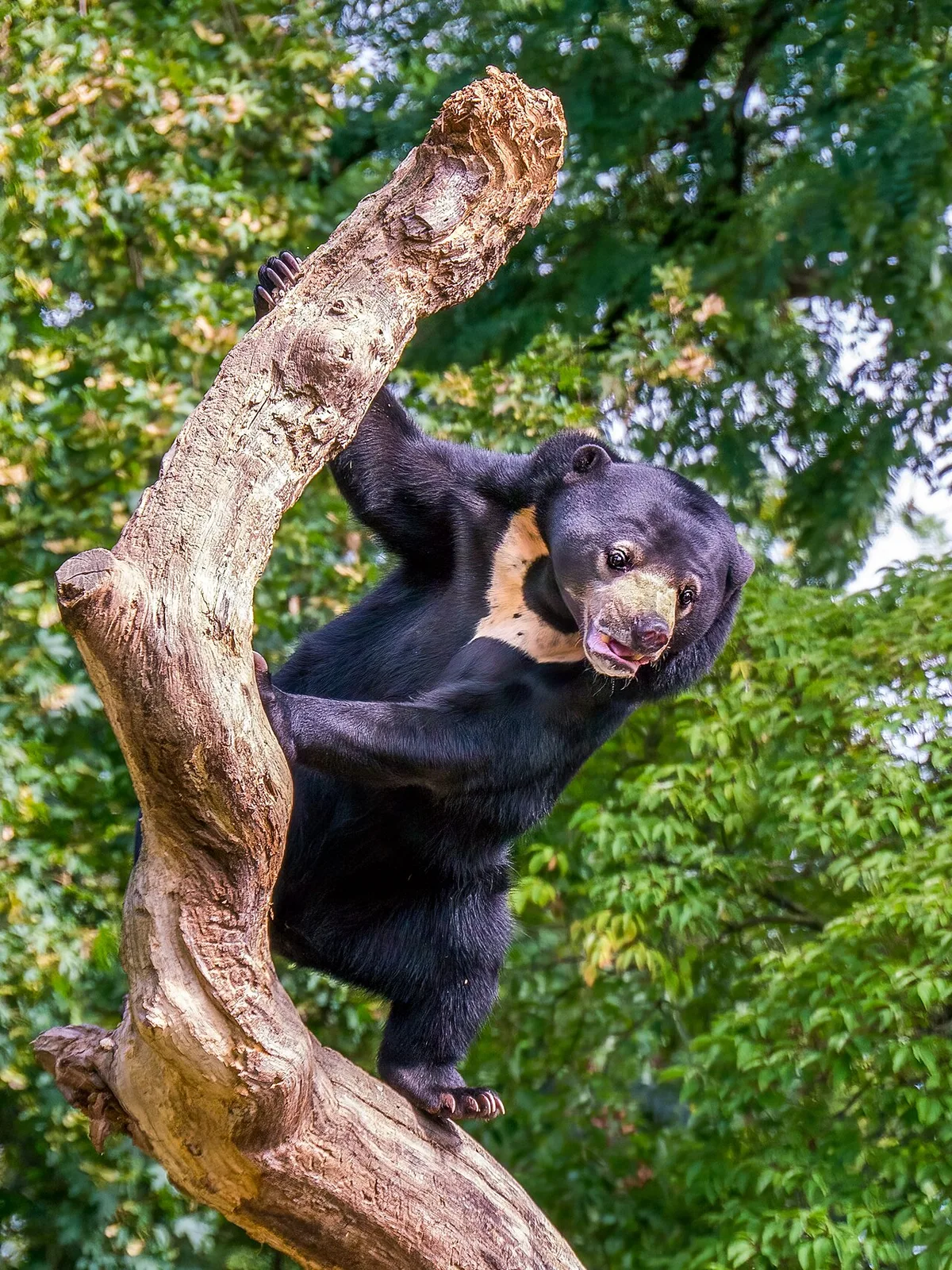
Malaienbär (Helarctos malayanus) Kölner Zoo-20110912-RM-143000.jpg · Resized and converted to WebP for display. AI-generated illustration. Ermell · CC BY-SA 4.0
Field guide · species
Helarctos malayanus
The sun bear is a small tropical forest bear of Southeast Asia. Curved claws, climbing ability and a long mobile tongue help it exploit foods that are hidden inside wood, nests and fruiting trees.
Public research profile · final editorial review pending.
Complete source lineage, including intermediate ranks. The standard view uses Life and the eight principal ranks.
A short dark coat contrasts with a pale chest patch and lighter muzzle. Strong limbs and curved claws are conspicuous features of its climbing build.
Tropical forests provide fruiting trees, insect colonies and sheltered resting places. Tree cover is important even though bears also forage on the ground.
Insects and other invertebrates are eaten alongside fruit and other foods. Feeding varies with local availability; the species is an opportunistic omnivore, not exclusively a honey eater.
Sun bears are capable climbers and may rest in trees. Their tropical setting differs from the strongly seasonal environments of bears that undergo a prolonged winter dormancy.
Young depend on maternal care. Much reproductive information comes from managed animals, and detailed schedules should not be assumed identical in every wild population.
The Mammal Diversity Database v2.5 records this species in Bangladesh, Brunei, Cambodia, India, Indonesia, Laos, Malaysia, Myanmar, Thailand, Vietnam, China?.
Shared classification
Framed for display
Ursus arctos
Brown bears are large omnivores with a prominent shoulder hump and powerful forelimbs. Their diets and seasonal routines change with the foods …
 Framed for display
Ailuropoda melanoleuca
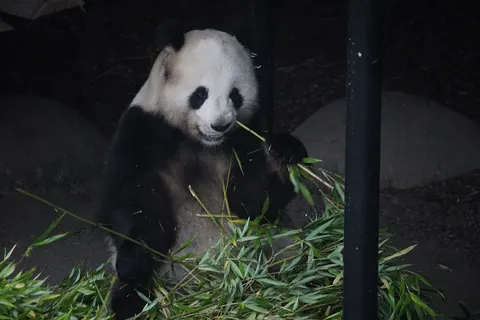
The giant panda is a bamboo-specialist bear of Chinese mountain forests. Its familiar black-and-white appearance conceals an unusual feeding strategy: a member …
 Framed for display
Tremarctos ornatus
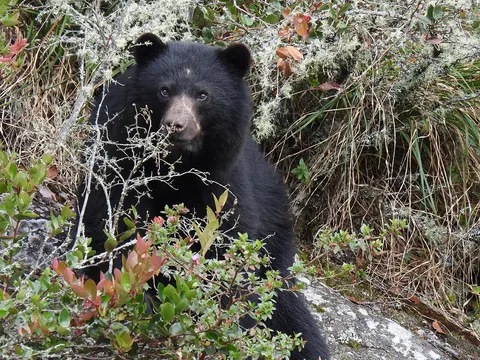
The Andean bear, also called the spectacled bear, is the living bear native to South America. It connects forests and high mountain …
 Framed for display
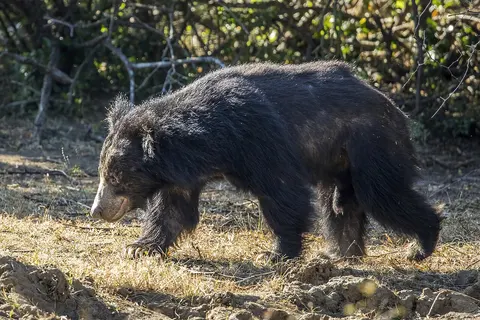
Melursus ursinus
The sloth bear is an insect-feeding specialist of the Indian subcontinent. Despite its name it is a bear, not a sloth, and …
Evidence
Connected life
No reviewed ecological connections in the collection yet.
Explore network ↗