 Living Beings
Compare species
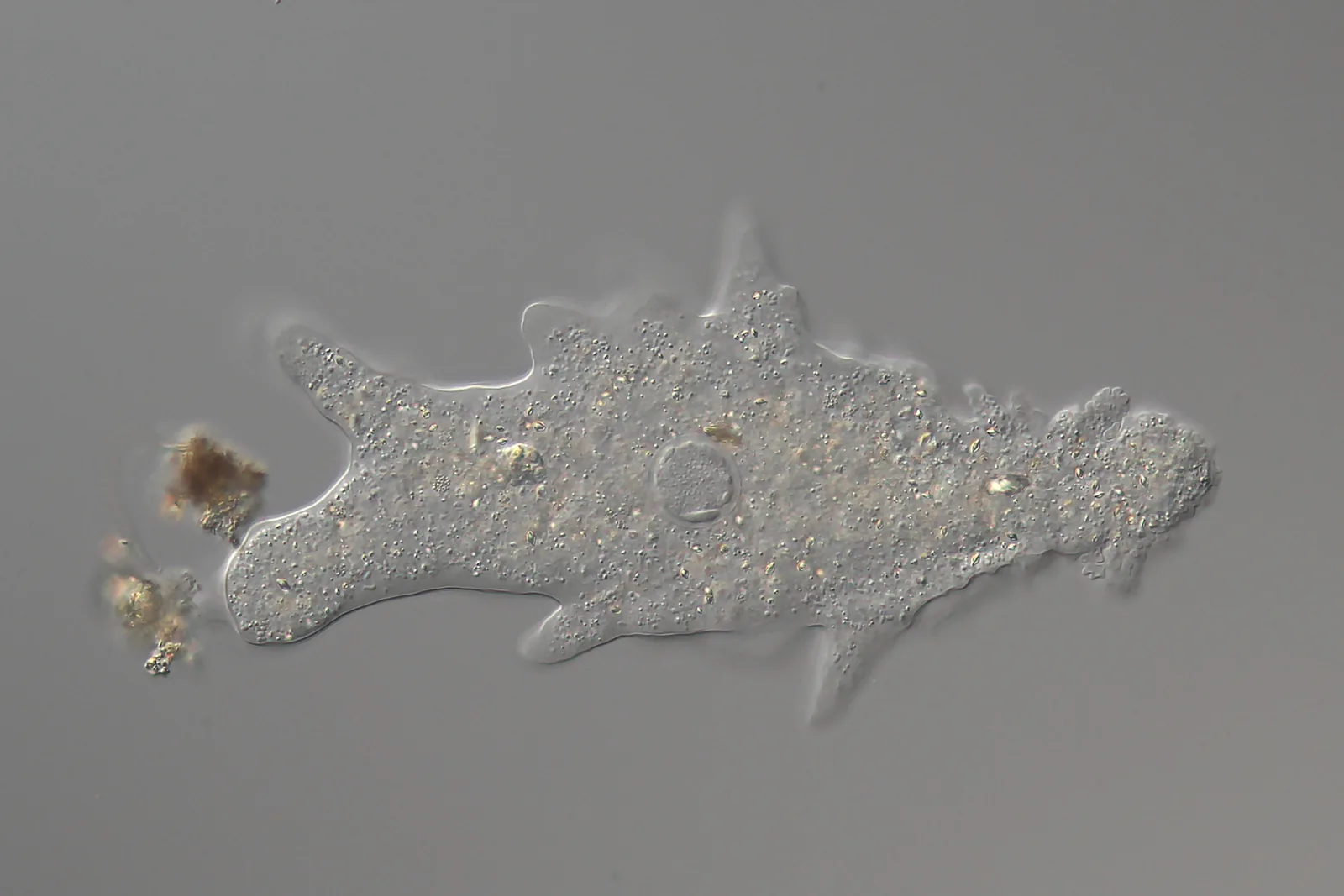
Amoeba proteus
Amoeba proteus
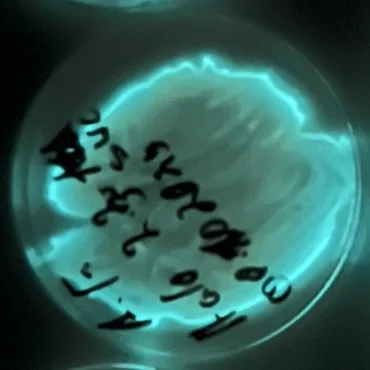
Aliivibrio fischeri
Aliivibrio fischeri
Evidence from the profiles
Compare their characteristics
| Trait | Amoeba proteus | Aliivibrio fischeri |
|---|---|---|
| Physical traits | An irregular outline and flowing extensions distinguish a moving cell. A nucleus and vacuoles can be observed using suitable microscopy. | Small bacterial cells require microscopy for direct observation. Light emission is a physiological property, not a visible body-color diagnosis. |
| Habitat and range | Freshwater environments with microbial food and suitable surfaces support its crawling and feeding activity. | Marine environmental phases and specialized host-associated sites provide distinct growth conditions. |
| Diet and nutrition | Pseudopodia surround food particles and small organisms, bringing them into vacuoles for digestion. | Organic substrates support metabolism. Conditions inside a host can differ substantially from those in surrounding seawater. |
| Behavior and activity | The cell forms pseudopods as its shape changes. Direct pressure measurements found that internal pressure rose before movement and decreased around pseudopod formation, supporting a role for hydrostatic pressure driven by the contractile cell cortex. This links movement with the mechanics of a living cell rather than an animal-like limb. | Chemical signaling and population context influence light production and other behaviors relevant to colonization. |
| Reproduction and life cycle | A growing cell can divide after nuclear replication. This profile does not assign a complex reproductive stage from another amoeba species. | Cell multiplication and repeated opportunities for host colonization connect free-living and symbiotic phases. |
| Geographic distribution | Recorded cultures have particular collection histories. Identifying every large freshwater amoeba as A. proteus would overstate its distribution. | Environmental and host-derived strains have documented collection localities. The origin of one experimental strain does not define the full range. |
| Ecological role | Consumption of microorganisms connects it with freshwater microbial food webs. | The well-studied squid association demonstrates a microbial contribution to an animal's light-producing system. |
| Distinctive adaptations | A deformable cell surface supports both movement and feeding. Contractile-vacuole activity helps manage water balance in freshwater. | Bioluminescence, environmental sensing and colonization traits help explain the model symbiosis. |
Classification
Shared ancestry
Closest shared taxon: cellular organisms.