 Living Beings
 Framed for display
Compare species
Common Octopus
Octopus vulgaris
Tiger
Panthera tigris
How to compare two organisms
Choose two species and trace their closest shared group. Then compare a trait with the same definition on each side. Check the units, life stage and context before interpreting a measurement or range.
Missing data means that the collection lacks a sourced value. Where a characteristic does not apply to a lineage, the comparison labels it separately. Open the two profiles for context and follow their sources before drawing a conclusion.
Biological comparison
Compare like with like. A mean, a range and a reported maximum summarize different things. Check the population and field or study conditions before interpreting differences.
| Characteristic | Common Octopus | Tiger |
|---|---|---|
| Principal classification | ||
| Domain | Eukaryota | Eukaryota |
| Kingdom | Animalia | Animalia |
| Phylum | Mollusca | Chordata |
| Class | Cephalopoda | Mammalia |
| Order | Octopoda | Carnivora |
| Family | Octopodidae | Felidae |
| Genus | Octopus | Panthera |
| Species | Octopus vulgaris | Panthera tigris |
| Scientific measurements | ||
| Body mass | Not recorded |
170.0 kg ≈ 374.8 lb
Mean · Literature value used in a comparative paper. The authors separate these mass references from their zoo sample. Source and measurement contextMass of an individual animal.
|
| Tail length | Different measurement scope |
0.90–1.10 m ≈ 3.0–3.61 ft
Reported range · Species account range. Source and measurement contextLength of the tail alone.
|
| Lifespan | Not recorded |
8–10 years
Typical range · Typical wild lifespan in this species account. Source and measurement contextAge attained in the recorded setting.
|
| Head and body length | Different measurement scope |
1.50–2.30 m ≈ 4.92–7.55 ft
Reported range · Species account range. Tiger size varies across populations. Source and measurement contextHead and body, excluding the tail.
|
| Natural history | ||
| Nutrition and energy acquisition |
Nutrition
No comparable measurement recorded
Molluscs, crustaceans and other animal prey are captured with the arms and processed with the beak. Source 1 ↗Source 2 ↗Source 3 ↗ |
Nutrition
Carnivorous Source ↗
Tigers mainly hunt large mammals, including deer and wild pigs. Deer and wild pigs are examples of important prey. Which animals a tiger …Tigers mainly hunt large mammals, including deer and wild pigs. Deer and wild pigs are examples of important prey. Which animals a tiger encounters depends on its region, so prey named in one local study should be read in that local context. |
| Habitat |
Rocky shores, reefs and other coastal seabeds provide crevices and shelters. Soft-bottom areas can also be used. Source 1 ↗Source 2 ↗Source 3 ↗ |
Tigers live in varied habitats, including tropical forests, mangrove swamps and temperate forest. A tiger can live in a mangrove forest or in …Tigers live in varied habitats, including tropical forests, mangrove swamps and temperate forest. A tiger can live in a mangrove forest or in a cold temperate forest. Those settings differ greatly in climate, while both can supply the cover and prey that a stalking predator uses. |
| Geographic distribution |
The restricted species concept is associated with the eastern Atlantic and Mediterranean. Older global records may represent related species and need reassessment. Source 1 ↗Source 2 ↗Source 3 ↗ |
Native to Asia. Profile references ↗ |
| Morphology |
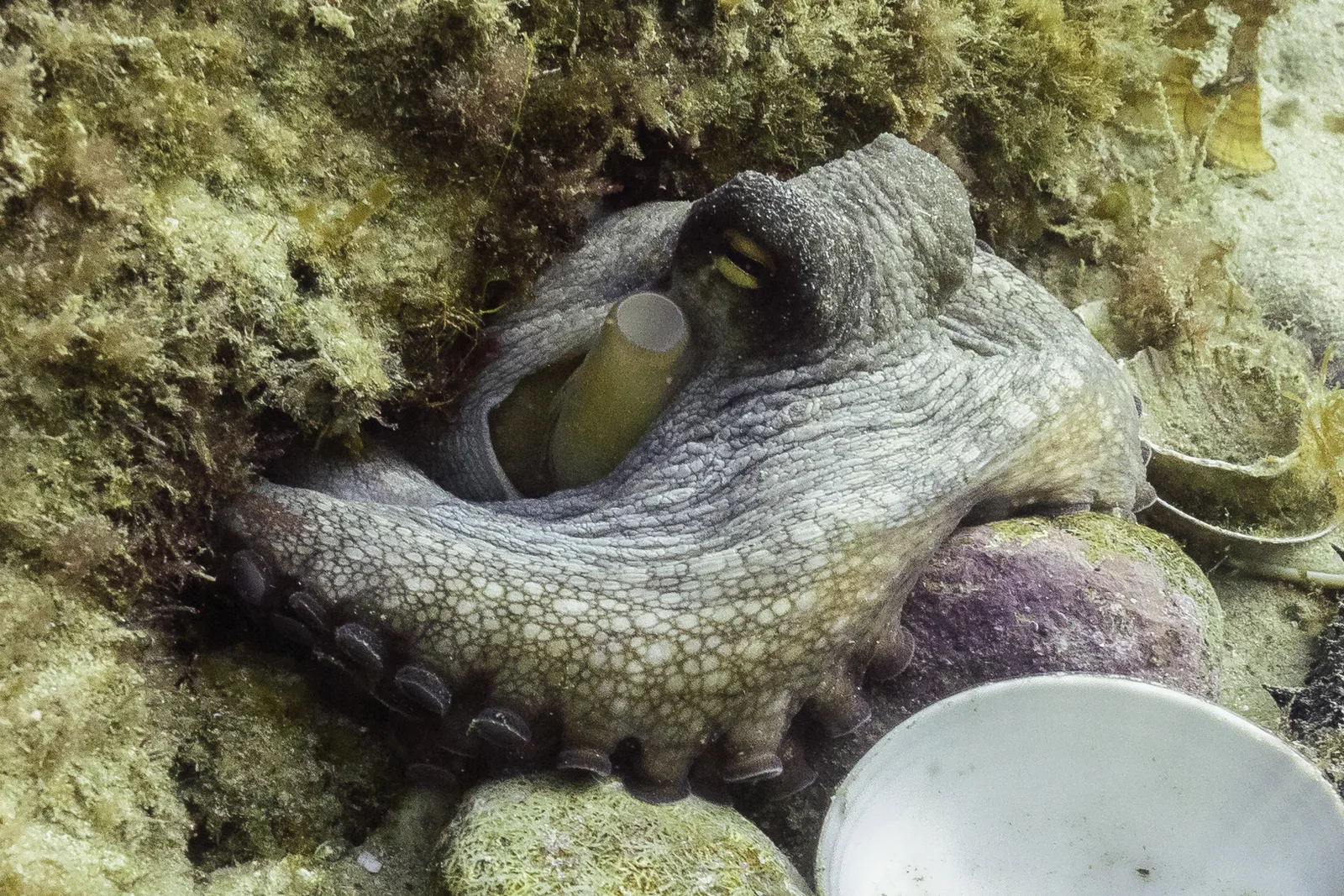
Suckers line the arms, which surround the mouth. Skin color and texture can change, so a single color pattern is not a secure species diagnosis. Source 1 ↗Source 2 ↗Source 3 ↗ |
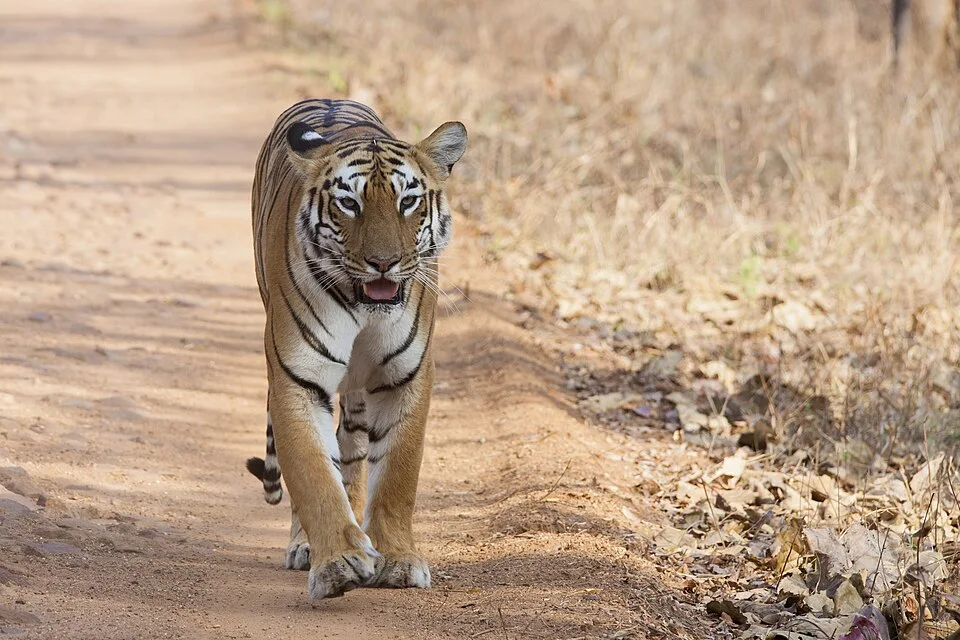
Dark stripes break up the tiger’s outline. Stripe patterns vary from one individual to another. Striping helps camouflage a stalking tiger in vegetation. …Dark stripes break up the tiger’s outline. Stripe patterns vary from one individual to another. Striping helps camouflage a stalking tiger in vegetation. The pattern varies individually, and field researchers can use photographs of the markings to distinguish animals. |
| Reproduction and life cycle |
Females tend attached egg strings in protected shelters. Small hatchlings enter a planktonic phase before settling into benthic life. Source 1 ↗Source 2 ↗Source 3 ↗ |
Young tigers stay with their mother while developing the skills needed to take prey. This prolonged period of dependence is consistent with an …Young tigers stay with their mother while developing the skills needed to take prey. This prolonged period of dependence is consistent with an adult life that is generally solitary. A photograph of a female with cubs therefore describes an important life stage rather than a permanent social group. |
| Ecological role |
Octopuses consume benthic animals and are themselves prey for larger marine predators. Source 1 ↗Source 2 ↗Source 3 ↗ |
No separate account recorded |
| Behavior and activity |
Social organization
No comparable measurement recorded
Individuals shelter in dens and explore using touch, vision and chemical cues. Learning changes responses to food and shelter. Source 1 ↗Source 2 ↗Source 3 ↗ |
Social organization
Generally solitary Source ↗
A tiger usually hunts by stalking its prey and attacking at close range. A tiger can communicate without meeting another tiger directly. Scratches …A tiger usually hunts by stalking its prey and attacking at close range. A tiger can communicate without meeting another tiger directly. Scratches and scent marks leave information at places another animal may visit later. In addition to stalking on land, tigers can swim well and have been observed hunting in water. |
| Environmental adaptations |
Camouflage, flexible arms and jet-assisted escape provide several ways to handle threats. Source 1 ↗Source 2 ↗Source 3 ↗ |
Individual stripe patterns have practical value to field researchers. Paired cameras can photograph the sides of a passing tiger, and repeated images of …Individual stripe patterns have practical value to field researchers. Paired cameras can photograph the sides of a passing tiger, and repeated images of the same pattern can identify the same animal. A sequence of detections across sampling locations can support a population estimate. |
| Conservation |
Fishing pressure must be evaluated against local populations and the correct species identity; records from the entire historical complex cannot simply be pooled. Source 1 ↗Source 2 ↗Source 3 ↗ |
No separate account recorded |
Sources from both profiles
Common Octopus
More comparisons
Framed for display

Classification
Shared ancestry
Closest shared evolutionary group · Bilateria.