 Living Beings
Both profiles belong to the genus Canis. Source ↗
ClassificationRelationship Network
Explore how an organism connects to its relatives, food, and habitat. Select a connection to read the observation and its source.
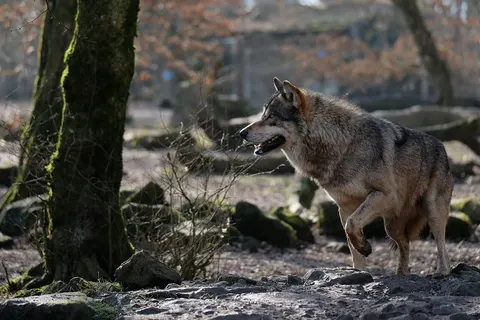
Gray WolfCanis lupus
4 displayed connections
← Return to Acropora millepora
Trace a path & display options
Paths follow arrow direction; symmetric relationships can be traversed both ways. Only recorded, reviewed connections are searched.
Drag to orbit or select a node to inspect it. Squares mark habitats. Arrows follow the recorded direction. Positions are schematic.
Both profiles belong to the genus Canis. Source ↗
ClassificationPrincipal classification in the Living Beings taxonomy. Source ↗
ClassificationPrincipal classification in the Living Beings taxonomy. Source ↗
Classification4 connections shown
Another way to explore
Relatives in the collection
These organisms share a recorded family. Classification does not establish an ecological interaction.
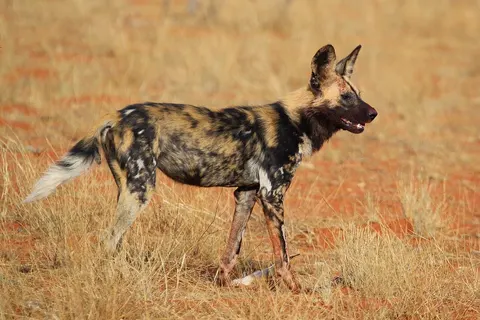 Framed for display
Species · Lycaon
African Wild Dog
Lycaon pictus
Botswana field observations show how pack members’ signals help determine when African wild dogs leave a resting site.
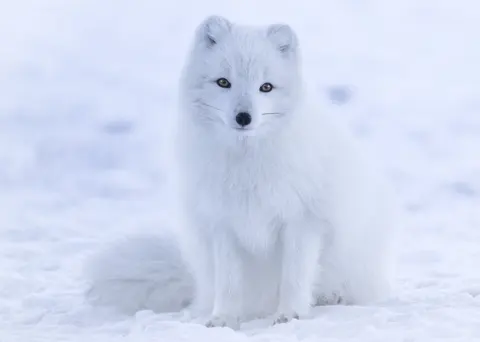 Framed for display
Species · Vulpes
Arctic Fox
Vulpes lagopus
The Arctic fox is a small northern canid adapted to cold, open landscapes. Dense fur, compact ears and fur-covered feet help it …
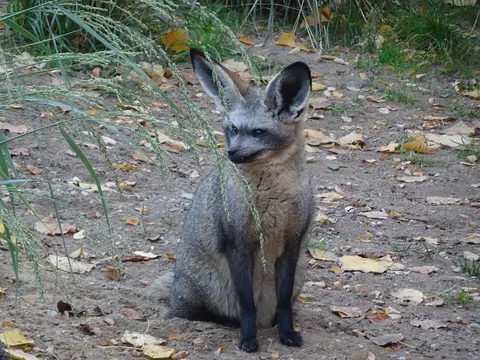 Framed for display
Species · Otocyon
Bat-eared Fox
Otocyon megalotis
The bat-eared fox is an African canid whose diet is unusually focused on insects. Large ears are relevant to finding small concealed …
 Framed for display
Species · Vulpes
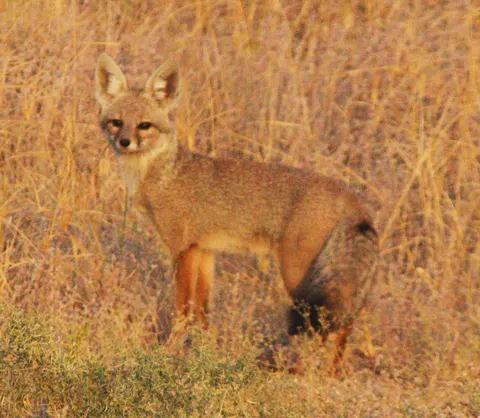
Bengal Fox
Vulpes bengalensis
The Bengal fox is a South Asian fox of relatively open landscapes. It combines small-animal hunting with the use of seasonal plant …
 Framed for display
Species · Lupulella
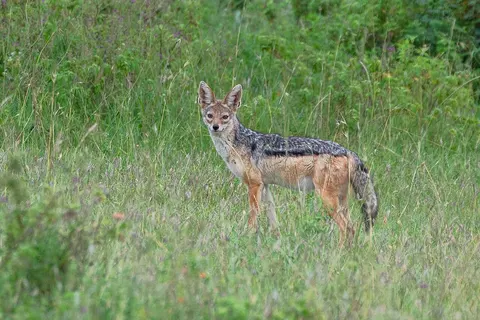
Black-backed Jackal
Lupulella mesomelas
The black-backed jackal is an African predator and scavenger recognized by a dark saddle across its back. Its flexibility includes both independent …
 Framed for display
Species · Vulpes
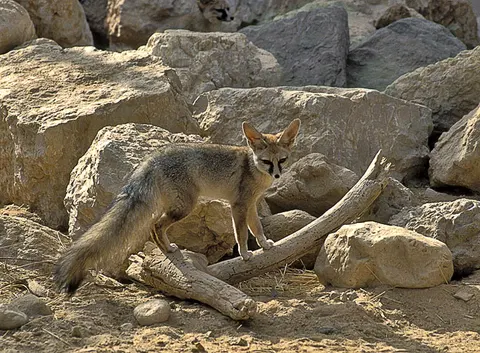
Blanford’s Fox
Vulpes cana
Blanford’s fox is a small canid associated with steep, dry terrain. Its feeding ecology includes substantial insect and fruit use, contrasting with …