 Living Beings
Principal classification in the Living Beings taxonomy. Source ↗
ClassificationRelationship Network
Explore how an organism connects to its relatives, food, and habitat. Select a connection to read the observation and its source.
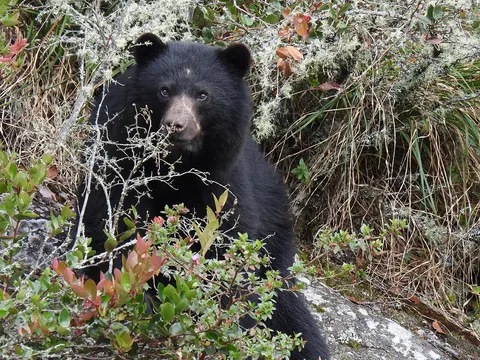
Andean BearTremarctos ornatus
2 displayed connections
Choose a different organism
Find an organism or filter connections
← Return to American Black Bear
Trace a path & display options
Paths follow arrow direction; symmetric relationships can be traversed both ways. Only recorded, reviewed connections are searched.
Drag to orbit or select a node to inspect it. Squares mark habitats. Arrows follow the recorded direction. Positions are schematic.
Principal classification in the Living Beings taxonomy. Source ↗
Classification2 connections shown
Another way to explore
Relatives in the collection
These organisms share a recorded family. Classification does not establish an ecological interaction.
 Framed for display
Species · Ursus
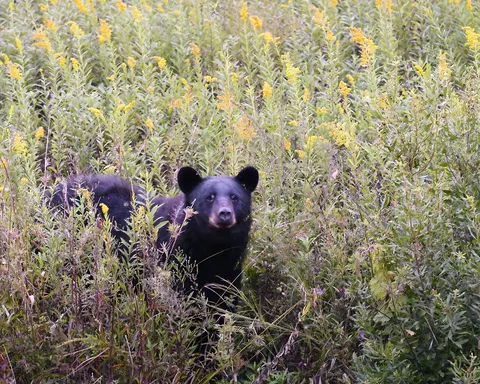
American Black Bear
Ursus americanus
The American black bear is a forest-associated North American omnivore whose coat is not always black. Seasonal changes in food strongly shape …
 Framed for display
Species · Ursus
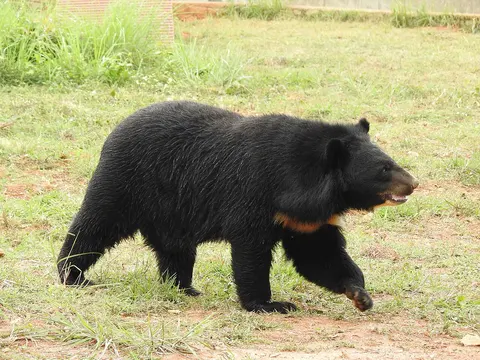
Asiatic Black Bear
Ursus thibetanus
The Asiatic black bear is a forest-dwelling bear recognized by a pale chest crescent. It combines climbing ability with a varied diet, …
 Framed for display
Species · Ursus
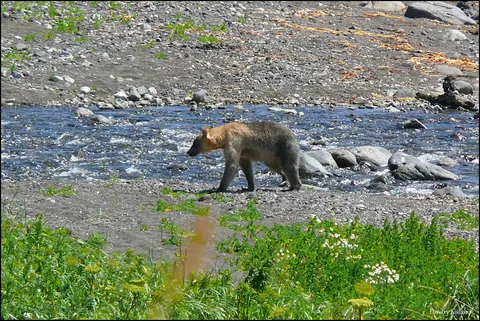
Brown Bear
Ursus arctos
Brown bears are large omnivores with a prominent shoulder hump and powerful forelimbs. Their diets and seasonal routines change with the foods …
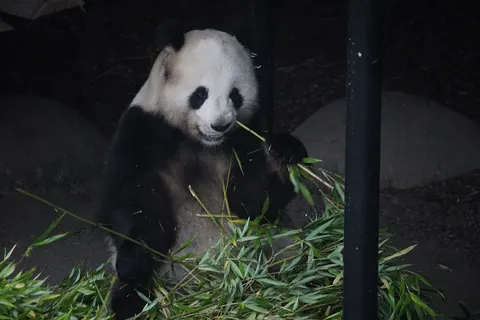 Framed for display
Species · Ailuropoda
Giant Panda
Ailuropoda melanoleuca
The giant panda is a bamboo-specialist bear of Chinese mountain forests. Its familiar black-and-white appearance conceals an unusual feeding strategy: a member …
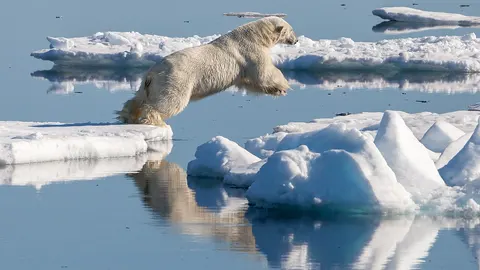 Framed for display
Species · Ursus
Polar Bear
Ursus maritimus
The polar bear is an Arctic predator whose feeding ecology is closely tied to sea ice. Its relationship with ice makes habitat …
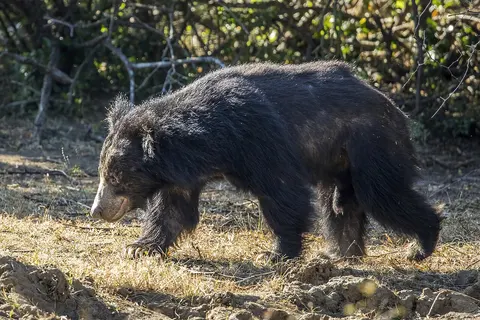 Framed for display
Species · Melursus
Sloth Bear
Melursus ursinus
The sloth bear is an insect-feeding specialist of the Indian subcontinent. Despite its name it is a bear, not a sloth, and …